In the last four rather stunning days, the United States and Israel have conducted precision strikes on key Iranian military infrastructure and leadership targets. Amid ongoing debate – some questioning whether America is merely acting as Israel’s proxy or whether we even belong in the Middle East – the following serves as a stark reminder of the long history that brought us here.
Since the 1979 Islamic Revolution, Iran has acted as a relentless adversary to Israel and a destabilizing force across the region. The regime has repeatedly defied international norms, brutally suppressed its own citizens (including mass killings during protests), and enforced severe restrictions that relegate women to second-class status.
Most critically for the United States, it has directly and through its proxies inflicted profound harm on American lives: kidnapping roughly 100 Americans, murdering approximately 1,200 (primarily service members but also diplomats and civilians), and injuring several thousand more – often through devastating attacks like bombings, missiles, and roadside devices.
The regime has also issued explicit threats against U.S. officials, placed bounties or assassination plots on American leaders and figures, and fostered an environment of ongoing hostility.
Here are 12 specific instances that could have provoked any reasonable nation to decisive action:
- Iran Hostage Crisis (Nov. 4, 1979 – Jan. 20, 1981) Iranian militants, with regime backing, seized the U.S. Embassy in Tehran, holding 52 Americans for 444 days. Hostages endured beatings, mock executions, blindfolding, isolation, and psychological torture.
- U.S. Embassy Bombing in Beirut (April 18, 1983) Iran-backed Islamic Jihad (Hezbollah precursor) suicide truck bomb killed 17 Americans (diplomats and CIA officers) and wounded dozens more at the U.S. Embassy.
- Beirut Marine Barracks Bombing (Oct. 23, 1983) Iran-directed Hezbollah suicide truck bomb killed 241 U.S. Marines and wounded over 100 others.
- Kidnapping and Murder of CIA Station Chief William Buckley (March 1984 – 1985) Iran-backed Hezbollah kidnapped, tortured for over a year, and murdered U.S. CIA Beirut station chief William Buckley.
- Hijacking of Kuwait Airways Flight 221 (December 1984) Hezbollah terrorists hijacked the flight to Tehran and executed two American passengers in cold blood.
- 1983–1984 Series of Kidnappings and Killings in Lebanon: Iran-backed groups kidnapped and tortured multiple Americans; several were murdered, including Marine Col. William Higgins (1988).
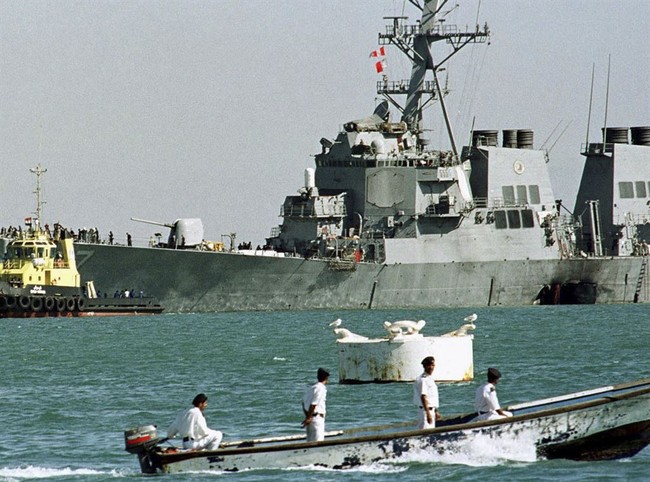
- USS Cole Bombing (October 12, 2000) Iran provided material support, training, and logistics to al-Qaeda operatives (via Hezbollah networks in the Gulf region, per 2015 U.S. federal court ruling in victim lawsuits), enabling the suicide boat attack in Yemen that killed 17 U.S. sailors and wounded 39 more.
- 2003–2011 Iraq War: EFPs and Proxy Attacks: Iran supplied and directed Shiite militias using Iranian explosively formed penetrators, killing at least 603 U.S. troops and causing severe injuries.
- January 2020 Ballistic Missile Attack on Ain al-Asad Base: Iran directly fired ballistic missiles at U.S. forces in Iraq, inflicting traumatic brain injuries on over 100 American troops.
- Jan. 28, 2024, Drone Attack on Tower 22, Jordan: Iran-backed Kataib Hezbollah drone strike killed 3 U.S. soldiers and wounded over 40 others.
- Ongoing Proxy Rocket/Drone Attacks (2021–2025, escalating post-2023) Iran-backed militias launched hundreds of attacks on U.S. bases in Iraq, Syria, and Jordan, killing and wounding American troops while issuing explicit threats to overrun U.S. positions.
- Ongoing Refusal to Curb Nuclear Program (escalating through 2026) Iran repeatedly rejected U.S. and international demands to halt uranium enrichment to near-weapons-grade levels and dismantle key infrastructure, openly advancing a program U.S. intelligence assesses is directed at developing a deliverable nuclear warhead for its ballistic missiles. This created an explicit existential threat to American forces, allies, and the homeland – directly prompting the U.S./Israeli decision for preemptive military action in late February 2026.
War critics – and boy, did they mobilize swiftly in this fast-moving four-day conflict – have trotted out the familiar objections: no legal justification existed, the president lacks authority to wage war without Congress, no viable path to success has been charted (though President Donald Trump and Secretary of Defense Pete Hegseth have in fact laid out a clear four-point plan), escalation is inevitable, civilians will suffer, and diplomacy should have been exhausted further.
Yet Iran’s track record tells a different story. Since the founding of the Islamic Republic in 1979, the regime has never negotiated in good faith when it held the upper hand; instead, it has consistently threatened America – and, time and again, acted on those threats through direct attacks, proxy terrorism, and relentless pursuit of destructive capabilities.
This operation is neither an endless occupation nor a full-scale war declaration; it’s a limited, precise, and stunningly effective military action. Our president has articulated straightforward, achievable objectives: destroy Iran’s ballistic missile capabilities (including production and stockpiles that could soon threaten the American homeland), annihilate its navy (with several vessels already sunk), ensure the regime can never develop or acquire nuclear weapons, and sever its funding, arming, and direction of terrorist proxies across the region.
Few commanders-in-chief have ever defined victory so clearly or confined the mission so tightly to core national security imperatives. If this campaign concludes swiftly, as current momentum suggests it will, with these goals met, the world will emerge safer, more stable, and free from the shadow of Iranian aggression. American military personnel, diplomats, and allies safeguarding vital trade routes and interests in the Middle East will stand on firmer ground, with a powerful deterrent reestablished through strength rather than endless accommodation.
History will judge this moment not by the speed of the critics, but by the results: peace through decisive action, and a future where threats like these no longer claim American lives with impunity.
Editor’s Note: PJ Media brings you the kind of news and commentary the mainstream media won’t, and we need your help to stay viable in a hostile media and internet environment. Join PJ Media VIP and use the promo code FIGHT to get 60% off your VIP membership!