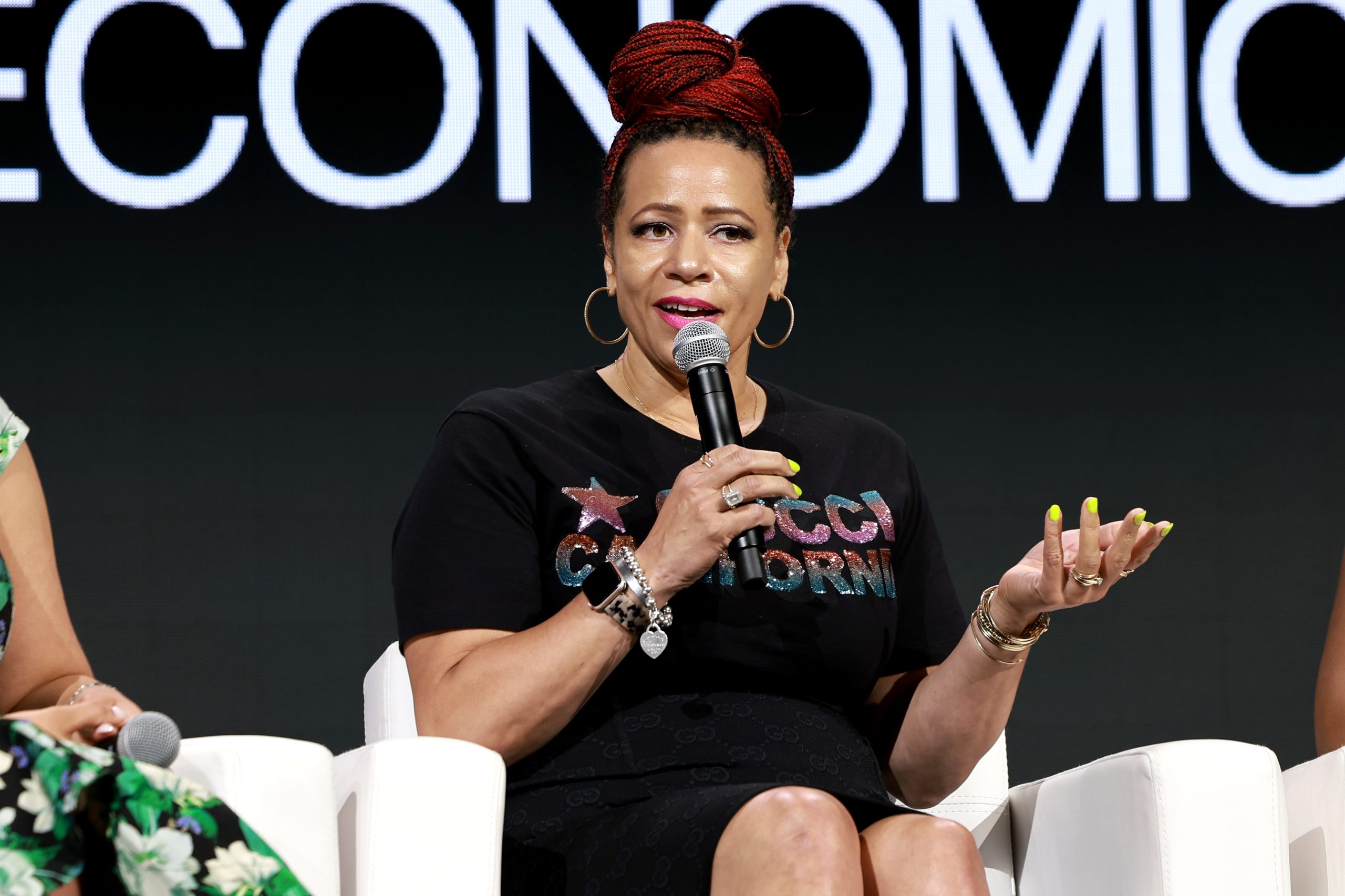
Given Nikole Hannah-Jones’s status as a celebrity big-foot at the New York Times—winner of the 2020 Pulitzer Prize for her “1619 Project,” winner of a $625,000 MacArthur Foundation “genius” grant, occupant of the Knight Chair in Race and Journalism at Howard University backed by “nearly $20 million” from the Knight Foundation, the John D. and Catherine T. MacArthur Foundation, and the Ford Foundation—you might think that if she discovered a woman wrongfully convicted of murder, she’d marshal the investigative resources necessary to make a thorough case for a presidential pardon, or for legal action to dismiss or overturn the conviction.
Instead of doing that hard work, Hannah-Jones—in her first New York Times byline since September 28 (she appeared on a Times podcast in October)—is out with a brief obituary of the woman who went by the names JoAnne Deborah Byron, Assata Shakur, and Joanne Chesimard.
Hannah-Jones doesn’t come straight out and assert that her subject was innocent, yet she certainly leaves readers with plenty of doubt. She writes, “In 1977, an all-white jury found her guilty of murdering a New Jersey state trooper who died in a shootout after a car that Shakur and her colleagues were riding in was stopped by the police. Officers later claimed Shakur fired the first shot. Shakur, who was shot twice, said her hands were in the air and she didn’t shoot anyone.”
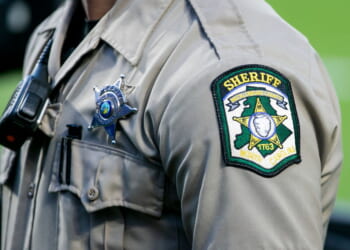
The Times tells you the name of the murderer (and, later, the name of her child) but doesn’t mention the name of the murdered state trooper. He was Werner Foerster, 34, a U.S. Army Vietnam veteran who had a wife, Rosa Charlotte Heider Foerster, and a son, Eric, and a vegetable garden.
The Times tells you that the jury was “all white” but it doesn’t tell you the race of the person who was president in 2013 when the U.S government added Joanne Chesimard to the list of most wanted terrorists. That was President Barack Obama. The Times doesn’t tell you the name of the FBI special agent in charge in Newark who put Chesimard on that list. He is Aaron Ford, who was quoted in a 2013 press release saying, “Joanne Chesimard is a domestic terrorist who murdered a law enforcement officer execution-style.” If the Times is going to say the race of the people in the law enforcement system or the government is relevant, it seems like a double standard to mention the jurors but not the president or the FBI official.
Clyde Haberman’s September 2025 obituary of the same person for the Times is far better journalism than Nikole Hannah-Jones’s attempt, three months later, at the same job. One wonders how many different obituaries of this woman Times readers need, or why bother publishing a worse one three months after a perfectly adequate one? Haberman included not only the name of the murdered trooper but the name of another, James Harper, who was wounded. Other highlights from Haberman’s account that are absent from Hannah-Jones’s: Chesimard’s 1987 autobiography referred to the police as “pigs.” And “she became a Muslim named Assata Olugbala Shakur (Assata derived from an Arabic name meaning ‘she who struggles,’ Olugbala from a Yoruba word for ‘savior’ and Shakur from the Arabic ‘thankful one’).”
Hannah-Jones’s depiction of Chesimard as having “died free” in Cuba, and of her having “been hidden in the United States for several years by a sort of Underground Railroad before being smuggled into Cuba and granted asylum as a political prisoner” is in keeping with earlier Hannah-Jones work praising the communist dictatorship.
In 2008, Hannah-Jones published a piece in the Portland Oregonian describing what she called “a Cuba you may not know. A Cuba with a 99.8 percent literacy rate, the lowest HIV infection rate in the Western Hemisphere, free college and health care.” She wrote of “what Cuba has accomplished, through socialism and despite poverty, that the United States hasn’t.” She wrote, “We could see that Cuba is not the great evil we are led to believe.”
That piece says it was reported as part of travel to Cuba “with six journalists, documenting the experiences of the African diaspora in the Western Hemisphere for the Institute for Advanced Journalism Studies in North Carolina.” The institute described the trip as “Funded by the Bill and Melinda Gates Foundation,” and Gates did make a $254,500 grant in 2008 to that Institute for what it described as “Global Health and Development Awareness and Analysis.”
Also included in the New York Times Magazine “the lives they lived” package is a piece by Times editor at large Matthew Purdy on former Times executive editor Max Frankel, “who encouraged this magazine to publish an end-of-year issue on notable deaths.”
Purdy writes, “On Jan. 1, 1995, Lives Well Lived appeared in The New York Times Magazine, with send-offs for such disparate luminaries as Ralph Ellison and Roy J. Plunkett, who discovered Teflon. For the second issue, the name was tweaked to The Lives They Lived, perhaps to accommodate fascinating scoundrels.”
Purdy probably means the scoundrels as subjects, not authors. Given the situation, his observation is apt.