raining matters when there’s no time to think—a sentence as true 17 years ago, on a Thursday, when we witnessed that moment in the Hudson River in New York.”
The Ordinary Flight That Wasn’t
On January 15, 2009, US Airways Flight 1549 left LaGuardia Airport on its way to Charlotte. Captain Chesley “Sully” Sullenberger piloted the Airbus A320, while First Officer Jeffrey Skiles handled cockpit duties next to him.
It was a routine takeoff and climb, that is, until reality hit.
Just after takeoff, a flock of Canada geese entered the equation, and both engines consumed birds, causing power to immediately fail and the jet to lose thrust at low altitude over one of the country’s crowded cities.
Seconds, Not Minutes
If you’ve seen the movie Sully, you know how things rapidly fell downhill.
With both engines and power fading, Sully and Skiles faced a decision measured in seconds: Returning to LaGuardia risked falling short, while diverting to Teterboro held the same risk. Meanwhile, airspeed dropped while altitude bled away.
Sully considered landing on the Hudson River, assessing glide distance, water conditions, and river traffic.
He opted for the river.
Sully’s choice demanded confidence that he earned through decades of experience.
The Landing Everyone Remembers
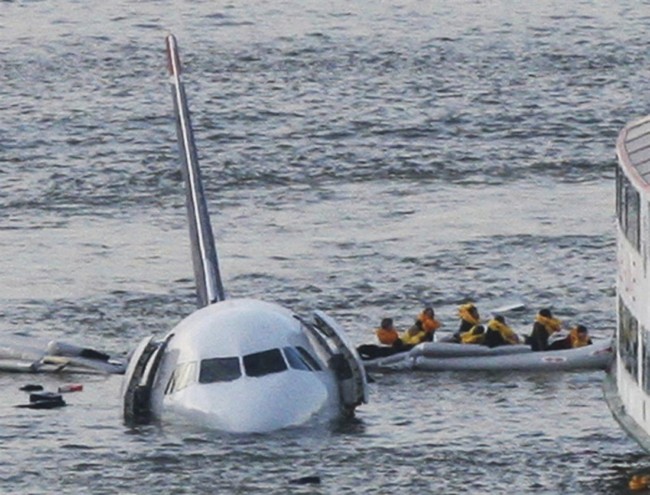
The plane touched down on the river with remarkable control, as Sully held the nose level, and Skiles managed checklists. The cabin crew was trained for situations like this—well, not exactly like this—and followed evacuation procedures precisely.
All 155 passengers and crew survived.
We remember the story: boats arrived within minutes, ferries diverted, and first responders executed rescues without causing panic.
For one shining afternoon, the city moved as a single organism, focused and calm.
What Investigators Found
The National Transportation Safety Board examined every decision, data point, and simulation. Early computer models suggested it might be possible to return to LaGuardia. Computer models are one thing, human reaction told a different story.
The NTSB’s investigation concluded that Sully made the right call given real-world conditions, citing that training, judgment, and composure made a difference over theoretical models.
It’s a finding that reinforced the value of pilot discretion when automation met its limits.
What Changed Afterward
The “Miracle on the Hudson” reshaped how aviation thought, raising awareness of bird strikes. Engine certification testing included scenarios such as large-bird ingestion. Pilot training emphasized energy management and decision-making under extreme stress situations.
The FAA revised its guidance to clearly recognize human factors during emergency evaluations, and simulators used more realistic time delays to reflect the reality pilots face in the cockpit, rather than assuming an instant response.
Aviation education leaned heavily on pilots’ judgment, not just on procedure.
Life After the River
Sully didn’t fade into the background; public scrutiny followed him, and some questioned his decisions, while others praised his restraint and leadership. Later that year, he retired from commercial flying.
Skiles kept flying and carried that experience as a teaching experience, not a trophy.
Neither pilot chased spectacle; both emphasized preparation, teamwork, and humility.
Why the Lesson Endures
Every moment, technology quickly advances, and automation continues to grow smarter. Machines still fail without warning, and when they do, human judgment steps forward, or expect disaster.
The Miracle on the Hudson endures because it proves training isn’t theoretical; it’s insurance against chaos.
Final Thoughts
Seventeen years after the Hudson River landing, the lesson is simple: preparation saves lives when seconds decide everything.
Profound moments deserve serious reflection. Support analysis that values skill, restraint, and hard-earned wisdom by joining PJ Media VIP.