As smoke lies over Minab, Iran, a girls’ school lies shattered; bodies line the pavement. Before the dust settles, familiar voices declare guilt: America and Israel did it. Case closed.
The Shajareh Tayyebeh girls’ elementary school in Minab was hit by a direct strike during ongoing military exchanges. Iranian officials announced a rising death toll, with numbers climbing past 140 and up to 165 lives lost. Health ministry figures quickly spread across global platforms. Tehran blamed joint U.S. and Israeli operations within hours.
Almost immediately, questions began surfacing. The school sits roughly 600 meters from an Islamic Revolutionary Guard Corps facility, which houses missile infrastructure and serves as a launch point for regional strikes.
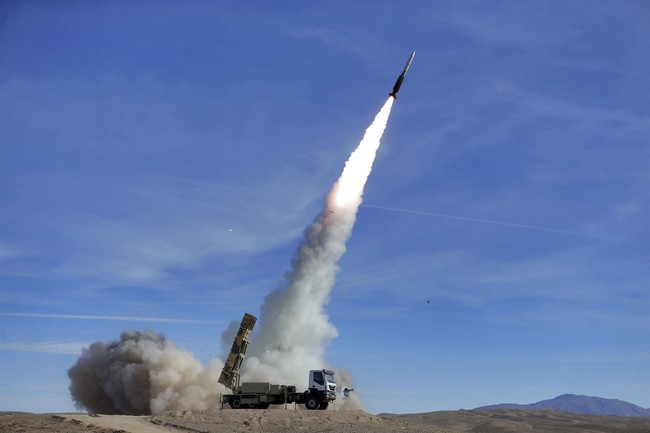
Iranian forces have fired repeated salvos toward Gulf targets, and missile debris recovered near the blast site reportedly contained Persian markings consistent with domestic manufacturing. Video circulating online shows at least one Iranian missile losing trajectory shortly after launch.
این یه نمونه از پرتابههای منحرف شده خودشون. https://t.co/qJUveGkEKg pic.twitter.com/OnZVM3xxY2
— Mehdi (@Mehdi70501002) March 2, 2026
Despite the uncertainty, outrage moved at light speed. The United Nations posted statements condemning attacks on children, with a social media post displaying stacked body bags presented as victims from the Minab school strike.
🤡 The UN is a joke.
This UN official was attempting to malign Israel and the U.S. (when in reality, it is the Iranian regime that targets schools and hospitals), BUT USED A PICTURE OF DOZENS OF IRANIANS SLAUGHTERED BY THE ISLAMIST TERROR REGIME.
Will @_VanessaFrazier speak… pic.twitter.com/PyFxUeQgCj
— Israel War Room (@IsraelWarRoom) March 2, 2026
The problem?
The image matched photos previously linked to Iranian crackdowns on protesters, when regime security forces shot demonstrators, including teenagers, at close range. Those deaths formed part of Iran’s own suppression campaigns.
As if we couldn’t hate the UN anymore.
Vanessa Frazier, serving as the United Nations representative for Children and Armed Conflict, amplified condemnation language demanding accountability. Calls for a ceasefire echoed across diplomatic channels, where moral language arrived before forensic clarity.
Domestic outlets mirrored Tehran’s narrative within hours. Headlines cited Iranian health officials as primary sources, while anchors repeated casualty totals without confirmed independent verification. Some commentators framed the tragedy as evidence of reckless Western escalation, but one online publication went even further, arguing that regime change equates to “blowing up a school full of children.”
PolitiFact addressed online claims that Iran admitted responsibility for the strike and labeled those claims false: Tehran’s government hasn’t accepted blame, which is what officials continue claiming.
PolitiFact found no official statements, state media reports, or news stories that said Iran’s government took responsibility for the attack.
U.S. Central Command did not respond to PolitiFact’s request for comment, but provided a statement to The New York Times: “We are aware of reports concerning civilian harm resulting from ongoing military operations. We take these reports seriously and are looking into them.”
We rate claims that the Iranian regime confessed that the Islamic Revolutionary Guard Corps bombed an Iranian school False.
History offers a cautionary parallel. In October 2023, the Al-Ahli Arab Hospital blast in Gaza sparked global condemnation of Israel within minutes. Subsequent analysis pointed to a Palestinian Islamic Jihad rocket malfunction. Early claims shaped headlines long before evidence stabilized.
The pattern repeats: first accuse, investigate later.
U.S. Secretary of War Pete Hegseth has outlined operational objectives focused on degrading Iranian missile capacity, naval assets, and nuclear infrastructure. Public statements have emphasized precision targeting. Israeli defense officials likewise describe strikes aimed at command nodes and weapons systems. Neither government announced operations targeting civilian schools in Minab.
Meanwhile, radical advocacy groups inside the U.S. issued statements condemning military action against Tehran, as several described strikes as appalling aggression. Iranian state media highlighted those reactions as proof of global outrage. The recently murdered Iranian protesters couldn’t be reached for comment.
Narrative alignment benefits Tehran far more than Washington.
I consider myself a Jedi master of sarcasm, but I feel inadequate here. A missile launches from Iranian soil, veers off course, devastates a nearby school, and somehow Washington writes the script. United Nations officials share images later revealed to originate from separate crackdowns. Domestic commentators lean on a single government source that operates one of the world’s most controlled media environments.
Anger grows not merely from tragedy but from reflex. Facts struggle to breathe when ideology grabs the microphone. Credibility weakens when institutions repeat claims from a regime known for crushing dissent at home. Tens of thousands died during Iran’s protest crackdowns. Snipers aimed at faces, prison cells were filled, yet international voices fell silent.
Now a school lies in ruins, children are dead, and responsibility deserves clarity grounded in evidence, not political preference. If an Iranian missile misfired, accountability rests in Tehran. If contrary evidence emerges, that evidence should stand.
Moral outrage holds weight only when evenly applied; grief becomes nothing more than a simple prop. The rush to condemn before confirming doesn’t honor victims; it serves narratives. And Tehran understands narrative warfare as well as any regime on the planet.
When the smoke finally clears in Minab, the truth should stand on verified ground. Until then, speed can’t ever outrun scrutiny.
Right now, join PJ Media VIP at a major discount using promo code FIGHT to get 60% off and unlock exclusive articles, podcasts, and community features by subscribing.