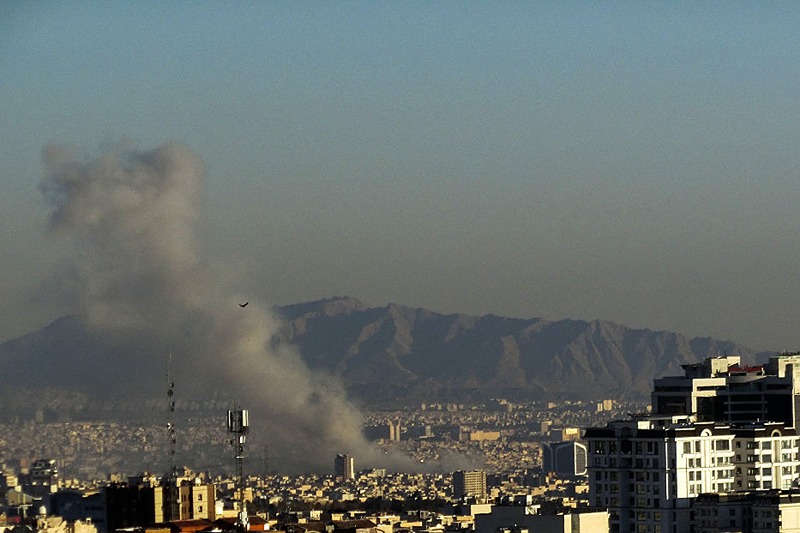
Plumes of smoke rise following reported explosions in Tehran on March 3, 2026, after Iran’s Supreme Leader Ayatollah Ali Khamenei was killed in joint U.S. and Israeli strikes on February 28, sparking a new wave of retaliatory missile strikes from Iran across the region. (Photo by Negar / Middle East Images / AFP via Getty Images)
OAN Staff Addie Davis 1:58 PM – Tuesday, March 3, 2026
The Iranian ambassador to the International Atomic Energy Agency (IAEA), Reza Najafi, told reporters on Monday that the Natanz nuclear site in Iran was struck during U.S. and Israeli attacks.
“Again they attacked Iran’s peaceful safeguarded nuclear facilities yesterday. Their justification that Iran wants to develop nuclear weapons is simply a big lie,” Najafi said to reporters at the IAEA headquarters, the the Associated Press reported.
When asked which facility nuclear he was referring to, Najafi replied, “Natanz.”
In an X post on Tuesday, the IAEA confirmed there was damage to the site.
“Based on the latest available satellite imagery, IAEA can now confirm some recent damage to entrance buildings of Iran’s underground Natanz Fuel Enrichment Plant (FEP).”
“No radiological consequence expected and no additional impact detected at FEP itself, which was severely damaged in the June conflict,” the agency continued.
Based on the latest available satellite imagery, IAEA can now confirm some recent damage to entrance buildings of Iran’s underground Natanz Fuel Enrichment Plant (FEP). No radiological consequence expected and no additional impact detected at FEP itself, which was severely… pic.twitter.com/7CS7BRZo1s
— IAEA – International Atomic Energy Agency ⚛️ (@iaeaorg) March 3, 2026
This is was an update to a prepared statement given by IAEA Director General Rafael Grossi to the Special Session of the Board of Governors on Monday, claiming there was no indication that nuclear installations had been hit.
A mix of above-ground and below-ground laboratories, the Natanz site did the majority of Iran uranium enrichment, and some of the material was presumed to have been onsite when the facility was attacked in June, according to AP.
The IAEA had said previously Iran had enriched uranium up to 60%, which is a small step away from the weapons-grade levels of 90%, the outlet explained.
Uranium above 20% purity is considered highly enriched, while most commercial reactors use low-enriched uranium below 5% as fuel, according to 2023 an article by the IAEA.
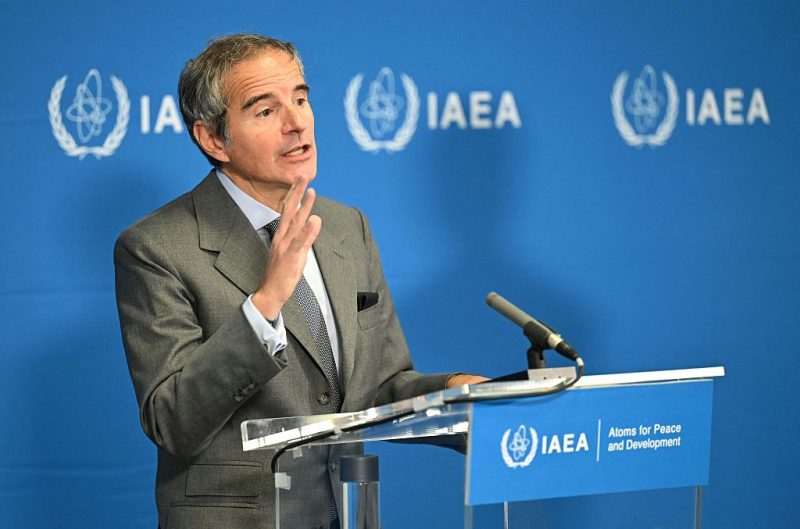
Director General of the International Atomic Energy Agency (IAEA) Rafael Grossi gestures as he speaks to journalists during his press conference after the special meeting on Iran, initiated by Russia, during the IAEA’s Board of Governors meeting at the agency’s headquarters in Vienna, Austria on March 2, 2026. (Photo by HELMUT FOHRINGER / APA / AFP via Getty Images)
On Monday, Grossi revealed the agency was trying to get in contact with the Iranian nuclear regulatory authorities through the IAEA’s Incident and Emergency Centre, but was unable to receive a response.
Noting several countries in the region who use nuclear applications were attacked in the past few days, Grossi asserted there was so far no elevation of radiation levels in the countries bordering Iran. However, he warned of potential consequences of the conflict.
“Armed attacks on nuclear facilities should never take place as they could result in radioactive releases with grave consequences,” he stated.
“We cannot rule out the risk of a radiological consequence, even one that could require evacuations of large areas,” he added.
Grossi said Iran did not provide reports or access to the affected facilities, and associated nuclear material, following the U.S.-Israel June 2025 strikes.
Stay informed! Receive breaking news alerts directly to your inbox for free. Subscribe here. https://www.oann.com/alerts
What do YOU think? Click here to jump to the comments!