The midterm election primary season kicked off in Texas, North Carolina, and Arkansas on March 3. Most of the attention was on the Lone Star State, where Democrats hope to flip a Senate seat in November. The results would have put more smiles than frowns on the faces of President Donald Trump’s MAGA base as a couple of its most notable antagonists – one Democrat and one Republican – saw their immediate future political plans dashed.
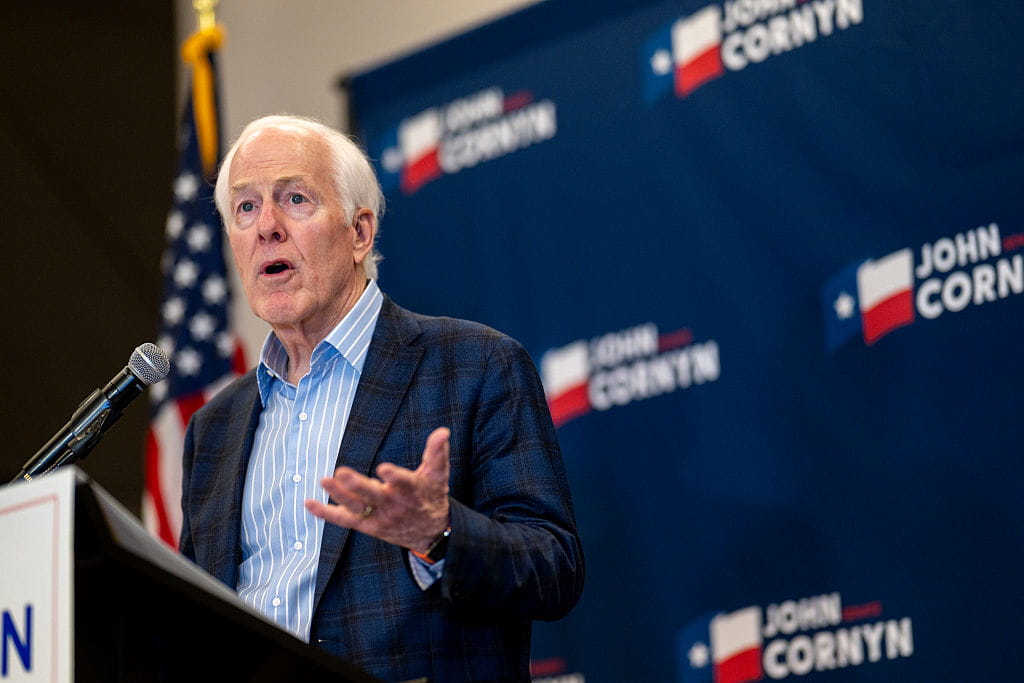
Most eyes were on John Cornyn, the four-term Republican senator who is seen by both parties as a weak link, of sorts. While Democrats could be perhaps a little overoptimistic about their chances of taking Cornyn’s seat in November, it is probably one of their better opportunities.
Cornyn, though he edged out Texas Attorney General Ken Paxton 41.8%-40.8%, did not get enough votes to avoid having to face Paxton again in a runoff.
Primaries Claim Two Scalps for Trump
Rep. Jasmine Crockett (D-TX) had hoped to position herself as the Democrat who flipped Cornyn’s seat. However, the Republican incumbent – if he can hold off Paxton’s challenge – will face Democrat James Talarico in November after the latter defeated Crockett 52.9%-45.7%. The loud and sometimes foul-mouthed Crockett, one of Trump’s most vocal detractors, has now essentially been redistricted out of her House seat, and this primary was her best chance of remaining on Capitol Hill, come January of 2027.
Incumbent Governor Greg Abbott handily won his primary. He will be challenged by Democrat Gina Hinojosa, who also stormed to victory in her party’s race for the mansion.
In the US House primaries for Texas, all the incumbents, both Republican and Democrat, triumphed in their respective races – with one exception. Dan Crenshaw (R), who currently represents the state’s 2nd Congressional District, lost by a significant margin to State Representative Steve Toth. A former Navy SEAL, Crenshaw, once he got into the House, quickly came to be perceived by many conservatives as a RINO (Republican in Name Only) as he cleaved to the establishment and became ever more critical of Trump.
Crenshaw now seems destined to join the Liz Cheney-Adam Kinzinger Club for Democratic Republicans Against Trump. No GOPers who take a firm stand against the 45th and 47th president survive long in Washington – which is a testimony to how complete Trump’s takeover of the party really was.
The Trump Endorsement Game
In North Carolina, former Gov. Roy Cooper (D) and former Republican National Committee Chair Michael Whatley both easily won their primaries and will face off in November for an open Senate seat.
The New York Times kept tabs on how President Trump’s endorsements made out in the primaries – because why wouldn’t it? As of 11:46 pm ET, with six races still uncalled across the three primary states, Trump was close to a 100% success rate. The Times records him as having endorsed 35 incumbents and 11 challengers. It’s fair to note that 16 of the 35 were running unopposed.
Everyone – except one – of the endorsed had either already won or were winning, most by comfortable margins. The single exception was Carlos De La Cruz, who was running for the newly redrawn 35th Congressional District in Texas. John Lujan came out on top in that Republican primary but has not avoided a runoff matchup with De La Cruz.
Very often, divining outcomes of congressional elections from primary results is a haphazard business too easily tainted by how the diviner hopes things will turn out. Primaries are about to come in thick and fast, but this year’s midterm elections may be far less easy to predict than any midterms in living memory.