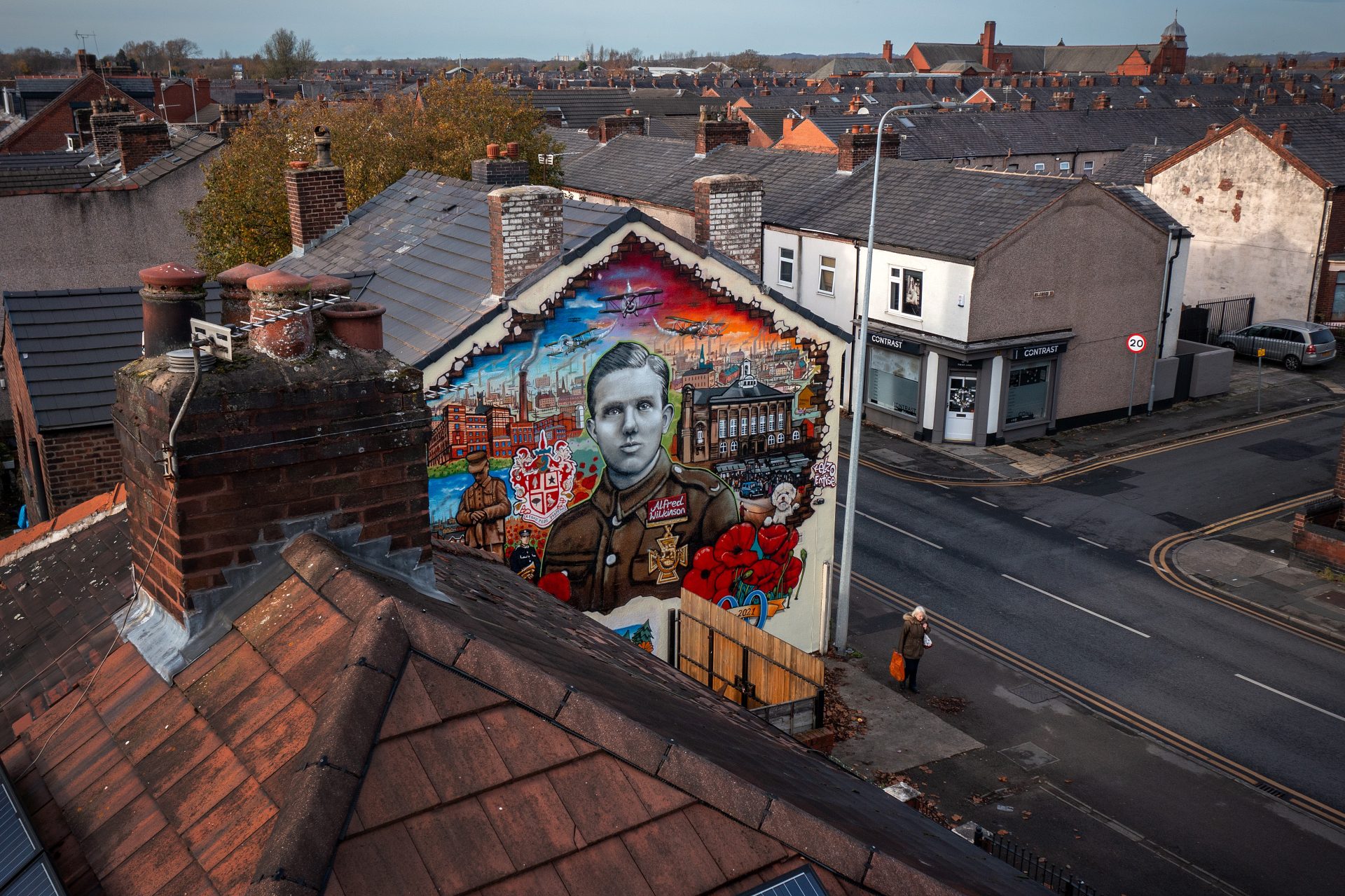
Walk down Bolton House Road, past a row of terraced houses on one side and an empty field on the other, past the rusting lorry trailers and the abandoned scrap metal and the thick black mud, and soon the mound will begin to rise before you. At its peak, it reaches 20 meters into the air. If you were to take it apart and pack it into sacks and carry it away, you’d have moved 25,000 tons of waste. But to do that would cost £4.5 million, so no one has.
Access to the mound was previously uncontrolled, which is how someone — most likely organized criminals — managed to dump so much crud here in the first place, on the outskirts of the village of Bickershaw. Now, it squats behind a thin wire fence. A sign put up by Wigan Council states that unauthorized access is a criminal offense. It reads: “Children must not play on this site”.
Bickershaw skirts the edge of Makerfield, one of the safest Labour constituencies in the country. It therefore falls to Josh Simons, who has represented the seat since the last election, to make entreaties on the villagers’ behalf. He is a wiry, cerebral young man who, before the age of 30, had joined and then left Jeremy Corbyn’s office over antisemitism, enjoyed an academic career at Cambridge and Harvard, and written a book on democracy in the age of AI.
But Simons has now been overtaken by a scandal of his own. It features a think tank he used to run, some donations from very wealthy people, a consultancy firm, a Sunday Times investigation. It is very Westminster. On Saturday, as Israel and the US started bombing Iran, he slipped out a statement resigning as a Cabinet Office minister.
Back in Bickershaw, locals — one of whom described the area a “black hole” — seem more worried about the mound. Daunted by the cost, no one wants to take responsibility. Not the King, who came to own part of the land on which the waste sits by accident and feudal right; nor Wigan Council, who have no money; nor the Environment Agency, who have no power. Residents are left furious that the latter is cleaning up an illegal dump in Oxfordshire, but not the one on their doorstep. Campaigning vigorously for May’s council polls, Reform UK, who came second in Makerfield at the last general election, sense blood.
When I visit Bolton House Road in the week leading up to Simons’ resignation, there isn’t much of a smell. This is not unusual, according to Chloe Humphreys, a blonde 29-year-old who lives in a neat, whitewashed house at the end of the street — closer than anyone else to the mound. The stench depends on the direction of the wind and how warm the weather has been. When it is bad, though, it smells as if Chloe is living with her head stuck inside a bin.
As we stand in her porch, she points out the broken fence across the road and abandoned trailers and dumped scrap metal beyond. “People are really nice around here but if you look back on Google Maps in 2011 people had pride, they made an effort,” she says. “Now it’s a state.” They may not have realized it themselves, but whoever dumped the waste was exploiting an area that was already on the decline, like a virus taking advantage of a body wracked by disease. “You kind of feel a bit like, ‘what’s the point? No one else cares’,” Humphreys says. For residents to do up their houses would be like, “chucking glitter at feces, really.”
When Chloe’s father, Andrew Humphreys, steps into the porch I ask his opinion of Simons. “I think he thinks everyone up North is stupid,” he says. “And if he thinks the person he’s talking to knows what he’s talking about he tries to shut him down.” I had only asked about the waste on their doorstep, but Andrew pivots immediately to Simons’ scandal: “To pay £36,000 to investigate two journalists is like…” he trails off, shaking his head.
Across Makerfield, knowledge of the affair seems hazy. Many people I speak to seem to have a sense that he has done something wrong. Fewer can articulate exactly what that is. Counting in his favor is a more pervasive sense that all politicians are screwing us in one way or another. If we know which rules Simons broke, then at least his sin is public.
The seat itself is a patchwork of urban and rural areas spread out below Wigan, in the badlands between Manchester and Liverpool. Flags — Union Jacks in some areas, St George’s Crosses in others — flutter from lampposts. Makerfield has been rock solid Labour for over 100 years now, but no one I meet can muster much enthusiasm for the party. According to an MRP poll published by Electoral Calculus in January, Reform would take Makerfield with over half the vote if a general election were held tomorrow. Simons, who won 45% in 2024, would crash to as low as 19%.
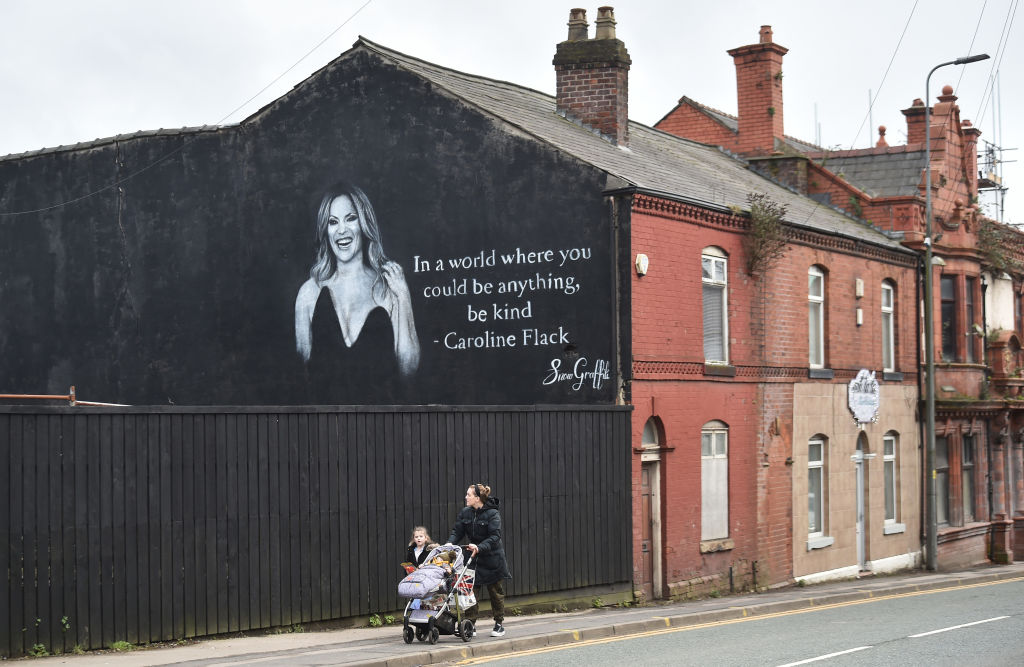
Ashton-in-Makerfield, the constituency’s largest town, is red-brick and handsome, albeit in a faded kind of way. A library endowed by Andrew Carnegie juts out at one central junction, but this great slab of Victorian architecture has been shuttered for years. Ashton Market was closed in 2017. There are “too many nail shops, vape shops, charity shops, kebab shops,” a middle-aged woman in a green apron tells me from behind the counter of a bakery.
She voted Labour because she was brought up supporting them and probably will do so again. “They’re doing a slightly better job.” She trusts Nigel Farage as far as she could throw him. But, she says, migration is a big issue. “People don’t feel safe in their own town any more, especially if they go out on their own at night.”
Personnel antipathy to Farage aside, it is this profile of voter that will make Reform confident they can make inroads here. Makerfield has a lot of working-class residents but is not particularly poor, falling near the middle of English constituencies in terms of deprivation. Demography helps in other ways too: at the last census, Makerfield was 97% white.
Altogether, then, many here vote Labour more from ancestral ties than conviction. Speaking last year at Reform’s North West Conference, Simons’ 2024 rival, Robert Kenyon, told supporters that Labour didn’t care that towns such as his had been transformed by the transplantation of “fighting-age males”. Talking to The Telegraph afterwards, the plumber said that the local Reform machine had “ramped up massively”. Already, he claimed, the party was putting on training workshops and gearing up for a fight.
“Many here vote Labour more from ancestral ties than conviction.”
Simons is well aware of the risk. Writing to ministers before last year’s spending review, he urged them to commit funding to build a road between Bolton and Wigan before the region lost faith that Labour might actually improve their lives. First proposed after the Second World War, Simons called the road link “among the most over-promised and under-delivered” infrastructure projects in the country. Certainly, the road between the two towns is often clogged bumper-to-bumper, slowing driving speeds to a crawl. Locals, Simons said, are “tired of being promised change but seeing little”.
Losing nearby Gorton and Denton in last week’s byelection, Labour saw its vote cannibalized from two directions. While some rejected the party over mass migration, others are turning Leftwards thanks to Gaza and Keir Starmer’s hardening rhetoric on asylum. Shaun Medvid-Staunton, keffiyeh-clad and walking his shitsus through Platt Bridge, a drab suburb running along an A road south of Wigan, is archetypal of the latter camp.
He tells me about how he was the first person to vote for Labour in Chester in 1997. He talks about serving as the in-house photographer for the party’s local branch when Ian McCartney — who described himself as the “Socialist MP for Makerfield” — represented the constituency. But, he says, “I watched the party become gentrified.” He considers Simons to be Blue Labour, not a proper Leftie. He will never vote for the party again.

Unlike in Manchester, there is no ethnic minority vote to speak of here that the Green Party might peel away with Urdu-language campaign videos. At the last election, they lost their deposit. But increasing their support among progressives such as Medvid-Staunton could help to deprive Simons of victory. Several people tell me they’re considering the party simply because they are neither the Conservatives nor Labour. One man, drinking alone in the town’s JD Wetherspoons, says he hopes Starmer will be replaced by Andy Burnham. If he isn’t, he may flip to the Greens.
If some are dumping Labour for more radical options, many others seem exhausted of politics altogether. At a gray pebbledash building, hunched behind a row of terraced houses, I meet Sarah Myler. When, as a small child, her daughter was diagnosed with serious health problems, Myler decided to teach her and her siblings herself. She discovered there was no home parenting group for Wigan — so she set one up. Then she realized how many elderly people in Ashton were lonely and how many others were broke, so she founded a community center. “I think it’s just, you see issues,” she tells me as we sit between rails of second-hand clothes and a pay-what-you-like café. “People moan about it but I’m more like ‘well, how can I fix this?’”
A few years ago, Myler’s eldest daughter, Scarlett, was elected as one of three independent councillors for her ward. She was just 18. “I think people are just so, like, pissed off with the big parties,” her mom says. “So we tried Tories, nope. We’ve tried Labour, nope. It’s just picking between two bad things, really, isn’t it?”
Around Makerfield, the British state has proved unwilling — or incapable — of fixing problems. The illegally dumped waste squats by Bolton House Road; the road to Bolton is unbuilt; the high street keeps declining. A retreat into hyper-local politics and community organizing seems a natural consequence. Myler has been following Rupert Lowe’s independent inquiry into the rape gangs with interest. He, like her, took action after the Government declined to do so. If Myler had her way, she tells me, every political party would be dissolved.
As we speak, a gaggle of elderly locals chat on the other side of the room. I walk over and ask who they might support at the council elections. “They’re all as bad as each other,” says a man in a gray hoody. “At the last elections one man said, ‘I vote Labour’. I said, ‘what’re their policies?’ He said, ‘I don’t know. I vote for them ‘cause my dad does.’” The group all laugh.
Then an older man, blind in one eye, says he can remember canvassing for a Labour candidate in St Helens when he was eight. “There was a gang of us running around singing ‘vote Hartley Shawcross, vote Hartley Shawcross’,” he says. “But I’ll tell you what — he only did one term in St Helens because he got what he wanted.” And then Sylvia Wilkinson, another independent councillor, whose thick gray hair is streaked with white, adds: “They’re all the same!”
But Hartley Shawcross did not do one term and leave because he’d got what he wanted. He served for 13 years. And he was not the same as any other MP: he was Britain’s lead prosecutor at the Nuremberg Trials, filleting members of the Nazi high command with an elegant grace. As attorney general, he ensured Lord Haw-Haw was hanged. Now, he is no more than a punchline. In its traditional home, all Labour representatives have become just as bad as each other. And if they’ve not yet been exposed for some disgrace, as Simons now has, their collective future still looks grim.