OAN Staff Brooke Mallory
5:14 PM – Thursday, March 5, 2026
In a legal standoff between the judiciary and the White House, a federal trade judge has ordered the Trump administration to immediately stop assessing emergency tariffs on millions of imported goods and begin the process of refunding billions of dollars to U.S. importers.
Nonetheless, the Trump administration can appeal, and they have already signaled their intent to do so.
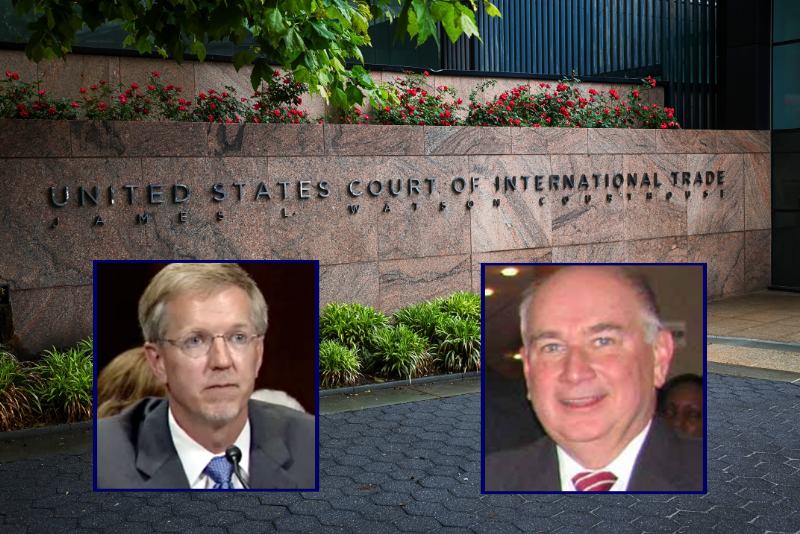
The ruling, issued late on Wednesday by Judge Richard Eaton of the U.S. Court of International Trade (CIT), follows the Supreme Court’s February 20th decision in Learning Resources, Inc. v. Trump.
In a 6–3 decision, the Supreme Court ruled that the administration’s use of the International Emergency Economic Powers Act (IEEPA) to implement broad tariffs exceeded the authority Congress granted under that statute. While the Court did not question the president’s ability to respond to trade imbalances or national economic threats, it held that Congress had not clearly authorized across-the-board tariffs under IEEPA.
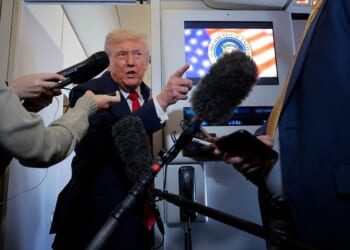
The ruling did not, however, preclude the use of different statutory mechanisms for tariffs. Following the decision, President Trump held a press conference vowing to use these “powerful alternatives” to keep his trade agenda alive.
Meanwhile, Judge Eaton’s order provides the first concrete roadmap for dismantling the “emergency” tariff regime that has dominated U.S. trade policy for the past year. The CIT Chief Judge has designated Eaton as the sole presiding judge for all cases pertaining to IEEPA refunds.
Immediate Cessation
U.S. Customs and Border Protection (CBP) is directed to liquidate all unliquidated entries, goods that have entered the country but haven’t had their final duties finalized, without applying the IEEPA duties.
The order for “Immediate Cessation” serves as a mandatory “kill switch” for the Trump administration’s emergency tariff program by targeting the “liquidation” process, which is the final legal settlement of duties for imported goods. Under Judge Eaton’s March 4th directive, CBP must finalize all currently open entries without applying the 10%–25% IEEPA surcharges previously ruled unconstitutional by the Supreme Court.
By forcing CBP to “reliquidate” entries processed over the last 180 days and stripping the illegal tax from pending files, the court has bypassed the need for millions of individual corporate filings, effectively ordering the government to automate the return of approximately $130 billion to $175 billion in collected duties.
While the administration is expected to file an emergency appeal to stay this order by March 6th, the directive currently prevents the U.S. Treasury from holding onto these “zombie tariffs” and mandates a clear path for corporate refunds with interest.
Automatic Re-liquidation
For goods where the liquidation process has begun but is not yet final, CBP must re-calculate those costs “without regard to the IEEPA duties.”
The directive for “Automatic Re-liquidation” acts as a restorative legal mechanism for importers whose tax “receipts” were finalized just before or immediately after the Supreme Court struck down the IEEPA tariffs on February 20th.
Under U.S. customs law, a “liquidation” becomes final and unchangeable 180 days after it is processed. However, Judge Eaton’s March 4th order mandates that CBP must proactively reopen and recalculate any entries that have reached this stage but are not yet legally “final.”
By ordering CBP to re-process these files “without regard to the IEEPA duties,” the court has shifted the burden of proof from the private sector to the government, effectively requiring the agency to strip away the unconstitutional 10%–25% surcharges and issue refunds automatically.
This prevents a “bureaucratic logjam” by removing the requirement for thousands of businesses to file individual formal protests, though the Trump administration is expected to challenge the scope of this “automatic” mandate in an emergency appeal to the Federal Circuit before the week’s end.
Refunds with Interest
The court confirmed that all “importers of record” who paid these duties are entitled to the benefit of the Supreme Court’s ruling.
The court’s confirmation of “Refunds with Interest” signifies that the federal government’s financial liability extends far beyond the estimated billions in principal duties collected. Under the ruling, all “importers of record” — including both the thousands of companies that filed lawsuits and those that did not — are legally entitled to the “benefit” of the Supreme Court’s Learning Resources decision.
As confirmed in court testimony by CBP Executive Director Brandon Lord, federal law mandates that any refund of excessive duties must include interest calculated from the date of the importer’s initial overpayment.
“Regardless of entry type and liquidation cycle, CBP still requires a review period to ensure no violation of other Customs laws and no other duties, taxes, or fees are owed,” wrote Lord.
This “interest clock” has been running on some entries for nearly a year, potentially adding billions in additional costs to the Treasury and creating a powerful incentive for the Trump administration to seek an emergency stay to stop the outflow of cash while they appeal the ruling to the Federal Circuit.
CBP’s Logistical Nightmare
According to court testimony from Lord, the volume of import entries surged during the tariff period.
- Between February 2025 and February 2026, more than 71.6 million entries were filed.
- As of late 2025, approximately 19.2 million entries remained “unliquidated” and subject to this order.
The government has collected an estimated $130 billion to $160 billion in IEEPA-based tariffs since early 2025. CBP officials previously argued that a mass refund process would be “unprecedented” and might require manual review.
However, Judge Eaton dismissed these concerns during Wednesday’s hearing, stating, “Customs knows how to do this… They liquidate entries and make refunds every day.”
Administration Response
The Trump administration has signaled it will aggressively challenge the order. Government counsel argued in court that refunds should not be automatic and that every individual importer should be required to file a specific claim.
While the administration officially terminated the IEEPA tariffs on February 24th, it has already pivoted to Section 122 of the Trade Act of 1974 to reimpose a 10% “baseline” tariff. Unlike the IEEPA measures, Section 122 tariffs are temporary and expire after 150 days unless Congress intervenes — a move that lawyers for the administration maintain is fully within the law.
What Comes Next
Judge Eaton has scheduled a follow-up conference for Friday where the government must provide initial steps on how it plans to automate the refund process without requiring tens of thousands of individual lawsuits.
Since more than 2,000 individual lawsuits have already been filed and thousands more are expected, the judge is forcing the government to explain why it cannot simply use the existing Automated Commercial Environment (ACE) system to identify and refund the illegal IEEPA duties.
During this closed-door conference, the Department of Justice (DOJ) must present “initial steps” for a streamlined, administrative solution that treats all roughly 300,000 affected importers as a single class, rather than requiring each business to spend thousands of dollars on legal fees to reclaim their share of the debt.
While the administration argues that mass refunds are technologically complex and require individual manual review, Eaton’s Friday deadline appears to signal that the court is prepared to issue a “universal” refund mandate if the government fails to provide a viable plan for automation.
Stay informed! Receive breaking news blasts directly to your inbox for free. Subscribe here. https://www.oann.com/alerts
What do YOU think? Click here to jump to the comments!
Sponsored Content Below