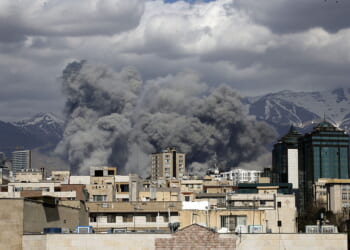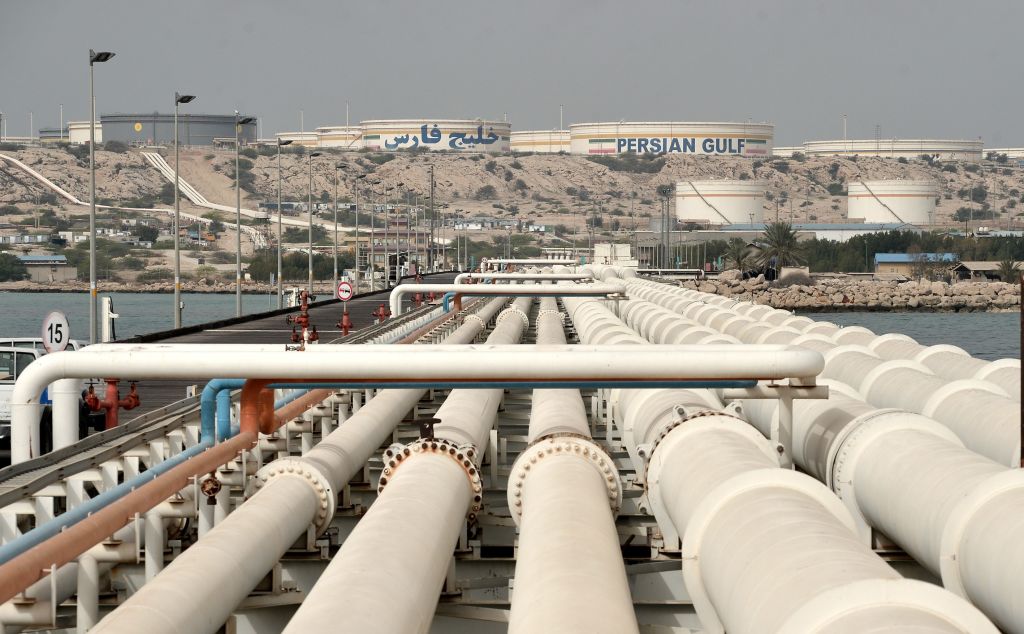
Based on how oil markets were behaving in recent weeks, President Donald Trump’s surprise joint attack on Iran was unsurprising. The attacks in Tehran were marketed as an operation to wipe out the Islamic regime that, like Venezuela, posed a threat to the United States. Akin to what unfolded in Caracas, this was also a means of preserving and protecting the petrodollar.
In the Petrodollar We Trust
Recent history is littered with examples of countries enduring the consequences for confronting the petrodollar, from Iraq to Libya. The latest examples might be Venezuela and Iran. When will rogue states learn to stop worrying and love the petrodollar?
A quick history lesson is in order. When President Richard Nixon severed the dollar’s link to gold, Washington needed a new foundation for the currency’s international role. The solution emerged in the 1970s, when the White House brokered a quiet but momentous deal with Saudi Arabia: The kingdom would sell its oil exclusively in dollars, and the United States would guarantee its security. Riyadh’s vast earnings would then cycle back into US financial markets.
Decades later, the world is still embedded in the dollar hegemony. And, based on geopolitical events of the 21st century, there is no going back to this era.
Iran, Venezuela, and China
For years, Iranian leaders have joined the anti-dollar crusade, urging other countries to settle bilateral trade in local currencies instead of the greenback. Since the early 2000s, Iran has desperately tried to peddle its product in euros, yuan, and other alternative currencies.

This past fall, the country reaffirmed its commitment to dedollarization, with Iran’s President Masoud Pezeshkian urging allies at the Shanghai Cooperation Organization to dump the dollar. Likewise, Venezuela, under Nicolas Maduro, had been vocal about ditching the greenback in the months leading up to his toppling.
These requests may have sparked interest a few years ago. However, since President Donald Trump took notice of anti-dollar efforts and threatened sweeping tariffs on countries engaged in these actions, the initiative has been all but abandoned by US adversaries.
Still, the petrodollar neither forgives nor forgets, and it never takes any chances as it aims to maintain its hegemony in global markets.
China, alongside Russia, has been a champion of dedollarization over the last two decades. Never letting a crisis go to waste, Beijing has been one of the largest oil customers for both Iran and Venezuela, effectively taking advantage of discounted and sanctioned petroleum products. The business arrangement has been in effect with Russia, as the Chinese leadership had purchased Urals at a lower cost, giving it a sizable advantage.
Caracas had exported approximately 450,000 barrels of oil per day, while Tehran shipped between 1 and 2 million barrels a day (half of what it produced). Put simply, 90% of Iran’s crude exports were directed to China, and 70% of Venezuela’s oil shipments were transported to Beijing. Half of Russian oil is sent to China.
It has not yet been verified whether these transactions were settled in Chinese yuan, Iranian rial, or Venezuelan bolivar. Some have speculated that these were non-dollar-denominated settlements since Venezuela and Iran were restricted from the SWIFT banking system.
Whatever the case, China is now short as much as 2.5 million barrels per day, accounting for 15% of its daily consumption. It is no secret that the world’s second-largest economy has been struggling amid a barrage of challenges, ranging from anemic consumer demand to slowing manufacturing activity and the persistent real estate crisis. This is another hurdle to overcome.
The Dollar Never Dies
Is the dollar as good as gold? Despite rumors of its demise, it remains the world’s reserve currency, and investors can never ditch the good old buck. When Wall Street returned from the weekend bombing of Iran, what was one of the chief assets traders bought? The greenback. The US Dollar Index, a measure of the buck against a weighted basket of currencies, rose about 1%.
The petrodollar is like the coquettish mistress portrayed in crime noir novels and movies: beautiful, smart, and dangerous. If she is double-crossed, she will seek vengeance.