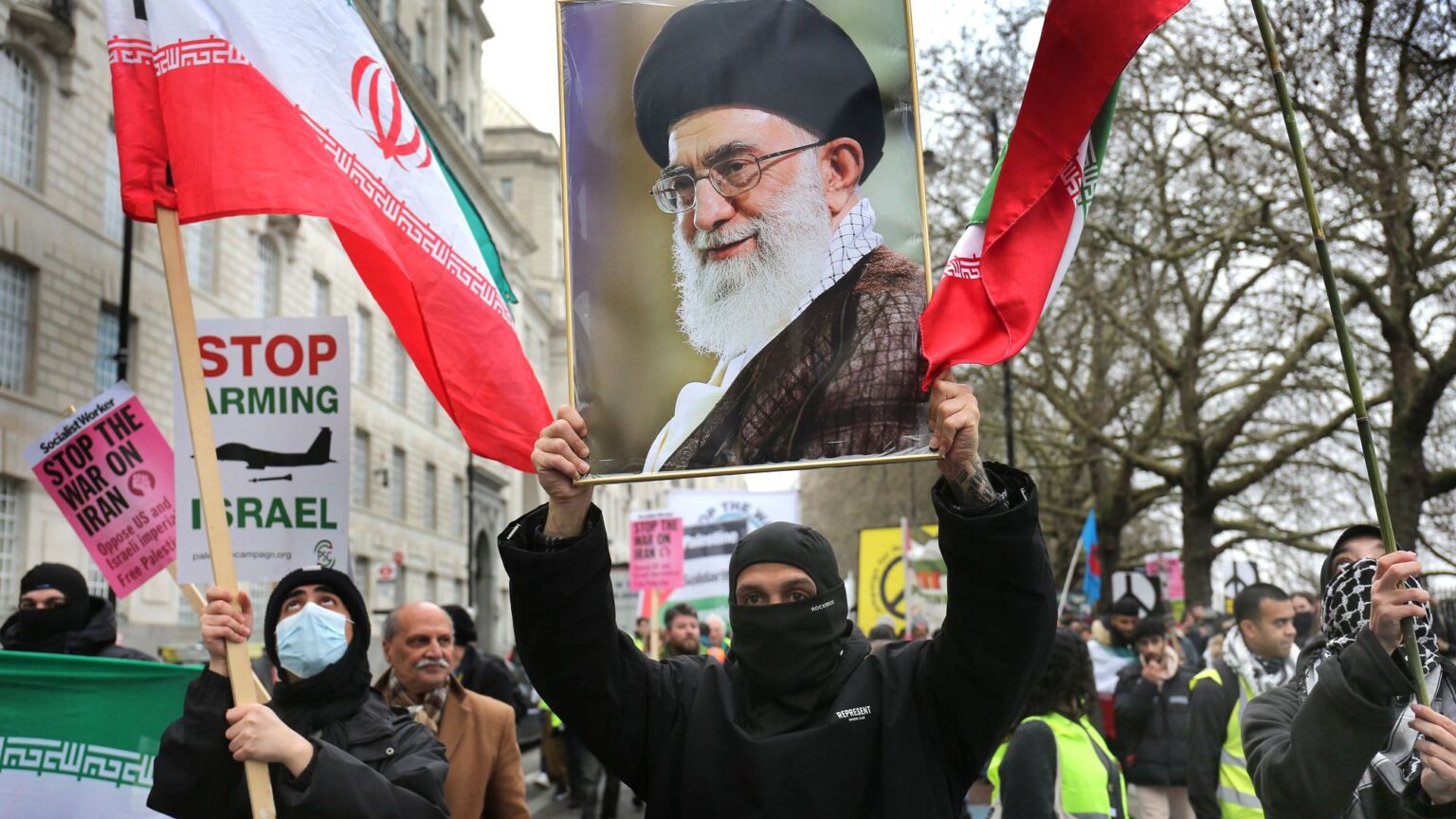
We now know that students mourned the killing of Iran’s supreme leader, Ali Khamenei, at a total of 27 British universities. Ahlul-Bayt Islamic societies, student groups affiliated with Iran’s Shia muslims, shared social-media posts expressing sorrow for Khamenei’s ‘martyrdom’, with some going further and organising commemorative events or directing members to join vigils.
In response, education secretary Bridget Phillipson has announced a crackdown on extremism in higher education. English universities that allow the promotion of terrorism on campus, or give a platform to speakers who engage in illegal activity, she warned, may face sanctions and even closure. Announcing the government’s new strategy, Phillipson said: ‘Free speech is a core pillar of our society and our universities, but we must also be clear about where the line is drawn. There must be no place for hate crimes, intimidation or attempts to draw students into terrorism.’
Although it is shocking to see students at British universities grieving for a regime that brutally murders its citizens, it is not obvious what Phillipson’s statement is intended to achieve. Universities already have a legal duty to comply with Prevent, the government’s counter-extremism strategy. Phillipson’s latest crackdown simply reinforces a decade-old requirement.
Not that this requirement has done anything to stop the spread of Islamism on campuses. Indeed, even Muslim-majority countries such as the UAE have declared that they will no longer sponsor students to study in the UK because of fears that they will be radicalised by Islamist groups, such as the Muslim Brotherhood.
In fact, Prevent’s only measurable impact of monitoring ‘extremism’ on campus has been to limit free speech. It has done this by creating a climate where lecturers and students self-censor and avoid discussing Islamist extremism in any context, including the threats it may pose. The 2008 arrest of a student at the University of Nottingham for downloading an al-Qaida training manual as part of research for a dissertation had a chilling effect on academic freedom. The backlash to this wrongful arrest led to growing concern that Prevent is fuelling ‘Islamophobia’. For many working in British universities, this is far more troubling than students demonstrating support for terrorist organisations.
Launching the government’s new strategy, Phillipson said: ‘Universities should be places of rigorous debate and opportunity – but never places where people feel unsafe because of who they are or what they believe.’ Jewish students who have experienced a huge spike in anti-Semitism on campus over the past two years may consider such platitudes to be too little, too late. Meanwhile, the demand that no one should feel unsafe on campus is frequently used to justify restrictions on all kinds of speakers, from gender-critical feminists to the Israeli ambassador to the UK.
A 2023 government-commissioned review of Prevent, conducted by Sir William Shawcross, found that resources were disproportionately focussed on a vaguely defined threat from ‘right-wing extremism’, while ‘not doing enough to counter non-violent Islamist extremism’. This undoubtedly holds true on campus. Staff charged with implementing Prevent policies seem far more comfortable talking about the risks posed by vanishingly small groups of far-right activists than they do the far larger and more real group of Islamist extremists. All too often, it is criticism of Islamism that is restricted, not Islamism itself.
This situation seems unlikely to change any time soon. Despite Phillipson’s rhetoric about the importance of free speech, new measures to challenge the promotion of terrorism have been introduced at the same time as the government finalised its definition of ‘anti-Muslim hatred’. Hatred and discrimination against Muslims are already illegal under the Equality Act of 2010; having an official definition of anti-Muslim hatred creates special protections for just one faith.
Taken together, these new measures mean that universities are being given contradictory instructions: they must protect free speech while clamping down on hate and intimidation. And they must stop Islamist extremism while not allowing expression of anti-Muslim hostility. At a time when many academics are convinced that people have a gender identity that matters more than their sex, that students need protecting from words that wound, and that knowledge itself must be ‘decolonised’, we should not be surprised when universities put more emphasis on protecting Muslim students from offence, than on defending free speech.
Bridget Phillipson’s crackdown on campus extremism is not simply too little, too late. It woefully underestimates the scale of the problem engulfing our universities. We cannot simply ban our way out of the problem of students from supporting Islamist extremist organisations (although institutions should certainly not be offering them financial support). If anything, this will do more harm than good.
If we’re serious about fighting back against Islamist intolerance, and for Western Enlightenment values, we will need more free speech on campus, not less. We need to ensure the rights of students who want to protest against anti-Semitism and in defence of women’s sex-based rights. Rather than making academics and students fearful of expressing ‘anti-Muslim hostility’, Islamist groups mourning the death of Ali Khamanei need to be met with the mockery and derision they deserve.