Chicago also under pressure as Fitch cautions about ‘management ineffectiveness’
A mostly obscure and widely derided sector of the financial industry—bond rating agencies—may be one of the few remaining things with the power to save some of America’s largest cities from destruction by the policies of the far-left mayors who run them.
Moody’s Ratings this week revised its outlook on New York City to “negative” from “stable.”
“The negative outlook reflects the emergence of sizable and persistent projected budget gaps that signal underlying structural imbalance and reduced financial flexibility,” the agency said, noting that if New York City is struggling to balance its budget even in a strong economy, things could worsen “if economic growth slows sharply or an outright downturn materializes.”
“That the city projects large and persistent imbalances under still-favorable economic and revenue conditions highlights the extent of its underlying structural budget challenges,” Moody’s said.
Analysts at S&P Global, another ratings agency, also warned that Mayor Zohran Mamdani’s plans “make it difficult to sustain budgetary balance beyond fiscal years 2026 and 2027,” a Bloomberg report said.
The ratings agencies review the creditworthiness of borrowers. Lower ratings may deter prospective bond investors, or mean that the borrowing costs of the cities increase as bond-buyers demand higher interest rates, or yields, in exchange for increased risk of default. Just like a consumer with a lower credit rating might have to pay higher interest rates on an auto loan or a mortgage, governments also, at least theoretically, have increased costs if they are seen as riskier borrowers.
The ratings agencies are notoriously bad at judging risks and were heavily criticized after the 2008 financial crisis for slapping solid AAA ratings on debt that wound up in default. The agencies are paid by the bond issuers, so their incentives are not to be particularly harsh. They were late to discover the problems in Orange County, California, whose 1994 failure was, when it happened, described as the largest municipal bankruptcy in U.S. history.
Yet for all those limitations, the agencies—and the bond markets they communicate with—at least provide some constraints, a reality check on the impulse of the mayors to spend recklessly without sufficient tax revenue to pay for it.
The New York City comptroller, Mark Levine, called Moody’s decision “a sobering wake-up call.”
“The fact that this is happening at a time of relative health in our local economy is all the more remarkable. The underlying challenge is clear: New York City is currently spending more than it is bringing in,” Levine said.
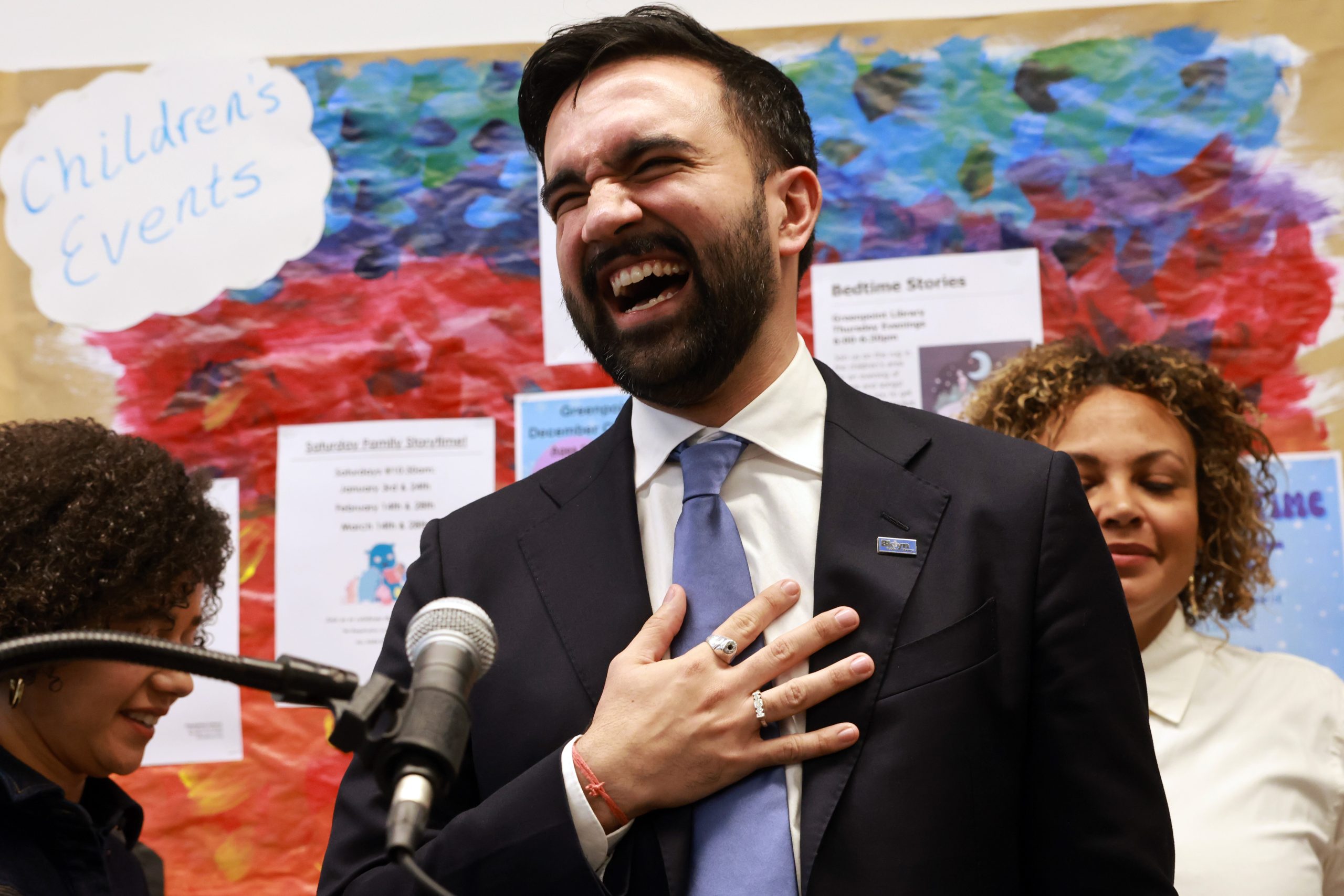
Mamdani, meanwhile, attacked the rating agency. “I think that the decision to revise the outlook, frankly, is premature,” he said at a March 12 press conference. Moody’s stopped short of downgrading the existing, outstanding debt; what changed was the outlook for future issuances.
A similar dynamic is playing out in Chicago, which also has a far-left mayor, Brandon Johnson, and a Democratic governor, J.B. Pritzker, who is a possible 2028 presidential candidate. Fitch Ratings and Kroll Bond Rating Agency both downgraded the City of Chicago’s general obligation bonds in late February.
Fitch said the downgrade “reflects consecutive operating deficits since 2023, the still high dependence on non-structural solutions and assumptions underpinning the adopted 2026 budget, persistent out-year gaps, and ongoing disagreements between the administration and the city council.” It warned that among the factors that could lead to future negative rating actions are “Management ineffectiveness, including late budget adoption, non-credible revenue forecasting, inaction if mid-year gaps materialize or irresolute or excessively contentious fiscal decision-making.”
Kroll said its rating downgrade reflects the City of Chicago’s “deteriorating fund balance, narrowing liquidity, and exceptionally high and rising fixed cost burden.”
Somewhat ironically, the higher tax rates soar in Chicago and New York City, the greater the relative tax advantages are of tax-free—or, in the case of New York City, triple tax free—municipal bond interest. A cynic might suggest that is Mamdani’s plan—to drive New York taxes so high that the only sensible place for anyone left in the city to put any remaining capital is in municipal debt. Instead, people and businesses are likely to head for the “exit” in the exit, voice, and loyalty framework, moving to lower-tax and freer jurisdictions. Census data and individual examples—the Chicago Bears moving to Indiana, Starbucks’s Howard Schultz leaving Washington for Florida, six billionaires and half a trillion in capital leaving California late last year—support that pattern.
Mamdani seems vaguely aware that New York once had a municipal debt crisis for which it desperately sought a federal rescue. On February 6, he posted to social media a photo of himself, President Trump, and the 1975 “Ford to City: Drop Dead” Daily News tabloid front page. It was a ploy aimed at eliciting the president’s financial backing for a development project in Queens. But it was also a reminder of what can happen when a city is mismanaged.