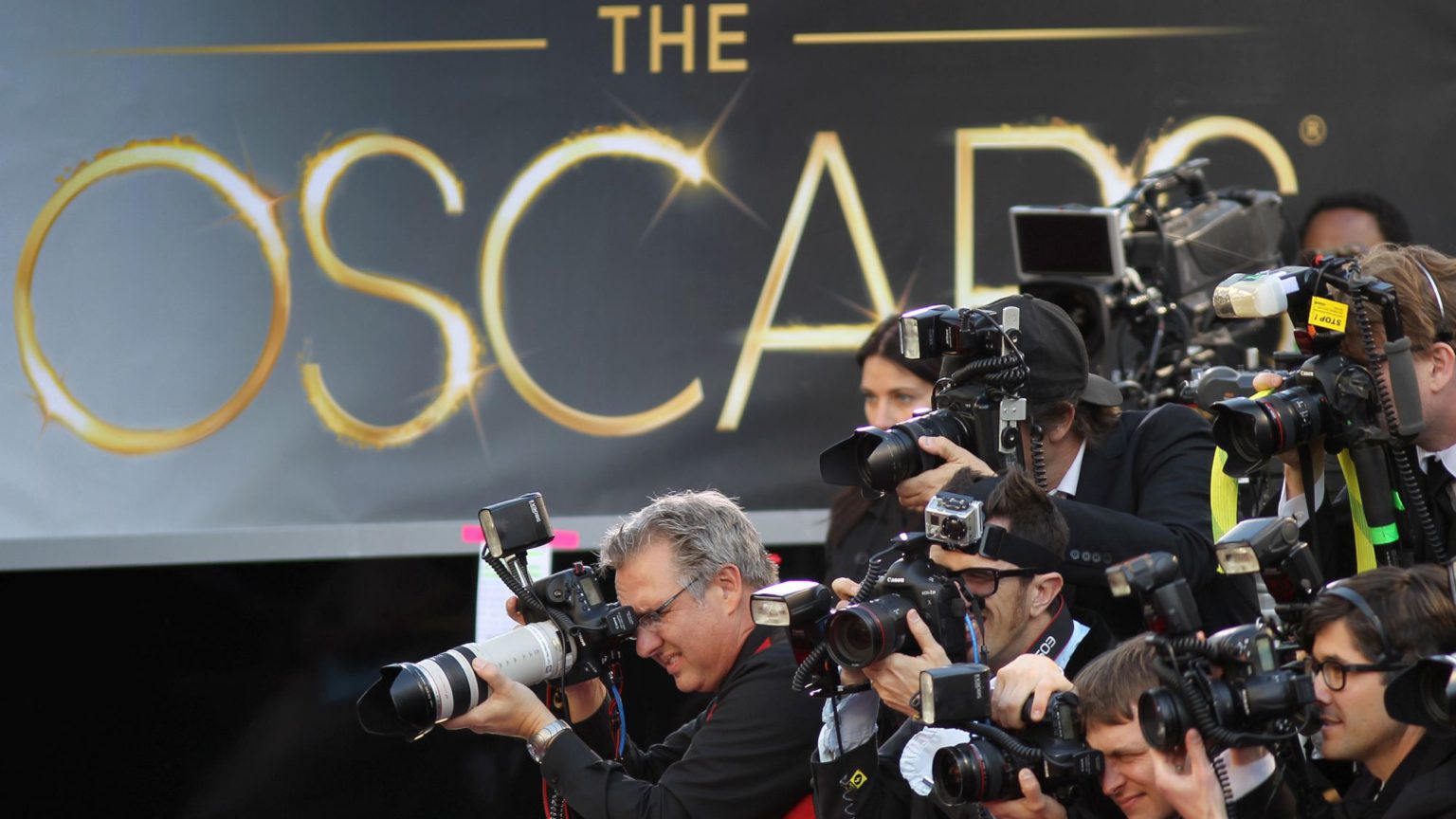
This year’s Oscars feel oddly bloodless. Not because there are no good films in the race, but because the ceremony increasingly resembles a formality. As far as the acting awards go, Michael B Jordan looks like a well-deserved shoo-in for best actor, and Jessie Buckley seems nailed on for best actress. Even more contested categories like Best Picture feel like a foregone conclusion. We all suspect that One Battle After Another is going to sweep up the awards. There is no sense that there is a genuine competition going on here.
Hollywood is definitely on a mission to recover the connection with the public that it has squandered over the past couple of decades. Last year’s broadcast ratings, with a five-year high of 19.69million US viewers, were certainly an improvement on the catastrophic low point of 2021. But this is still nowhere near the old mass-culture era, when the Titanic-era awards show drew more than 57million viewers. Hollywood is being shown that it’s easier to build self-praise than to regain popular interest once it’s dwindled.
That said, the genuinely interesting thing about the 98th Academy Awards is not the old categories but a new one: The Oscar for Achievement in Casting. The language the Academy uses in describing this award is revealing. It refers to casting movies as a ‘creative’ process in which casting directors work with directors and producers on the selection of the acting ensemble. The prize will be a real recognition of the craft. There is a shortlist, a special presentation process and a final field of nominees. In other words, the Academy is formally acknowledging that casting is not clerical work, quotas or DEI compliance – it is an art form.
This really matters, because casting is one of the most crucial decisions in the filmmaking process. It is the moment when an idea becomes a person. A script may do an excellent job of painting a character, but the casting makes that character human on screen, creating their rhythm, their presence, their chemistry with others. One of the first nominees in this new category, Nina Gold (one of the few casting directors who comes close to being a celebrity), puts this beautifully. She says casting gives a film its ‘flesh and blood’, turning the abstract into something ‘living and breathing’.
You can see how this all plays out in Gold’s own work. In last year’s Hamnet, she prioritised the emotional bond between twins Judith and Hamnet over literal resemblance, casting non-siblings rather than insisting on real twins. Paul Mescal was cast as Shakespeare in order to deviate from the idea of ‘Shakespeare the symbol’ and instead find the man underneath – crucially, a man who could generate real chemistry with Jessie Buckley. Moreover, Gold has long argued for risk over safety, saying she would rather back character over conventional beauty, and take a chance on the right presence than recycle the obvious big names. That is what real creative judgement looks like.
But here is the problem: the more visible the realities of the casting room become, the more obvious it will be that they are at odds with ‘progressive’ Hollywood. For years, casting has been looked on not as an artistic process but as a representational tickbox exercise. Even the Academy’s own inclusion standards for Best Picture still require films to meet representation criteria, and for their creators to submit forms demonstrating compliance. Online, the debate has become even cruder, with actors judged less on whether they can carry a role and more on whether their ancestry or sexual orientation satisfy a particular ideological agenda.
Of course, no one is claiming that casting ever existed in some saintly realm beyond commerce. Films need financing. Studios like stars. Producers want bankable names. But that is precisely why the new Oscar award is so revealing. If casting were merely commercial, there would be nothing to honour. By giving casting directors their own category, the Academy is admitting that the best casting decisions answer to something higher than market calculation.
Of course, if casting is indeed an artistic craft, then it must be judged by artistic standards, from dramatic impact to truthfulness. But if Hollywood continues to treat the casting room as an annex of the HR department, the new statuette will be rendered meaningless – just another golden tribute to a freedom the industry no longer trusts itself to exercise.
Alex Dale and Maren Thom are co-hosts of the Performance Anxiety podcast.