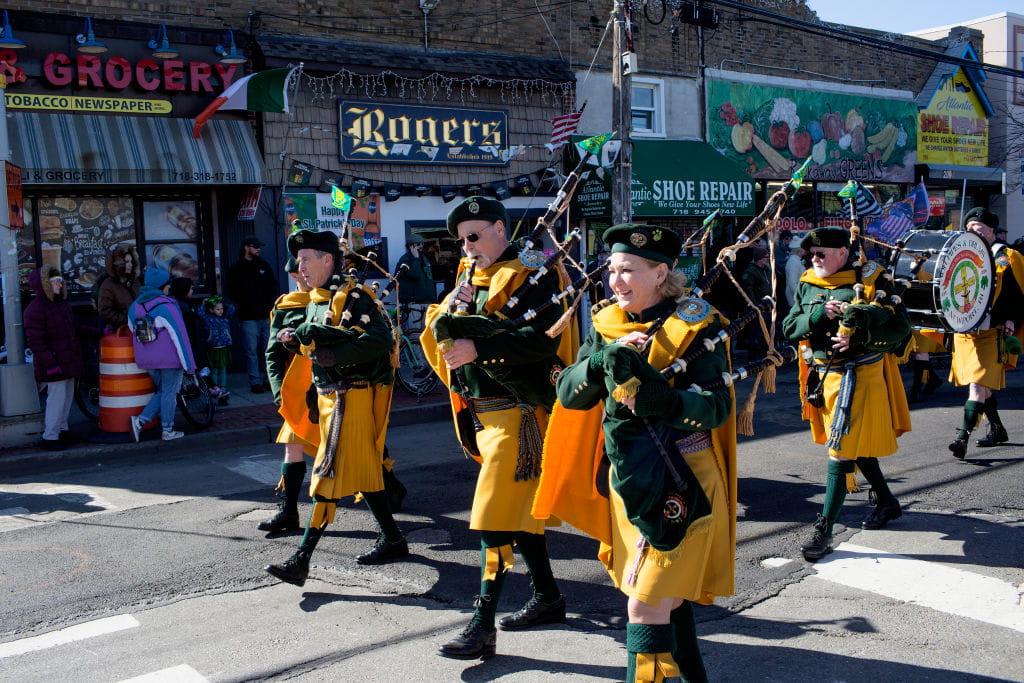
Every year on March 17, Americans across the United States grab a pint of Guinness, a bite of Irish soda bread, and their favorite green shirt in recognition of St. Patrick’s Day, the annual celebration honoring the patron saint of Ireland and all things Irish.
From the 264-year-old parade in New York City to the tradition of dyeing the Chicago River green, Americans have gone all-out for St. Patrick’s Day for generations. With at least 30 million US residents claiming Irish ancestry, according to the Census Bureau, it’s easy to see why the Irish holiday has become a cultural phenomenon in the United States. But beyond the pints and parades, what mark have the Irish left on America during the other 364 days of the year?
Irish Roots in American Music
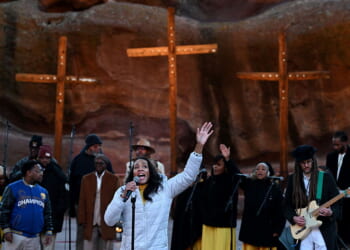
Irish immigrants played a critical role in the development of country music, a genre that rose to prominence in the 1920s and became one of the defining sounds of American culture. After settling in the Appalachian Mountains, many Irish immigrants brought with them traditional songs, stories, and instruments such as the fiddle, laying the foundation for American folk and country music. The official “Birthplace of Country Music” — Bristol, TN — sits in the same Appalachian region many early Irish immigrants called home. “Country music owes much of its heritage to the Irish,” former Country Music Association executive Ed Benson said.
Irish Americans didn’t just influence country music: They contributed to a wide variety of musical traditions, including “Anglo-Irish folk song , the sean-nós ‘old style’ Gaelic song, ‘high art’ Irish American song, hybridized Irish American popular song such as Vaudeville and Tin Pan Alley, contemporary folk music, Irish American big band and showband music, and Celtic rock,” according to the Library of Congress.
Immigrants From Ireland and the American Dream
From 1845 to 1855, more than 1.5 million people emigrated from Ireland to North America, where Irish labor quickly became vital to American expansion and growth. While the Irish frequently worked on farms and ranches, many also took on demanding construction jobs, building railroads, canals, sewers, and roads.

“In the Southern United States, slave owners considered the Irish less valuable than slaves, as they were not property, and therefore a better population to execute cheap and highly dangerous labor,” Irish America Magazine explained. “They were often employed for construction projects, in the course of which hundreds and thousands of Irish would die, often paid only a dollar a day for their trouble.”
Though often looked down upon in early America, Irish immigrants embodied a spirit of relentless hard work and ambition, which would later become a hallmark of the American Dream. When the Gold Rush erupted in the mid-19th century, the Irish population in San Francisco exploded from 4,200 in 1852 to nearly 30,000 by 1880. Facing high risk of death from disease, hunger, or violence, many traveled more than 2,000 miles west in search of opportunity. Some found success and some didn’t – but they had to try. It doesn’t get much more American than that.
From beloved music to the American Dream, the legacy of early Irish immigrants continues to shape American culture today. If you’re not technically among the roughly 30 million Americans of Irish descent, you’re in luck: Everyone is Irish on St. Patrick’s Day.