OAN Staff Brooke Mallory
11:50 AM – Tuesday, March 17, 2026
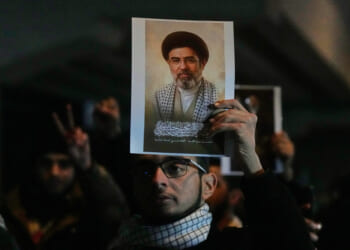
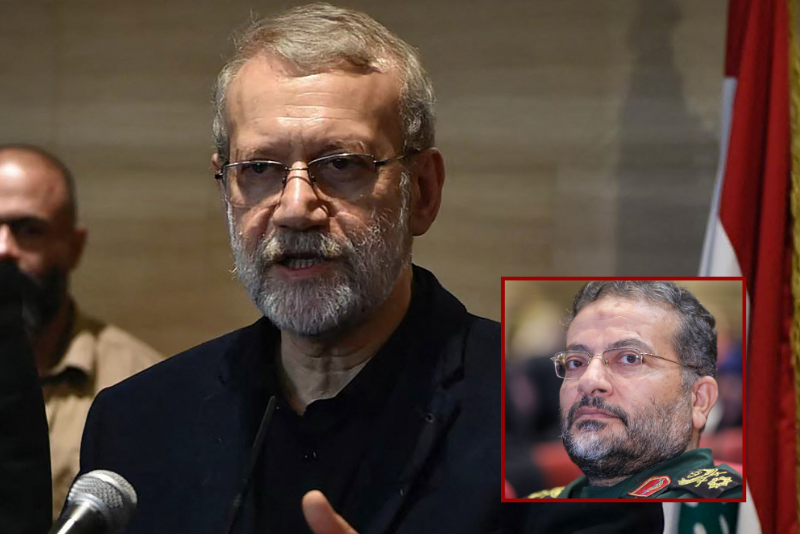
The Israeli government announced on Tuesday the “elimination” of Ali Larijani, the secretary of Iran’s Supreme National Security Council, a man widely seen as the de facto architect of Iran’s current war strategy, in addition to Gholamreza Soleimani, the commander of the Basij paramilitary force.
Israeli Defense Minister Israel Katz confirmed the strike during a security assessment on Tuesday morning.
Katz stated that Larijani, along with Soleimani, were killed in precise overnight airstrikes in the Tehran area. The operation was the result of a “precise intelligence window” that placed Larijani at a safe house in Tehran. However, Iran has not confirmed Larijani’s death.
Iranian state media has been notably defiant, “teasing” an upcoming message from Larijani, without delivering, while attaching a note on his official X account shortly after the claims. The note paid tribute to Iranian sailors killed in a recent U.S. naval engagement. Nonetheless, as of Tuesday at 11:48 am PT, no video or audio message has been broadcast to confirm Larijani is alive.
The post may have also been pre-scheduled or written by his staff to project an image of stability — as this is a tactic previously seen by the Islamic regime following the reported death of Khamenei.
“This morning we eliminated Ali Larijani,” Prime Minister Benjamin Netanyahu said in a televised address, while describing Larijani as the “boss” of the regime’s power structure. Netanyahu also declared that the strike was intended to give the Iranian people a “chance to take their fate into their own hands.”
Larijani’s death, still waiting to be officially confirmed by U.S. intelligence, would be a significant blow to the Islamic Republic since the start of the conflict on February 28, 2026. President Donald Trump referenced the killing of Larijani during a press briefing on Tuesday, despite not providing a formal intelligence confirmation.
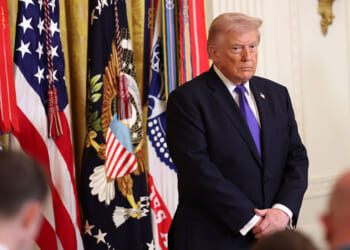
While speaking to reporters in the Oval Office, the president stated that the U.S.-Israel coalition had successfully killed “one of their top people” during the previous night’s operations.
Since the reported death of Khamenei, in the conflict’s opening days, Larijani had emerged as the “steady hand” guiding Iran’s “Inner Circle.” Unlike many hardliners, Larijani reportedly understood both the machinery of the IRGC and the nuances of international diplomacy, analysts say.
“Larijani was one of the few figures who could manage the war and the politics around it simultaneously,” noted a senior security analyst who reached out to the press. “Without him, the bridge between Tehran’s military escalation and any future diplomatic off-ramp has effectively been burned.”
The reported death of Soleimani is pivotal as well.
Soleimani led the Basij, formally the Sazman-e Basij-e Mostaz’afin or “Organization for the Mobilization of the Oppressed,” a massive paramilitary volunteer militia, and terrorist organization, that serves as the “eyes and ears” of the Iranian regime. Founded by Ayatollah Khomeini in 1979, it functions as one of the five branches of the Islamic Revolutionary Guard Corps (IRGC) and is widely considered the most vital tool for maintaining domestic order.
Meanwhile, the news of both deaths has since triggered a fresh wave of volatility in the region.
Minutes after Minister Katz’s statement, sirens blared across Israel as a barrage of ballistic missiles was launched from Iranian territory. Projectiles struck residential areas in Nahariya and caused damage near Jerusalem, while broader Iranian strikes reached as far as Abu Dhabi and Dubai, prompting temporary airspace closures in the UAE.
Additionally, the Trump administration is currently facing diplomatic friction within the NATO alliance regarding the scope of the conflict. Several U.S. allies — including France, Germany, and the United Kingdom — have explicitly rejected the White House’s request for naval assistance to reopen the Strait of Hormuz, which has been closed to commercial traffic since the conflict’s early days.
In response, President Trump has described this refusal as a “foolish mistake” and a betrayal of the transatlantic alliance, warning that the future of NATO faces a “very bad” outlook if allies continue to prioritize diplomacy over active military support.
Stay informed! Receive breaking news alerts directly to your inbox for free. Subscribe here. https://www.oann.com/alerts
What do YOU think? Click here to jump to the comments!
Sponsored Content Below