Politics is the art of the possible and all that, but it still feels uncomfortable to use the safety of a country’s Jews as a bargaining chip in a fight over the correct number of prison beds.
Yet that is the subject of current debate in Belgium.
On March 9, an explosion rocked a synagogue in Liege. Within the next few days, there were similar incidents in two different cities in the Netherlands. Federal officials and the mayor of Antwerp called for military support for the police who were already tasked with guarding Jewish sites. Time, everyone agreed, was of the essence.
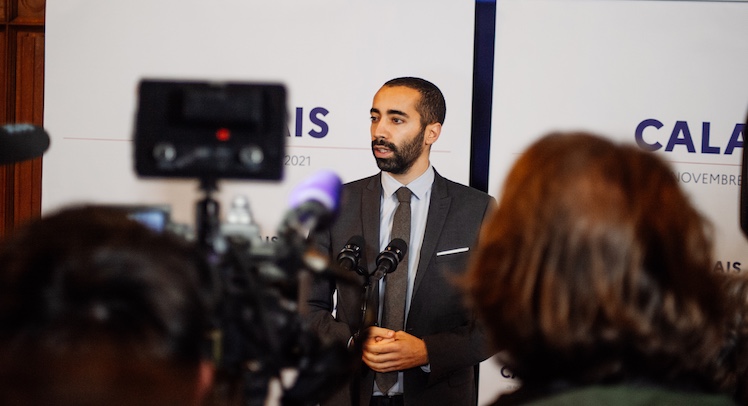
Well, not everyone, as it turned out. Annelies Verlinden is the Belgian justice minister, and she disagreed with Defense Minister Theo Francken and Interior Minister Bernard Quintin. Within the coalition government, Verlinden’s party is demanding that a solution to prison overcrowding be agreed upon before additional security measures are taken. This led to quite a quote from Sammy Mahdi, the chairman of Verlinden’s party: “If one can find a ‘quick fix’ solution for the security problems for the Jewish community, one cannot simply let the security problem in the prisons persist.”
If only there were a quick fix! The whole reason this debate is taking place is because Europe cannot seem to figure out how to keep its Jewish gathering places reasonably secure from anti-Semitic violence. Deploying the military is a last resort and meant to be temporary, both because of the cost and because the country is loath to conclude that societal militarization is the only way Belgium can protect its houses of worship.
I’m sure Verlinden’s concern for prison overcrowding is legitimate and genuine, but counterterrorism isn’t the sort of thing one can just horse-trade away. The government went ahead with the security plan by having the federal police commissioner invoke a rule that enables him to call in the army when the police are stretched beyond capacity during a crisis.
Verlinden apparently found out about the end-around from the media, and was furious. So was Mahdi: “In a five-party government, you cannot simply do as you please.”
The unseriousness here is astounding. It is not unprecedented for Belgium to deploy the military amid a rise in anti-Jewish terrorism, though it has been a decade since the last time it was done.
Meanwhile, CBS reports from Rome:
“Outside the Great Synagogue, in the narrow streets of Rome’s historic Jewish quarter, Italian soldiers patrol with automatic weapons slung across their chests. It is part of a visible surge in security following a wave of antisemitic incidents across Europe.
“One of those soldiers told CBS News the heightened presence came after recent attacks on Jewish sites, including an explosion at a synagogue in Liège, Belgium, last week. The blast caused damage but no injuries, but it was enough to prompt the Belgian government to announce it was deploying military forces to help protect Jewish institutions nationwide.
“The soldier in Rome said fewer people were visiting the Jewish neighborhood recently, wary of a repeat of the kind of antisemitic violence seen in Liège and elsewhere in Europe.”
So an explosion at a synagogue in Belgium is enough to convince Italy that special measures must be taken to protect Jewish institutions, but the justice minister of Belgium thinks there’s time first to finish negotiations over prison beds?
These stories highlight two important aspects of Europe’s security architecture. The first is that Europe is compact. When something happens in a nearby country—not town, not county, but country—it reverberates. Italy changes policy because of something that happens in Belgium, and Belgium changes policy in part because of something that happened in the Netherlands. This contributes to a feeling of insecurity for Jewish communities throughout the entire continent. And Jewish insecurity in Europe is not to be taken lightly.
Second, government officials in Europe can appear startlingly callous and dismissive about the security picture. Iran has long staged attacks and assassinations in Europe, and the continent is currently host to a land war with Russia. The Beijing-Moscow-Tehran axis does not take European sovereignty seriously. Neither do some Europeans, as the current debate in Belgium illustrates.