JERUSALEM, Israel – New developments with Iran are raising serious questions about the stability of the Tehran regime. Reports now indicate that internal cracks may be forming, even as Israel and the United States intensify their military campaign.
Here in the Middle East, signs are emerging that pressure on Iran is no longer coming only from the outside.
New reports suggest that some ordinary Iranians are quietly assisting Israel, providing intelligence on regime leaders and their movements. At the same time, security forces inside the country appear increasingly strained, with information that some Basij units are on the run.
The developments come as Israel escalates its campaign to eliminate key Iranian officials with precision strikes. In recent days, several high-ranking figures have been killed, in part due to intelligence gathered from within Iran itself.
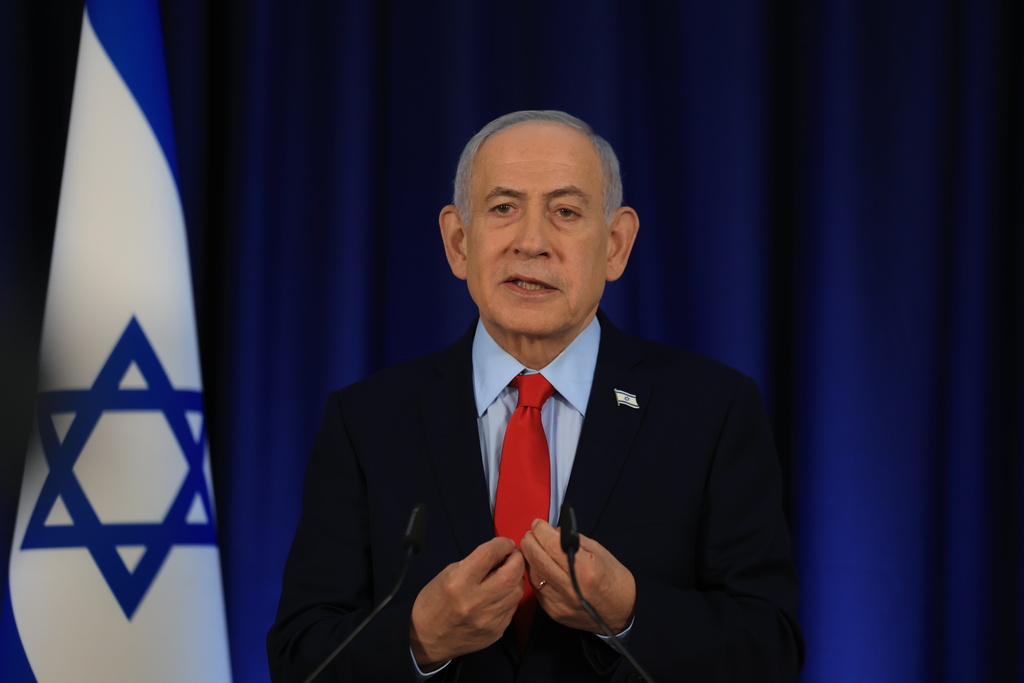
Israeli Prime Minister Benjamin Netanyahu believes the campaign is already delivering results.
At a Thursday press conference, the prime minister declared, “We are winning, and Iran is being decimated. … In ‘Rising Lion’, we destroyed missiles, and we destroyed a lot of the nuclear infrastructure. But what we’re destroying now are the factories that produce the components to make these missiles and to make the nuclear weapons.”
Netanyahu indicated that Israel is now shifting from disrupting Iran’s capabilities to dismantling them completely.
“After 20 days, I can tell you: Iran today has no capability to enrich uranium and no capability to produce ballistic missiles. We will continue dismantling these capabilities, down to dust, down to ashes.”
However, Iran is pushing back on those claims. An Iranian Revolutionary Guard Corps spokesman insisted that the country is still producing missiles, even in wartime conditions. He signaled that the fight is far from over.
That message was underscored overnight as Iran launched multiple missile salvos toward Israel, highlighting a gap between Israel’s assessment and Iran’s actions on the ground.
Meanwhile, the United States is deploying some of its most advanced bunker-busting bombs against deeply buried Iranian targets, including fortified missile infrastructure along the Persian Gulf designed to penetrate reinforced underground facilities before detonating.
The weapons are capable of striking sites once considered to be out of reach, including missile silos, command centers, and suspected nuclear infrastructure.
U.S. Central Command (CENTCOM) reports that the scale of the campaign continues to grow, with more than 7,800 targets struck, over 8,000 combat flights flown, and at least 120 Iranian vessels damaged.
In a separate development, a U.S. fighter jet was forced to make an emergency landing after a combat mission over Iran. While the pilot is safe, reports suggest it may mark the first time a U.S. fighter was struck by enemy fire.
Beyond the battlefield, U.S. investigators are expanding a probe into the United Nations Relief and Works Agency (UNRWA), examining alleged ties between employees and Hamas, including possible connections to the October 7th, 2023, attacks.
According to U.S. officials, more than one hundred individuals are now under investigation, with 14 already identified as having affiliations with Hamas. The growing probe has raised renewed concerns in Washington and Jerusalem about oversight within the agency, and whether international aid resources were exploited by terrorist networks operating in Gaza.
Taken together, the mounting military pressure and internal strain suggest the conflict may be entering a decisive phase, and here in Jerusalem, which is under a blanket of heavy clouds before the Sabbath, the question remains whether this moment of uncertainty will give way to a brighter future for the Middle East or deepen the instability across the region.