On March 18, the Office of the Director of National Intelligence released the “2026 Annual Threat Assessment of the US Intelligence Community.” As the introduction explains, “This assessment focuses on the most direct, serious threats to the US primarily during the next year. All these threats require a robust intelligence response, including those where a near-term focus may help head off greater threats in the future.” The Annual Threat Assessment (ATA) notes that worldwide security is becoming more complex and demanding.
The Intelligence Community Lays Out the Threat
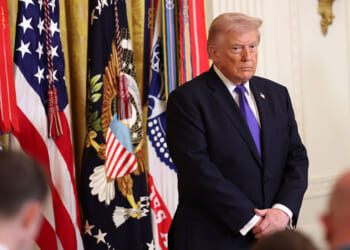
In January 2026, Liberty Nation News explained the latest Department of Homeland Security “Homeland Threat Assessment 2025,” describing how it “focused much of its concern on domestic violent extremists.” As a complement to that report, the 2026 ATA takes a much broader view of the global threats facing the US. The director of National Intelligence, Tulsi Gabbard, testified on March 18 before the Senate Select Committee on Intelligence. She told the committee:
“In this assessment, we’re following the structure of priorities that were laid out in the President’s National Security Strategy, starting with threats to our homeland and then shifting to global risks. The defense of our homeland is of the utmost importance to the American people, and efforts by this administration have shown over the last year the results of bolstering homeland defense in the security of the American people.”
The 2026 ATA, in discussing global threats to the homeland, explains that the US “faces a variety of threats in the coming year, including our top concerns: transnational organized crime, illicit drug trafficking, migration, the threat of Islamist ideology and terrorism, major power competition, and WMD [weapons of mass destruction] threats.” Terrorism remains a formidable threat, and the 2026 ATA highlights the continuing peril represented by the “spread of Islamist ideology” by organizations such as the Muslim Brotherhood, which has provided material support to Hamas and Hezbollah. The intention of these terrorist organizations is to undermine the “foundational principles that underpin Western Civilization.”

The report includes positive news about President Trump’s successful closure of the US southern border. Director Gabbard, in her written statement, reported that, “Based on Customs and Border Patrol data, January 2026 monthly encounters are down 83.8% compared to January 2025. Encounters declined at 79% compared to 2024; the drivers of migration are likely to continue.” By comparison, during the Joe Biden presidency, the US southern border was a sieve for all illegal aliens, including criminals, potential terrorists, as well as drug and human traffickers. This report reveals significant improvement in preventing bad actors from entering the US.
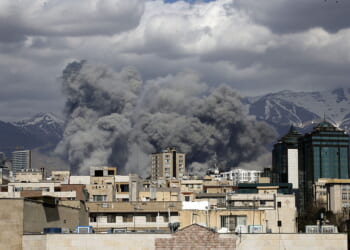
As you read the 2026 ATA, the analysis that catches your attention is in the Homeland Defense section. The assessment goes into detail about the ballistic missile threat that China, Pakistan, North Korea, Russia, and Iran represent. With the exception of Iran (as of this writing) – whose ballistic missile, drone, and cruise missile capability has been seriously degraded to include inventory and the capacity to produce more – the other four are problematic. The 2026 ATA explains that China, Russia, North Korea, and Pakistan are “researching and developing an array of novel, advanced, or traditional missile delivery systems with nuclear and conventional payload.” Furthermore, the intelligence community estimates that the number “will expand to more than 16,000 missiles by 2035, from the current figure of more than 3,000 missiles.” The assessment goes on to explain that North Korea successfully tested intercontinental ballistic missiles capable of targeting the entire US homeland. Additionally, the threat from these countries is not going away any time soon, since adversaries will “continue to prioritize advanced missiles that can threaten the US.”
Adversaries to the Golden Dome for America
The 2026 ATA also warns that adversaries will seek to understand US plans for the Golden Dome for America, a missile defense shield, to find ways to defeat the system. This effort will certainly impact the US intentions regarding nuclear deterrence. The assessment notes that China might believe that the US having an effective missile defense shield might “reduce Washington’s threshold for initiating military action against Beijing in a crisis.”
Among the technology challenges the US faces is maintaining leadership in artificial intelligence (AI) and quantum computing. The report asserts that being out front in developing and adopting these technologies “is increasingly defining global power and influence.” Other global powers are challenging the US in the application of AI. The impact of artificial intelligence on “all industries and domains” will only increase in the future. Quantum computing leadership is a national security imperative that offers an advantage, enabling the leader in the field to “quickly process national security information and break current encryption methodology.” The US must develop and exploit quantum computing first.
After reading the 2026 ATA, there is only one conclusion that the reader can reach. We live in a dangerous world, and the trend is that it’s getting more dangerous. What the 2026 ATA allows US national security decision-makers to do is be prepared.
~
The views expressed are those of the author and not of any other affiliate.