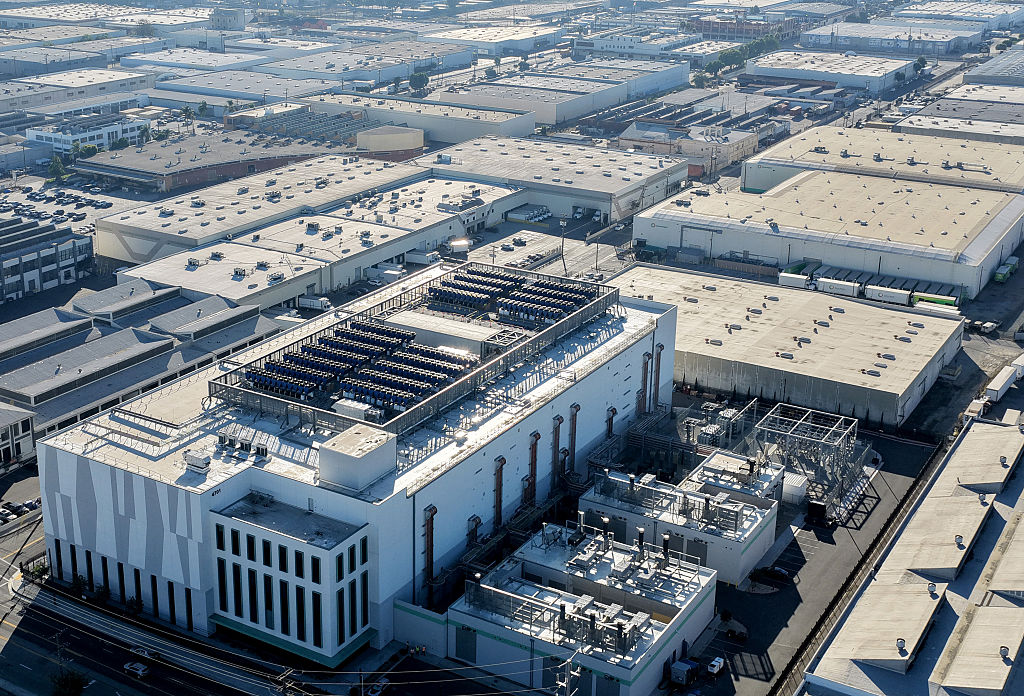
The US economy came to a near standstill in the final three months of 2025. The Bureau of Economic Analysis revised the fourth-quarter GDP expansion rate to 0.7%, from the first estimate of 1.4%. This is firmly below the third-quarter boom of 4.4%. A deeper dive reveals how the modicum of growth was driven almost entirely by capital expenditures in artificial intelligence (AI). In other words, data centers are keeping the gross domestic product alive.
AI Driving GDP
Here is a headline summary of the October-December period: Consumers pulled back, the record-breaking shutdown forced governments to spend less, and net exports declined. But combing through the bureau’s “related materials” indicates that, without capital expenditures from the AI buildout, the US economy came to a grinding halt.
In fact, approximately 94% of GDP growth in the previous quarter was driven by AI capex. The remaining 6% was everything else. It is not entirely surprising, considering the circular nature of the tech industry, which is fueling trillions of dollars in investments, from constructing data centers to manufacturing and purchasing semiconductors.
Many critics will blame the abysmal fourth-quarter reading on the record-breaking 43-day spending impasse. Others will say the administration’s tariff policies are backfiring on trade. With the war in Iran contributing to higher energy prices, anemic Q1 growth will not exactly elicit confidence that President Donald Trump’s economic agenda is working, particularly heading into the midterms.
Given the short-term nature of politics, voters may not want to wait for what could lie ahead.
Railroads and the Internet
The economic landscape could be comparable to previous expansion periods, whether the 19th-century railroads or the 20th-century dot-com boom. In the 1880s, railroad infrastructure capex accounted for about one-sixth of US GDP. In the 1990s, the internet revolution represented roughly two-thirds of the productivity and growth. Today, AI capex’s share of the economy is at least half.
During the ‘90s, pop culture suggested the internet was primarily about Minesweeper, ordering pizza, and online chatrooms. Keynesian economist Paul Krugman wrote more than 20 years ago, “By 2005 or so, it will become clear that the internet’s impact on the economy has been no greater than the fax machine’s.” It is 2026, and our entire lives and economies are centered around the World Wide Web.
Today’s environment is comparable to the era of Pongs, Napster, and VHS players. AI users are generating videos of cats engaged in karate fights, cheating on their essays, and disrupting various industries. Remember, AI is still in its infancy, and one can only imagine what it will look like in the next several years.

For now, AI might not be doing much for the US economy. Similar to the late 1980s and early 1990s, businesses do not know what to do with the panoply of equipment and machines they purchased. Fast forward to the present, and companies would not know what to do without these tools.
While AI is preventing the GDP from slipping into the abyss, economic forecasts are optimistic about its future. Goldman Sachs says global growth could balloon by $7 trillion. The Penn Wharton Budget Model estimates that AI will boost US productivity and GDP by 1.5% over the next two years. The UN Trade and Development projects the international AI market will target $5 trillion by 2033. Billionaire entrepreneur Elon Musk, the bull of all bulls, thinks AI and robotics will wipe out poverty.
The next couple of years may replicate the dot-com euphoria when anything with .com in the company’s name led to massive valuations. Then, a bust happens, and the industry expands at an accelerated pace, permanently etched into the marketplace. The possibilities are endless.
GDP-Maxxing
Generation Z has a new term: add “maxxing” to the end of each word. Shakespeare-maxxing, burger-maxxing, or hippopotomonstrosesquippedaliophobia-maxxing. How about GDP-maxxing? While GDP is not the end-all be-all of measuring the economy, it is a tool that offers a snapshot of how the country is performing. AI, data centers, and robotics. These are the components that will likely drive another Industrial Revolution, propelling the United States – and the world – to new heights. But the path will be bumpy along the way.