At the start of this year, much of the media was preoccupied: first with Donald Trump’s threats to seize Greenland, then with the night raid via which the US captured Nicolás Maduro, the president of Venezuela. Meanwhile, the Swift Centre identified Iran as the primary geopolitical risk for 2026. Betting markets like Polymarket remained skeptical of US military action against the country before the end of March. But the Swift Centre put a significantly higher likelihood on armed conflict — a prediction that has now become a dangerous reality.
As the war enters its second month, we find ourselves at a moment of maximum uncertainty. The Strait of Hormuz is besieged by missile launchers. The oil price has surged. America’s Nato allies are balking at Trump’s demands for help. Trump has announced a five-day postponement of strikes on Iranian power plants, claiming that Iran and the US are now in peace talks — only for a senior Iranian official to deny that such talks are taking place. All the while, domestic pressure is mounting on Trump: his allies want him to finish the job or get out.
Will Trump double down to achieve a complete and unquestionable victory, perhaps through a territorial takeover of the Strait of Hormuz? Or will he claim the action he’s already taken as a total win, blame his allies for failing to secure the peace, and walk away? Will the global economy ride out the chaos — or should we expect recessions?
With these questions in mind, the Swift Centre has consulted its forecasters on what is likely to happen next.
1. Will the US send in the army?
If President Trump wants to secure a clear victory, the most urgent question facing the Pentagon is whether aerial dominance is sufficient. If not, then does the US commit significant troops — not just special forces, but a brigade — to secure critical strategic territory? A ground war would be highly unpopular with most Americans — but it might be the only way to destroy the remnants of Iran’s nuclear program or control the critical supply chain through the Strait of Hormuz.
To analyze the prospects of a ground war, the Swift Centre professional forecasters were asked about the likelihood that the US will deploy more than 1,000 troops into Iran before May 31st 2026 — providing a median forecast of 30%.
The forecasts were made before Trump claimed that peace negotiations were underway, but they take into account the President’s volatility. Of particular significance is Trump’s statement, when asked about the prospects of a ground war, that “nothing is off the table”.
As one forecaster observed:
“The simple fact that the door was not closed was a meaningful turning point. Previous presidencies (including 45th) had not hesitated to rule it out even if that meant losing some strategic advantage.”
That the 11th and 31st Marine Expeditionary Units (MEUs) are en route to the region has added weight to this possibility. These units, though relatively small, are designed for the kind of targeted territorial seizures now being discussed in Washington. Forecasters are particularly focused on the crown jewel of Iran’s oil export infrastructure: Kharg Island.
“[The deployment of 1,000 troops on Iranian soil] is most likely to happen if the US tries to seize Kharg Island or secure the Strait of Hormuz… Strikingly, a thousands-strong Marine Expeditionary Unit (MEU) has been dispatched from Japan to the Middle East. It will arrive in the region well before May 31.”
Some suggest Trump has held an obsession with the island for decades, citing a 1988 interview where he claimed “One bullet shot at one of our men or ships, and I’d do a number on Kharg Island. I’d go in and take it”.
But a large commitment of American troops would entail significant risks — and the taking of territory would not necessarily bring the US closer to achieving its goals. As a more skeptical forecaster put it:
“It is very difficult to determine what military objective would be simultaneously risk tolerant for political leaders and effective in changing the political will, economic conditions, or combat conditions to warrant using them to attempt to take any territory.”
Ultimately, President Trump needs to weigh his priorities for this conflict in the context against the political risks in an election year. One forecaster put it bluntly:
“Does he have the guts to send over a thousand soldiers though?… That’s bound to bring a high number of coffins back home, and this is not going to look good six months before the midterms”.
2. For how long will the Strait of Hormuz be at a standstill?
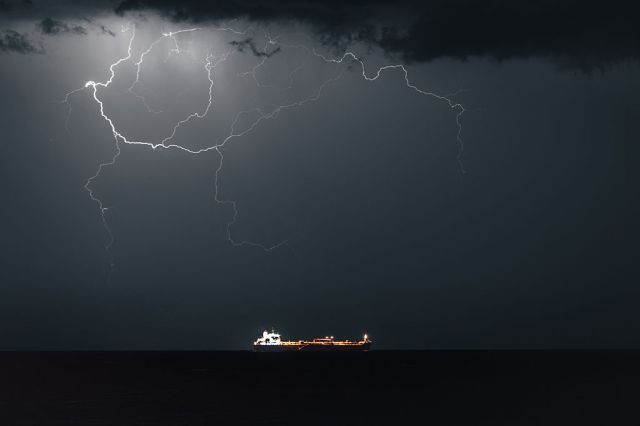
The Strait of Hormuz, being the world’s most critical economic choke point, is being held hostage by Iran. The IRGC has calculated, correctly, that if it can hold up the shipping, it can cause worldwide economic havoc, thus creating leverage for itself.
So far, the strategy seems to have been effective. The International Energy Agency has already stated that this war is causing the largest ever disruption to oil markets and that oil flows will take months to recover after the war ends. If Trump seems more interested in peace talks, it is probably at least in part because he fears that Iran can inflict economic pain on the US and its allies.
We therefore asked our forecasters how long it would take for the Strait of Hormuz to return to a “normal” flow of traffic following a US withdrawal or indefinite cessation of military action. Our yardstick for “normal” was the point when the seven-day average of ship arrivals reaches 60 per day, as reported by IMF Portwatch.
The result was a median forecast of three weeks. On paper, a three-week lag sounds manageable. However, the distribution of our forecasts reveals a worrying long tail. The forecasters believe there is a 90% chance the Strait will be back to normal within eight weeks — but that leaves a 10% chance that the disruption could last even longer than two months. The physical and legal friction of war cannot be wished away by a presidential decree or a declaration of victory. As one forecaster noted:
“The requirements are: 1) Demining the area, 2) insurers and carriers agreeing to resume transit and ships physically getting back to the Gulf, and 3) about seven days of high enough traffic to build the moving average”.
In other words, there is no switch enabling the world to go from zero to “normal” in only a few days.
Beyond the logistics, there is a deeper risk: that the cessation of military action does not equate to a restoration of the status quo. Forecasters are weighing the possibility that the Islamic Revolutionary Guard Corps (IRGC), having survived the initial US onslaught, permanently weaponizes the Strait. One forecaster noted:
“If the IRGC survives, which is the most likely scenario… They will instead see it as an opportunity for leverage on their enemies and will act to control their access. With that in mind, I think they will set it up as a toll gate, charge ships for the privilege, and be selective as to who they let pass.”
The longer the war goes on, the greater the risk to infrastructure that would be required to get the supply chain back to normal levels. A forecaster who felt the most likely scenario was a fast reopening warned that it could take up to 12 weeks, noting the possibility of the Strait being heavily mined. The same forecaster warned that it would be in the Iranian regime’s interests to slow down the reopening.
A toll gate would be a nightmare scenario for global trade. It would place a tax on the West while favoring Iran’s allies, like China and India, whose ships have already begun to trickle through the Strait again. For Trump, this creates a secondary dilemma: walk away and allow the value of the Strait to be extracted by Iran, or stay and commit to the very type of “forever war” he has spent his political career railing against.
3. Will the war cause a recession in the West?
The ripples of the Iran conflict are already washing against the shores of the world’s largest economic blocs. European economies, having failed to make a quick recovery from the Covid pandemic, were already struggling with the effects of the war in Ukraine, and are vulnerable to the fallout from the war in Iran — not least because the EU has failed to secure its own energy supply. A key question, then, is: will the US or the EU fall into a recession in 2026?.
The Swift Centre’s current aggregate forecast places the likelihood of such a recession at 35%. While this might not yet be a coin-flip, it represents a dramatic elevation above the historical base rate — estimated at around 10-15% for these regions. The key factor here is energy. As one forecaster noted:
“Europe didn’t need for the Strait to be closed in order to already have issues, so I’m pretty concerned”.
The forecasters note a stark gap in vulnerability between the two economic blocs. While the US can look to its own domestic petrochemical resources to smooth out price shocks, Europe remains perilously exposed to the flow of gas and oil from the Persian Gulf.
“The EU bloc is more vulnerable than the US with growth being anemic anyway and [its] dependency on oil from the Gulf region being higher.”
In part, the economic danger is represented by the price at the pump, which is often the focus of the mainstream news. But other risks include potential shortages of critical industrial materials such as aluminum, fertilizer and helium. Swift Centre forecasters note a troubling cocktail: the war in Iran is coming at a time when the private credit market in the US is in trouble; when there are significant structural constraints on European industrial growth; and when Trump’s own tariff policies are causing inflationary pressure on the American economy.
If the “toll gate” scenario in the Strait becomes a reality, then, the temporary shock of war could transform into a structural economic drain. One forecaster cautioned that “if Hormuz strait remains functionally closed for months… the risk rises dramatically”. The EU, facing a potential multi-year natural gas shortage, will be hoping for a quick resolution, but time is running out.
Nevertheless, there is hope. Some forecasters are more bullish on the economic resilience of the EU and US. They note that consumer demand, which remains healthy, is a reliable predictor of whether the US faces recession, and that if the US stays out of recession, then the EU generally does the same. “The US has experienced gas prices this high many times,” one forecaster wrote, “and there are many tools that can be used to manage or lower gas prices.” Perhaps Trump’s hand is stronger than his claims of peace talks would suggest.