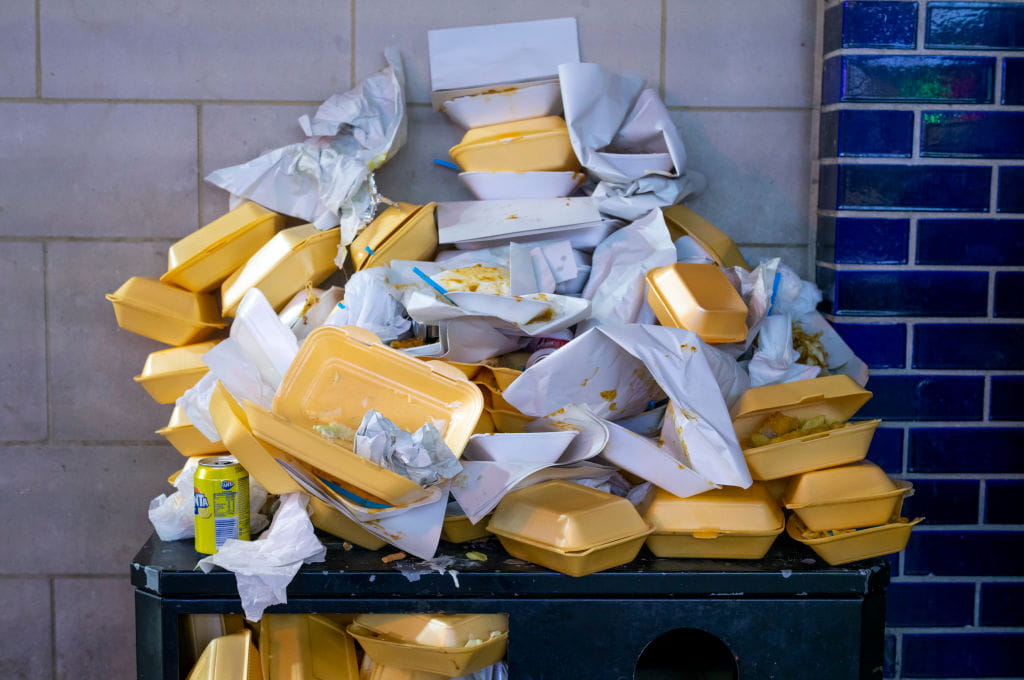
A pending Connecticut bill that would ban Styrofoam take-out packaging and impose numerous other mandates on restaurants in the Constitution State illustrates the classic metaphor of roads to Hell being paved with good intentions. Some restaurants perceive that Connecticut’s constitution is being crumpled up and burned in the legislature’s drive to stop Styrofoam from being crumpled up and landfilled.
Plastics, Plastics, Everywhere!
Increasingly, scientific research is exposing unforeseen health threats associated with the thousands of plastics and other packaging materials commonly used in food production. Plastic bottles for soda and water have largely replaced their glass-bottled and tin-canned forebears because of their low cost and easier transport (glass is heavy to recycle and contaminates sorting systems for recycled materials when it shatters). As the threat of microplastics in the world’s oceans and in human bodies has become apparent, society (and culture) has not articulated a plan to wean itself off this petroleum-based dependency.

To its credit, Connecticut is trying to reduce its landfill waste and public litter by regulating one culprit: Styrofoam. The ubiquitous substance is used in packaging for inanimate objects and is popular in restaurants for takeout food because it keeps hot meals warm and fresh. Some alternatives are available, but restaurants fear they will lose business if customers are deprived of this traditional convenience. This demonstrates the difficulty in changing consumption habits – if consumers do not demand change, it is difficult for either government or businesses to impose it from on high.
The business backlash against Connecticut’s initiative, though, is not driven by a desire to pollute or sicken people (the bill does not invoke health risks from Styrofoam as a motive) but by an age-old commercial interest in remaining solvent. Restaurateurs fear they will alienate customers with the new policies, undercutting takeout sales. Food price inflation has affected restaurant prices more than grocery store prices, and the takeout sector is a mainstay for many Connecticut restaurants.
A Challenging Regulatory Balance
A fine line exists between “regulated capitalism” and bureaucratic overreach. Government agencies are operated without consideration for the realities of businesses like restaurants, which must deal with their customer base. Connecticut’s initiative, restaurateurs claim, will annoy and alienate customers who favor insulating Styrofoam to keep their orders warm on the trip home. Such micromanagement of business by the government harms private businesses and the state’s tax base, but legislators don’t have to deal with the economic harms they impose.
Connecticut’s bill would impose many unreimbursed costs on its struggling restaurant industry, including source-separating of materials, diverting excess inventory from landfills to donations, and detailed reporting requirements to the state for both practices. Public schools are not burdened to the same degree as restaurants under the draft bill, which favors government institutions over private ones. The bill leaves municipalities free to impose even more stringent requirements than those of the state.
Restaurants would also be prohibited from routinely supplying napkins, condiment packets, and plastic eating utensils with take-out orders, which critics also argue will alienate customers and hurt business. Such measures are very difficult to enforce, as well. Connecticut’s House Bill 5524 would also prohibit the use of straws contaminated with PFAS for health concerns. To its credit, Connecticut also seeks to fund grants to support capital improvements required to comply with its mandates, but these do not offset increased labor costs for compliance or lost sales.
Styrofoam Is a Harbinger of Future Challenges
The government certainly has a role to play in educating consumers and protecting them from unhealthy chemical exposures. Connecticut’s primary focus in its Styrofoam container ban is on landfill waste and public litter, yet there are numerous health risks inherent in fast-food takeout. Plastic wrappers and gloves can contain phthalates, which may explain why fast-food diners are exposed to high rates of phthalate contamination. Less toxic polyethylene gloves are preferred over vinyl gloves, but soap-washed hands have served food preparers for many decades.
Tupperware containers, plastic bowls and plates, and a myriad of other potential chemical exposures that threaten human health have yet to be reckoned with. Connecticut’s targeting of Styrofoam packaging is raising public awareness about landfill and landscape pollution. As more consumers become aware of the risks of chemical pollution in food preparation to their and their children’s health, these pressing and complex problems may prompt more take-out customers to prefer cleaner packaging, and customers won’t punish restaurants for jettisoning Styrofoam or tainted straws.
Meanwhile, opponents of the new Connecticut measures are pushing the state to pause implementation pending further research into alternatives and the bill’s impacts on the state’s food service industry. Restaurant owners complain that legislators did not confer with them in drafting the new bill and seek more compromise or creative implementation to protect their viability. Hopefully, both Connecticut’s takeout diners and its environmental health can be served without unfairly punishing the restaurants caught in the middle.