In a state known for lobster boats and lighthouses, politics can sometimes be just as rough as the Atlantic waters off its coast. This year, Maine finds itself once again at the center of a Senate battle with national implications. The race is widely viewed as one that could help determine control of the U.S. Senate and provide clues about where American politics is heading.
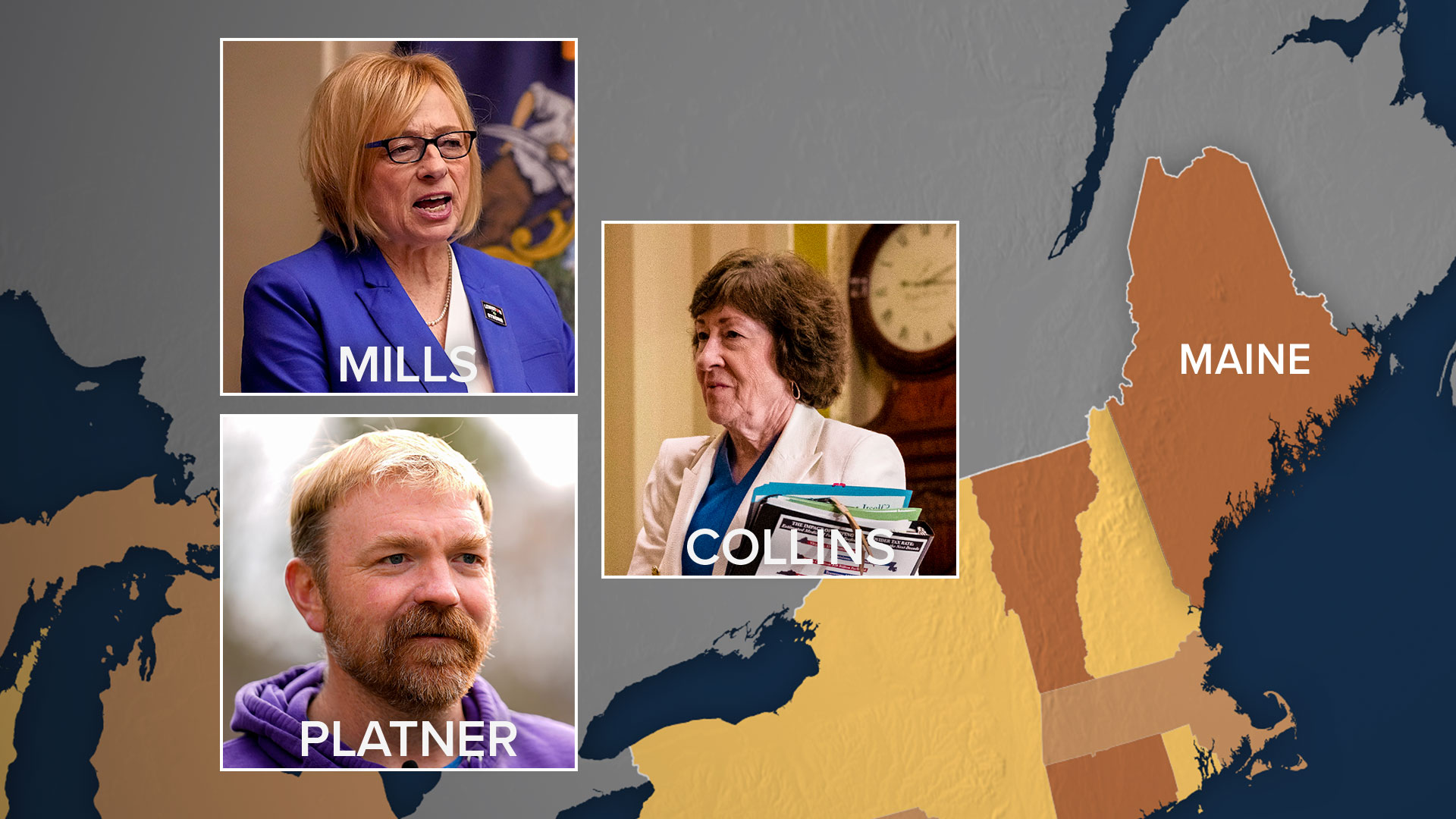
Republican Sen. Susan Collins, 73, is seeking a sixth term after nearly a quarter-century in office. Her campaign will test whether a longtime moderate Republican can still win in an increasingly polarized political environment.
“If Susan Collins ends up losing this in some way, then that’s very likely very bad for the Republicans in the House and in gubernatorial elections across the country and other Senate races,” said Matt Gagnon of the Maine Policy Institute. “If she falls, that’s not a good sign.”
Collins faces a potentially strong challenge from Democrats eager to flip the seat. Two-term Gov. Janet Mills, one of the state’s most prominent Democrats, is competing in the party’s primary along with progressive challenger Graham Platner.
Maine’s tradition of political independence has often made election outcomes difficult to predict. With the Senate once again narrowly divided this cycle, the race has drawn intense national attention and money.
“I’ve heard estimates of 500 million dollars for this race, which in a state like Maine, I mean, I don’t even know how you could spend it all,” Gagnon said.
Democrats see Maine as a prime pickup opportunity, pointing to Collins’ long tenure and the state’s shifting demographics. Population growth in the southern part of the state has brought more progressive voters into the electorate.
“The key question is, has Susan Collins changed in her political agenda or has Maine’s demographics changed?” said former state senator and political analyst Philip Harriman. “And I would submit to you that it is the latter.”
Abortion rights remain a major flashpoint in the race. Collins voted in 2018 to confirm Supreme Court Justice Brett Kavanaugh, saying at the time she believed he viewed Roe v. Wade as settled law. When the court later overturned Roe, some moderates and Democrats said they felt misled.
Among voters in the state, the issue continues to resonate. “She’s not listening to what the people Maine want anymore,” one voter said. Another added, “I’m a Democrat. I’ve always voted for Susan Collins until this year.”
The Democratic primary, scheduled for June 9, could shape the party’s direction heading into the general election.
Mills represents the party establishment, having won statewide elections and built a broad coalition of voters. Platner, an oyster farmer and Marine veteran, is running as a progressive outsider focused on economic inequality and systemic change.
“This is a referendum on the system itself on establishment politics in this country,” Platner said in an interview.
The state’s ranked-choice voting system adds another layer of complexity to the race. Voters rank candidates in order of preference, and if no one receives a majority, last-place candidates are eliminated until someone surpasses 50 percent.
That system often benefits candidates who can appeal to a broad coalition of voters.
“Maine has two very distinct personalities,” Harriman said. “The northern part of the state tends to be much more rural, while the southern part of the state tends to be more liberal.”
Immigration has also emerged as a political battleground in the campaign, reflecting broader national debates over border enforcement.
“I think that is the frustration that we’re seeing play out, is, well, do we enforce the laws that are on the books or not?” Harriman said.
Political observers say the race may ultimately serve as a national barometer testing whether moderation can still win elections, how far Democrats can move to the left without losing centrist voters, and whether demographic changes will reshape the political map.
As campaigning intensifies in the months ahead, Maine voters may once again find themselves at the center of a contest with consequences far beyond the state’s rocky coastline.