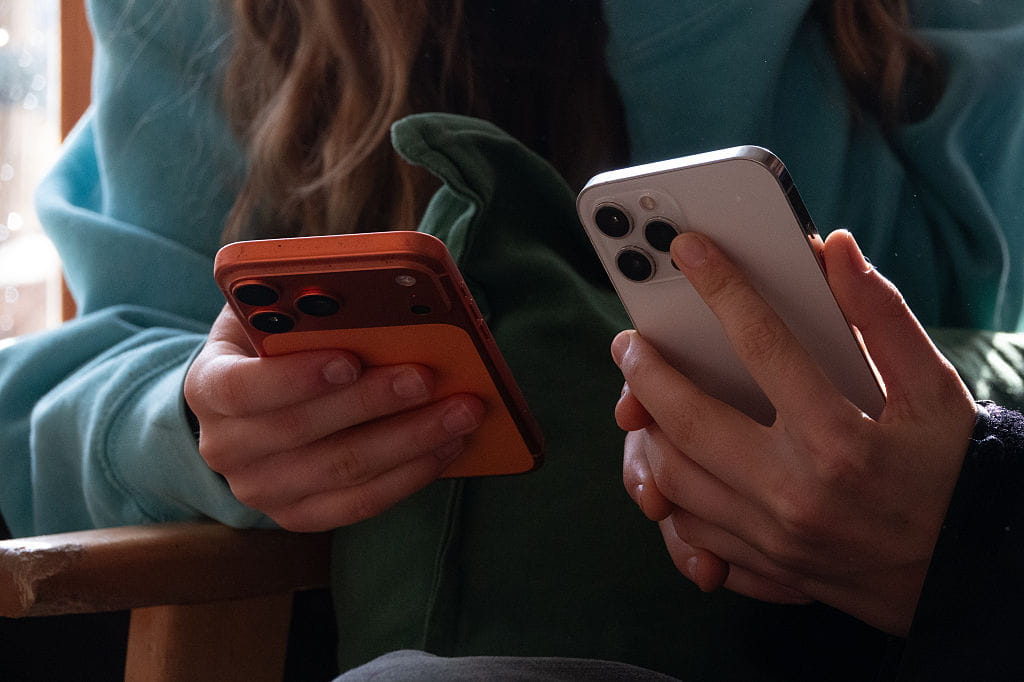
Social media giants were thrown a curveball on Wednesday, complete with a hefty fine, as a California court found Meta and YouTube harmed a young user with addictive design features that led to mental health distress. While there have been numerous cases about whether these platforms should bear responsibility for their content and design, this one is considered a bellwether because it could impact the outcome of other cases. The Jury found Meta liable for $4.2 million in damages and Google for $1.8 million.
Social Media on Trial
The plaintiff in this case is a 20-year-old woman referred to as “Kaley” who blamed the social media platforms for making her addicted to their products. TikTok and Snap, which owns Snapchat, were also named as defendants, but they settled out of court with no disclosure of the settlement amount. Kaley’s lawyers claimed in the lawsuit that she started using the programs at the age of six and that their designs and features addicted her to the technology, enhancing her depression and suicidal thoughts. The defendants argued that Kaley was already struggling with mental illness and that they shouldn’t be liable for an unpleasant home life.
The trial began in February and was estimated to last six weeks. Meta CEO Mark Zuckerberg and his team may not have set the right tone when they arrived at the Los Angeles courthouse wearing Meta’s Ray-Ban AI glasses. The accessories are equipped with cameras that can record whatever is in view. This didn’t go over well with the judge, who told the group to remove them and warned that using facial recognition technology to identify jurors was banned. Most Los Angeles courtrooms don’t allow recordings during proceedings.
“I don’t naysay the opportunity to make money, but when you’re making money off of kids, you have to do it responsibly,” Mark Lanier, the attorney representing Kaley, said in his closing statement. To emphasize his point, he showed an image of a lion eyeing a herd of gazelles, explaining that predators never go after the strongest but target the weakest in the herd, suggesting Big Tech’s products are preying on kids.
The plaintiff’s legal representation argued that the design of the apps, not the content, is what attracts children and makes them addicted. While the defendants argued that Kaley’s home life was less than desirable, Lanier suggested that, as a young girl, she wouldn’t have told people how much she was using social media because she feared losing her phone privileges. Also, despite her being a victim of cyberbullying, the attorney brought up Kaley’s February testimony, in which she admitted that she would return to the platforms because it was easier to deal with bullying than being away from the platforms.
The Meta team continued to argue that Kaley’s challenges started before she ever used social media. A spokesperson said in a statement that the jury’s only task is to “decide if those struggles would have existed without Instagram. Not one of her therapists identified social media as the cause.”
Paul Schmidt, an attorney for Meta, said in his closing statements that Lanier was trying to argue that if his client had never used Instagram, her other mental health struggles wouldn’t be the same.
YouTube’s strategy, on the other hand, was to declare that its platform was not social media but more akin to television, emphasizing that it lacks the same validation features as other platforms.

Despite the social media giants’ arguments, the jury found Meta and Google, which owns YouTube, were negligent in the design of their apps and didn’t adequately warn viewers about the platforms’ dangers.
“Today’s verdict is a referendum — from a jury, to an entire industry — that accountability has arrived,” the plaintiff’s lead counsel said in a statement.
The $4.2 million and $1.8 million liabilities may seem like a lot of money, but they’re just drops in the bucket for these two businesses. In January, Meta said it expects its capital spending for this year to be between $115 billion and $135 billion; Google expects to spend between $175 billion and $185 billion.