After years of depressing statistics about the decline of churchgoing and religiosity, news of last year’s “Quiet Revival” felt like a long-awaited good-news story. Based on YouGov polling data, and turned into a report by the Bible Society, it was especially pertinent to my thesis that we are seeing a surprising rebirth of belief in God in the secular West.
But secular campaigners and some religious journalists soon pointed out that the remarkable figures for increased churchgoing did not reflect actual attendance numbers reported by church denominations. Similarly, the 2025 British Social Attitudes survey directly contradicted the data — showing a continued decline in church attendance across all age groups.
The picture was complicated. But the Bible Society continued to stand by its report. YouGov was a reputable polling company, used and trusted by hundreds of organizations, including secular organizations like Humanists UK. The Bible Society had sought and been given repeated reassurance of the quality of the data.
Then came the bombshell. The Bible Society this week announced they were withdrawing the Quiet Revival report, having discovered that YouGov “failed to activate key quality control technologies that protect the sample from a wide range of errors and this undermines the reliability of the result”. It appears that the survey had been contaminated by bogus respondents.
This is an important wake-up call: that we should all be very wary of putting our faith in surveys and polls, especially when they align with our deepest desires. Confirmation bias runs deep. As a Christian I’ve been guilty of it, as are people on the other side of the aisle.
In fairness, the Bible Society has owned up to what went wrong, and will no doubt think carefully about how it publicizes any future research. For the moment, a dose of humility and introspection is in order, and perhaps an opportunity to build some bridges with critics whose concerns turned out to be fully justified.
Even so, the danger with a U-turn of this magnitude is that it can also lead to errors in the opposite direction. Humanists UK, freshly vindicated by the reversal, now states on its website: “We need to be absolutely clear: there is no revival of Christianity in Britain.”
That statement is true. Yet it doesn’t do justice to the actual picture of what’s happening both here and in Europe. “Revival” is not the word we should ever have used for what’s happening — but “rebirth” does still feel appropriate.
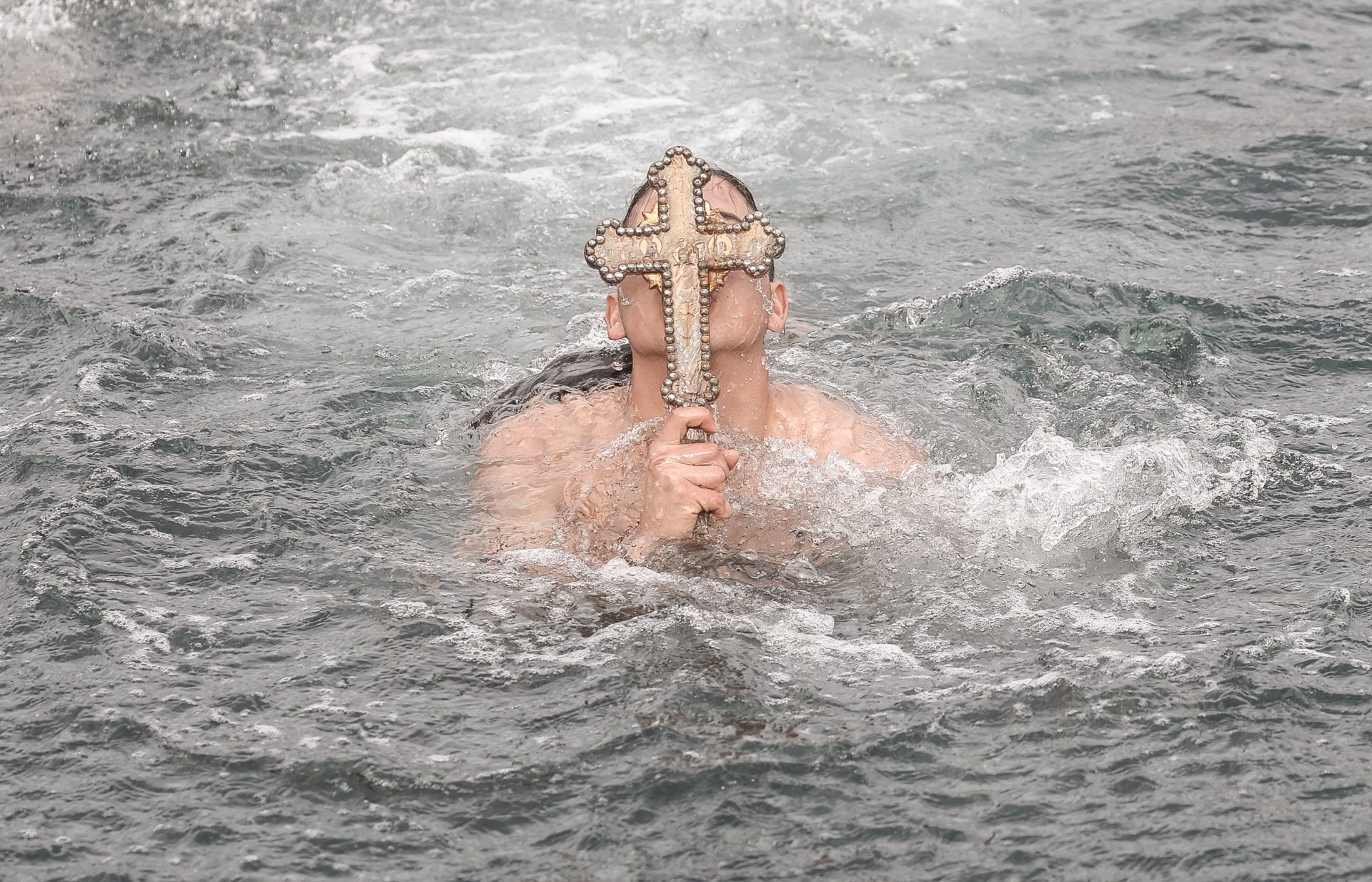
The same day that the Bible Society’s report was retracted, Le Figaro, one of France’s leading newspapers, published a full-page article on the continuing rise in adult baptisms. For the past two years, this famously secular country has seen the largest number of adult converts to Catholicism in living memory. This year’s Easter vigil is expected to set a fresh record, as over 20,000 people enter the Church.
Nor is France an outlier. Spain is reporting a similar trend. Something unexpected is also happening in Sweden, Norway, Finland and Denmark; all reporting an uptick of interest, especially among young men. Likewise, many Orthodox parishes around Europe are dealing with a boom in young catechumens.
In the UK, meanwhile, the Catholic diocese of Westminster is about to see its largest intake of new converts for 15 years, while other parts of the country are recording similar spikes. Attendance at Alpha courses, an introduction to Christianity run by many churches across the UK, has also risen sharply in the past two years.
Commercial metrics tell the same story. Christian music streaming on Spotify has surged in recent years and, against an otherwise stagnant book market, Bible sales in Britain are at a historic high, rising from £2.69 million to over £6.3 million from 2019-25.
None of these figures amounts to a “revival”. But they are reliable data points and indicate that something is happening.
“None of these figures amounts to a “revival”. But they are reliable data points and indicate that something is happening.”
How that plays out in future church-attendance statistics remains to be seen. At this point, my best guess is that any new converts are not yet offsetting the number of older religious people who are dying. That means the church is still shrinking, but that the decline itself may be slowing. This is underscored by figures from the Church of England. Recent modest growth comes in the context that Covid lockdowns had already decimated churchgoing. In the end, though, this is about more than mere numbers.
A “vibe shift” is a hard thing to quantify — but there’s been an undoubted change in the way people publicly talk about faith in the past few years. That’s perhaps best captured by the list of influential converts that have popped up recently, including the former atheist activist Ayaan Hirsi Ali, her husband the historian Niall Ferguson, and the sociologist Michael Murray. Even Prince William, after years of speculation about what the future head of the Church of England actually believes, has confirmed a “quiet faith”.
Of course, many of these celebrity personalities lean Right in their outlook. Likewise, it’s no secret that the religious vibe shift is overlapping with a wider political vibe shift. The result is sometimes dubbed “Christian Nationalism”.
Yet whenever Christianity gets into bed with politics — either of the Left or Right — it’s a recipe for disaster. Being co-opted by cynical political actors like Tommy Robinson would be a far greater catastrophe for Christianity than a flawed report.
Nevertheless, we shouldn’t be surprised when social tumult creates a messy picture. Religious renewals of the past have always been bred of cultural disruptions and mixed motives. Whether or not we approve of the Tommy Robinson crowd, the common thread is that people are searching for identity.
The default secular humanism on offer today has manifestly failed to deliver on its promises. We are being atomized by technologies that are programmed to polarize us. AI is proving a dangerous substitute for real human relationships, while the identities and ideologies promoted by social media have created a generation of disillusioned, distracted and depressed young people. Little wonder many have started looking for a better story.
That’s why, as I’ve met with vicars, church ministers and youth leaders over the past three years, I’ve kept hearing the same thing: that spiritual hunger is leading more and more seekers to their doors. Besides, if a Christian revival ever truly gets underway, we won’t need a spreadsheet to tell us. It’ll be obvious.