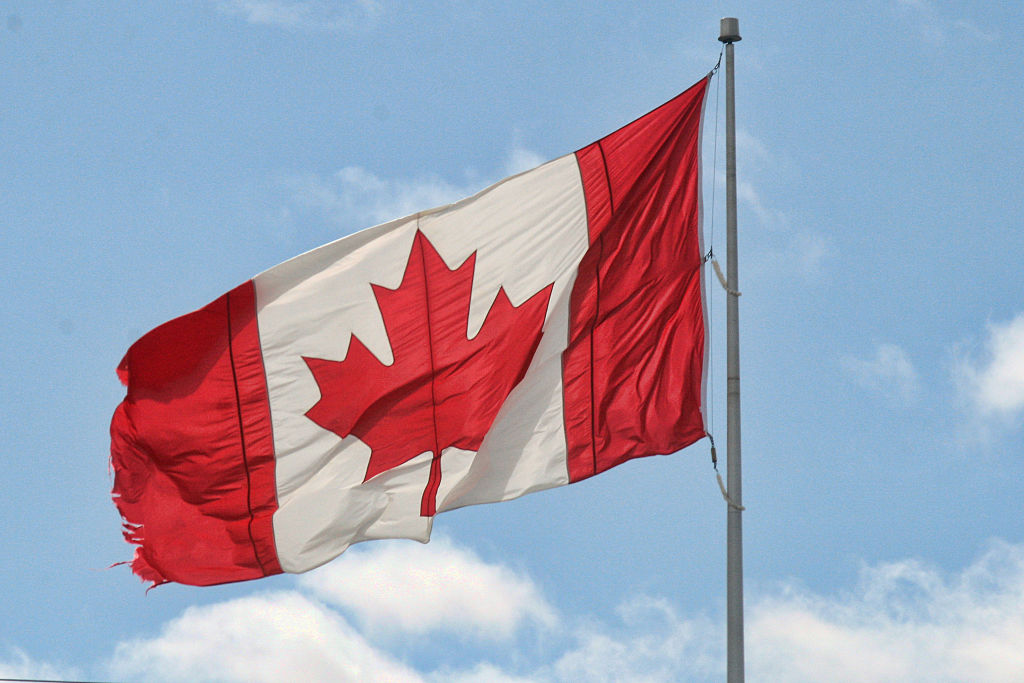
It has already been a year and change since President Donald Trump initiated his “51st state” quips, angering 40 million Canadians and causing the formation of another Liberal government. Prime Minister Mark Carney declared that it was time to “elbows up” and push back against Trump’s rhetoric and reaffirm the independence of Canada. Ottawa imposed retaliatory tariffs, provinces dumped American liquor they had already purchased down the drain, and cities vowed to buy domestically.
The reality is that Trump exposed how vulnerable the Great White North was to any pressure implemented by the United States. Suffice it to say, Canada was a lot like Marlon Brando in On the Waterfront: “I coulda had class. I coulda been a contender, I could’ve been somebody, instead of a bum, which is what I am.”
The loss was written long before the clash of the North American economies.
Canada Will Have Nunavut
A flurry of recent data painted a grim portrait of the Canadian economy.
In February, the country lost almost 84,000 jobs, and the unemployment rate rose to a higher-than-expected 6.7%. The youth jobless rate is sitting above 14%. Retail sales have fallen short of expectations, manufacturing sales have plunged, and labor productivity has contracted. The country is now halfway to a recession after the Q4 gross domestic product (GDP) fell 0.2%.
Across the country, the Grits, New Democrats, Greens, and Bloc Québécois are pinning the blame squarely on Trump and his tariffs. But US trade policy instead merely revealed how the Great White North is not so great after all, and that the Liberal Party has been inept for a decade.
New scandals relating to immigration fraud and officials feigning outrage that the head of Air Canada delivered a message in English only will provide cover for how poor economic conditions have been. However, recent reports have placed a nation rich in resources under the spotlight that are too hard to ignore.
Trudeaumania Shifts to Carney-val
Liberty Nation News recently reported that Canada has fallen behind Alabama. That reportage covered only half the story. The second part of that tale is that the country has lagged behind everyone else since former Prime Minister Justin Trudeau ascended to the throne in 2015.
Over the last ten years, Canada’s annual GDP per capita growth – a measure of how much the economy is growing per person – has been 0.5%. While the US metric has been close to 21%, the Canadian gauge is lower than those of Japan (8.7%), the United Kingdom (7.7%), and even Germany (4.7%).
Anemic business investment has been a challenge for the Canadian economy. Even before the coronavirus pandemic, it was on a downward trajectory. One example of this is industrial machinery investment: The nation invests 40% less than in 1980. Why? When you are importing low-wage workers from a pocket of South Asia, companies no longer need to make expensive investments in equipment to keep their enterprises afloat. Another thing: Entrepreneurship has tanked in recent years.
Noticing the writing on the wall, many people are fleeing the country and heading south. The Globe and Mail recently sparked discussion about the growing number of Canadians relocating to the United States to enhance their career prospects and earn higher wages.
Up to 50% of top 10% earners have shouted “au revoir” and moved to the United States, causing a wealth exodus. Brain drain is also happening because an estimated 40% of potential top 1% earners have emigrated to the world’s largest economy.

For anyone who is not watching the government-owned CBC or living in a $4 million home in the heart of Toronto, these numbers are not entirely surprising. Astronomical taxes, enormous federal spending, and money printing have been the chief contributors to these disastrous results.
Earning above $100,000? Be prepared to hand over about 30% to Ottawa. Live in Ontario? Your combined marginal tax rate (federal and provincial) will range from 31% to 54%. Buying goods and services? Don’t forget about the double-digit sales tax. Surely, the federal government is being fiscally responsible with these tax dollars, right? The Liberals have yet to present a balanced budget after all these years. Okay, fine. At least the Bank of Canada is doing a good job. Well, since 2007, the money supply has soared nearly 400%.
Winning!
Canada has struggled in the international sports scene lately. The country failed to win hockey gold at the Olympics. The Toronto Blue Jays – so-called Canada’s team – lost to the Los Angeles Dodgers. The Edmonton Oilers fell short of a Stanley Cup. It could not slay the juggernauts in the World Baseball Classic.
But Canada is still a winner in three specific areas: deficits, money printing, and home prices. Without them, the economy would hardly generate enough growth to buy a Double-Double from Tim Hortons.