OAN Staff Brooke Mallory
1:31 PM – Tuesday, March 31, 2026
The recent arrest of golf icon Tiger Woods in Martin County, Florida, has provided a sobering glimpse into the ongoing personal and physical struggles of one of the world’s most celebrated athletes.
Following a high-speed rollover crash on a residential beachside road, Woods was taken into custody on charges of driving under the influence (DUI).
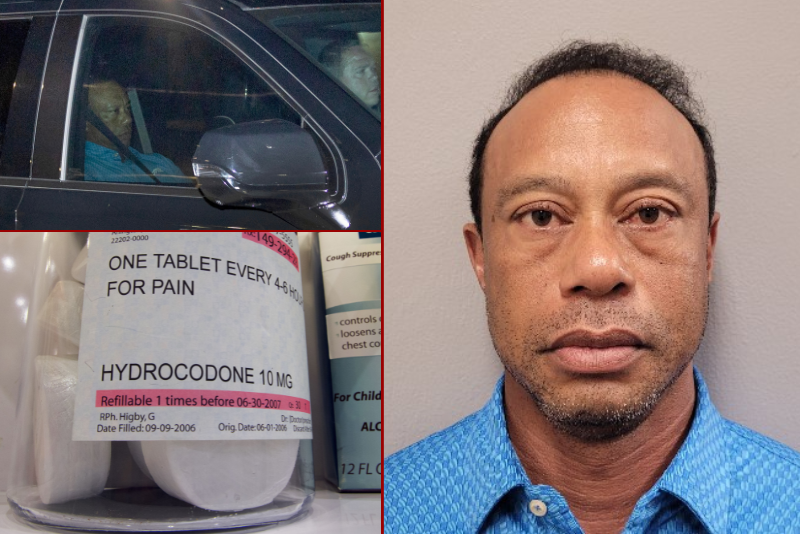
While initial scrutiny centered on the mechanics of the collision, the release of the arrest affidavit has shifted the focus toward a more concerning discovery: two hydrocodone pills found stashed in Woods’ pocket.
Combined with signs of “visible physical distress,” according to police, this new evidence paints a grim picture of the chronic pain that has cast a long shadow over the final years of his career.
Hydrocodone is a potent opioid analgesic used to treat severe pain, usually in combination with acetaminophen. It acts on the central nervous system by binding to mu-opioid receptors. Common side effects include constipation, dizziness, sedation, and nausea — and it carries high risks of addiction, abuse, and respiratory depression, according to the National Institutes of Health (NIH).
The accident occurred when Woods’ Land Rover clipped a Ford F-150, causing his vehicle to roll onto its side. Although Woods escaped physical injury, responding deputies described him as “slow and lethargic,” exhibiting signs of impairment including glassy eyes, dilated pupils, and profuse sweating.
During the roadside investigation, Woods’ physical vulnerabilities were also on full display. He was observed limping and wearing a compression sock, citing a grueling medical history that includes seven back surgeries and over twenty leg operations. At the time, Woods told police that his ankle frequently “seizes up,” and attributed the crash to a moment of distraction while attempting to use his cell phone and adjust the radio.
Despite the obvious signs of impairment, Woods’ Breathalyzer results returned a .000 blood alcohol level, shifting the focus of the investigation entirely toward prescription medication. According to the affidavit, Woods did admit to taking “a few” pills earlier that morning, a statement corroborated by the discovery of the hydrocodone in his pocket.
However, his inability to complete field sobriety exercises, exemplified by persistent hiccups and a failure to follow simple instructions, led deputies to conclude that his “normal faculties” were severely compromised. The situation was also further complicated by Woods’ refusal to submit to a urine test at the station, which, under current Florida law, constitutes a misdemeanor offense.
As Woods awaits his April 23rd arraignment, the legal and professional consequences of the arrest continue to mount. He now faces charges of DUI, DUI with property damage, and refusal to submit to testing — his fourth significant driving-related incident since 2009 for the 15-time major golf champion.
The media-frenzied incident has also reportedly complicated his role as chairman of the PGA Tour committee, while reviving broader concerns about the fine line between legitimate medical treatment and the risks associated with prescription opioid use.
After decades spent battling physical setbacks on the course, Woods now confronts a more intricate test — one that will play out not on the fairways, but in courtrooms and the court of public opinion.
Legal analyst Joshua Ritter, speaking on Fox News on Tuesday, noted that Woods likely faces heavy driving restrictions following his March 27th arrest. Ritter emphasized that Florida’s stringent administrative penalties often lead to significant license repercussions, particularly when a refusal to submit to testing is involved.
Since the state’s laws are designed to act swiftly, Woods may see his driving privileges curtailed well before his formal court proceedings conclude.
Under Florida’s “Implied Consent” law, Woods’ refusal to provide a urine sample at the crash site triggers an automatic one-year license suspension, independent of the DUI court case. Additionally, since the incident involved a high-speed rollover and property damage, Ritter and other experts believe prosecutors will push for more severe conditions, such as the mandatory installation of an ignition interlock device or a total driving ban during probation.
While his legal team may petition for a hardship license to allow for essential travel, the gravity of the two-vehicle collision makes such an exception unlikely before his arraignment.
Stay informed! Receive breaking news alerts directly to your inbox for free. Subscribe here. https://www.oann.com/alerts
What do YOU think? Click here to jump to the comments!
Sponsored Content Below