European countries must help reopen the Strait of Hormuz, President Donald Trump said – and he’s threatening to shut down weapons transfers to Ukraine and even leave NATO if they don’t. Now those European leaders are talking about doing just that, and they aren’t including Trump in those talks. The idea of leaving NATO isn’t new, nor is it the first of its kind to come out of the current administration. The president’s priorities have always been America First, and under his guidance, the US is abandoning globalism. Is the world now trying to move on from America, as well?
Hell Over Hormuz
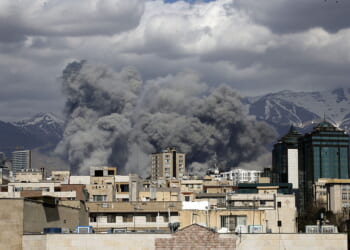
After the US and Israel began attacking Iran in February, the rogue nation and world’s largest state sponsor of global terror moved to close the Strait of Hormuz in retaliation. Between 20% and 30% of the world’s total oil supply (depending on the year) travels through the Strait of Hormuz, a 104-mile stretch that connects the Persian Gulf with the Gulf of Oman and the Arabian Sea. Going around rather than through adds as much as two weeks and 4,000 nautical miles to the trip and jacks up oil prices. Violence in the strait and Iran’s new plan to charge a per-barrel toll affect those costs, as well.
But only most of the oil shipped through the Strait of Hormuz is destined for Asia. Some much smaller portion is headed for Europe, and only about 7% of America’s oil imports – just 2% of the nation’s total consumption – comes via that sea route. Tensions in the region increase pain at the pump here as it does everywhere because of what we can call the “political risk premium.” Oil is priced globally, and so if the cost per barrel increases worldwide, gas prices go up worldwide as well. But that doesn’t mean the US supply is in danger.
That’s why, just a few days ago, President Trump said during an address: “We’re now totally independent of the Middle East… We don’t have to be there. We don’t need their oil.”
“The US imports almost no oil through the Hormuz Strait and won’t be taking any in the future. We don’t need it. We haven’t needed it, and we don’t need it,” he continued. “And the countries of the world that do receive oil through the Hormuz Strait must take care of that passage.”
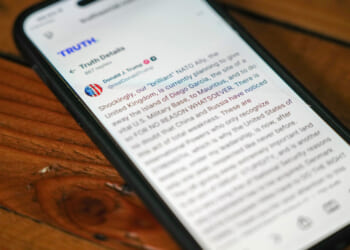
Will the pain at the pump continue? Yes. Will America run out of oil? No. Still, Trump did later backpedal on leaving the rest of the world to fend for itself in the region. On Saturday, the president posted to Truth Social that Iran had 48 hours to reopen Hormuz before “all Hell will reign down on them.”
President Trump had previously given Iran a ten-day ultimatum over the Strait of Hormuz, and that deadline is expected to come on Monday. He threatened to bomb the country’s energy, water, and oil infrastructure if no deal was reached in time. So far, no deal has been reached or even really appears close on the horizon.
‘Not Our War’ – A Poor Choice of Words?
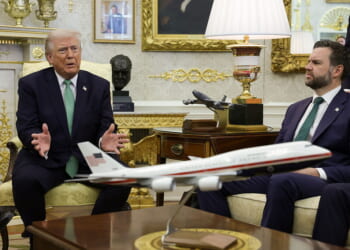
Last month, Trump tried to convince NATO allies to send their navies to help reopen the strait, but the general consensus among those nations was it’s “not our war.” That may have been an unfortunate choice of words, however. Trump reportedly threatened to leave NATO – something he probably can’t do – and to stop sending weapons to Ukraine – something he likely can do. “Not our war,” as it turns out, is a blade that cuts both ways.
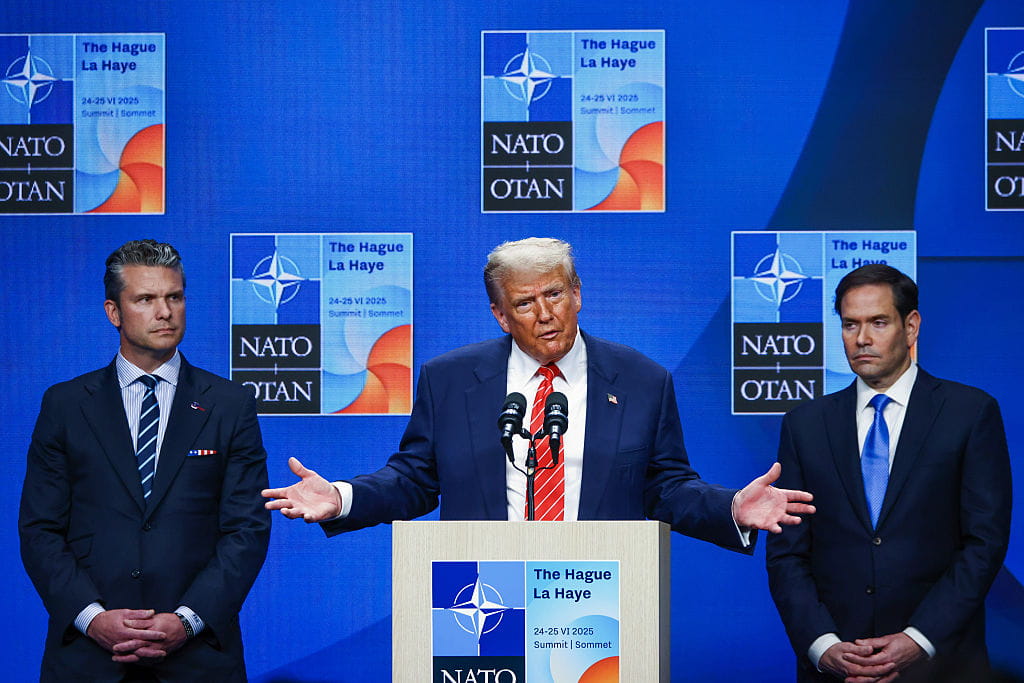
NATO Secretary-General Mark Rutte responded by urging a group of countries – including France, Germany, and the UK – to quickly issue a statement saying: “We express our readiness to contribute to appropriate efforts to ensure safe passage through the Strait [of Hormuz].”
The UK then convened a meeting of 41 countries on Thursday, April 2 – which notably did not include the US – to discuss plans to reopen the Strait. This is precisely what Trump wanted: for the countries most reliant on energy exports from the Gulf to handle the situation. “They must grab it and cherish it,” he said during a speech on April 1. “They can do it easily. We will be helpful.”
So far, however, the European solution has been talking of “diplomatic pressure” and “sanctions” should Iran refuse to cooperate. Meanwhile, their governments have begun rationing oil. Does this mean the global elite are finally moving on from American dependence?
Probably not – more likely they’re simply resigned to the fact that, with Trump in charge of US foreign policy, they don’t have much choice in the matter. As the US steps back, the rest of the world has to step up, whether they like it or not.
Globalism Needs American Money
In truth, these worldwide organizations need the US a lot more than the US needs them. There are 32 member countries in NATO – that’s the North Atlantic Treaty Organization for anyone who’s curious, not the North America Treaty Organization, as a recent headline from The New York Times print edition erroneously read. But the US provides nearly 70% of the alliance’s funding. America spends roughly $980 billion a year on NATO, and the next closest – Germany and the UK – come in at $93.7 billion and $90.5 billion, respectively. Neither quite hit 10% of America’s contribution, and it only goes downhill from there.
Meanwhile, the US is just one of 193 member states in the United Nations (less than 1% of the total), but it provides roughly 31% of the annual funding. Again, Germany and the UK come in second and third at 10% and 7%.
President Trump pulled America out of the UN’s Paris Climate Accord twice – once toward the end of his first term, and again upon taking office for his second after President Joe Biden rejoined in between. He withdrew the US from the UN Security Council in 2018 and again in 2026. In fact, in January of this year, Trump severed ties with a total of 66 UN-sponsored international organizations, which include significant funding cuts. He left the World Health Organization in 2025. The US had historically provided about 20% of WHO funding – a burden the remaining nations now have to shoulder.

In an opinion article published by PassBlue, a news outlet that closely tracks US-UN relations, international lawyer Mona Ali Khalil accused Trump of “sending the UN to Hell.” It seemed a clear criticism, of course, but it’s also the sort of spin President Trump himself might appreciate. He has been clear from the beginning that he harbors no love for international governing bodies that threaten the sovereignty of the US and leech our resources.
The president’s threats to leave NATO, however, aren’t quite as likely to come to fruition. In 2023, Congress and the Biden administration passed a law preventing the president from withdrawing from NATO unilaterally. Instead, now the process requires a 60-vote consensus in the Senate, something Trump is unlikely to achieve any time soon. But he can still put the hurt on the alliance in both funding and function.
NATO operates on unanimous decisions. Without every member agreeing to an action, it can never happen. The easiest way to effectively kill NATO, then, is for Trump to withdraw America’s active participation – this could be limited to simply refusing to vote for any NATO proposal or it could potentially even include refusing to send troops or supplies. The other avenue would be to refuse to sign any bill, including appropriations for the organization. Consider that $980 billion annually that comes from the US. Again, Germany is the second-highest contributor, but the nation’s tax revenue for 2025 was a mere $314.5 billion, when counted in USD – and Germany is Europe’s largest economy.
President Trump and MAGA may be done with globalism, but the globalists certainly aren’t done with America. They simply can’t afford to be.