When people talk about political division in America, they usually mean red states versus blue states. But what happens when the divide runs straight through a state itself? And what if a group of counties decides the only fix is to switch territories entirely? That’s the debate now emerging from Appalachia, where a West Virginia lawmaker is openly encouraging dozens of counties in Virginia and Maryland to break away and join his state instead. The idea sounds dramatic and almost impossible, yet it’s rooted in real political frustration felt in rural communities across the country, and it raises questions that reach far beyond state borders.
Virginia and Maryland Invited to Secede
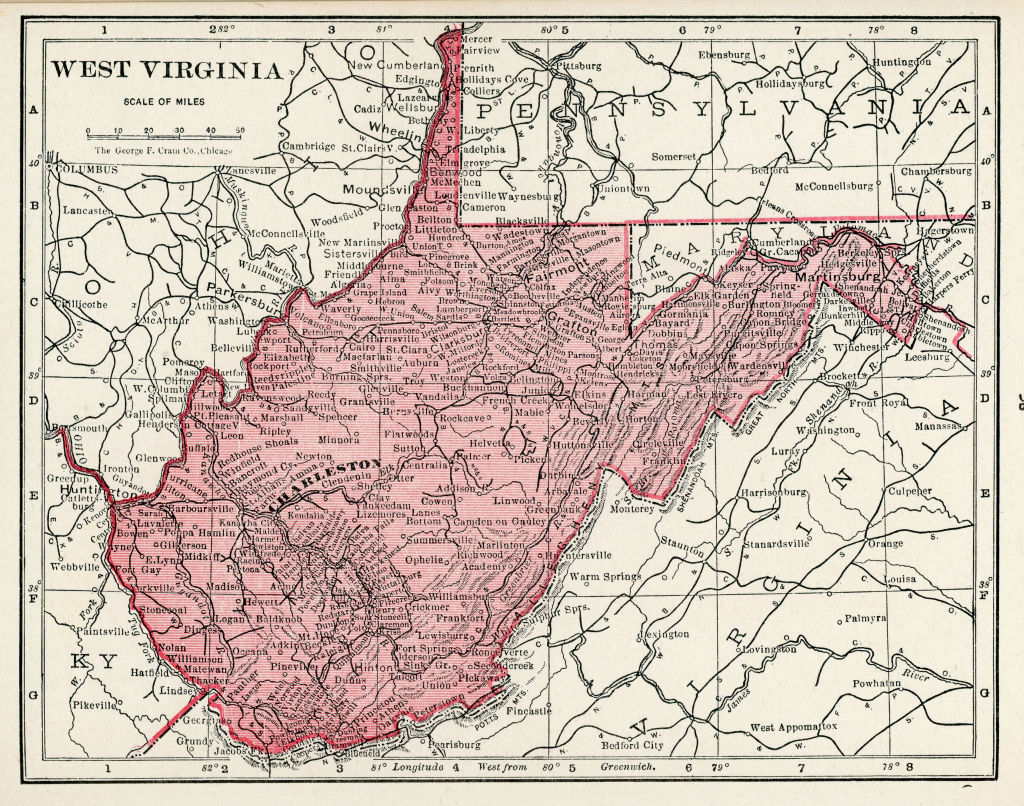
West Virginia Republican Sen. Chris Rose wants to invite others to his state in what he calls an “Appeal to Heaven” movement. In mid-November, Rose urged 30 Virginia counties and three Maryland counties to consider leaving their states and becoming part of West Virginia. His argument is that residents in these rural border regions feel outvoted and overlooked by the more populated, politically different areas in their home states.
“Exciting update on our Appeal to Heaven movement for freedom in Appalachia!” Rose wrote. “Due to overwhelming interest and support, I’m thrilled to announce we’ve expanded our Senate resolution inviting even more Virginia counties, along with counties from Maryland, to join West Virginia. Now including Amherst, Bedford, Botetourt, Floyd, Pulaski, and Rockbridge, counties that share our values of freedom, Second Amendment rights, and rural prosperity. Let those country roads take you home. Break free from out of touch policies and unite for a stronger future.”
While the idea may sound far-fetched, it taps into a widening divide between rural and urban areas and parallels other movements around the country where counties are openly questioning to which state they want to belong.
Switching states is not like changing school districts. If a county left Virginia or Maryland and joined West Virginia, everything tied to state governance would change. Residents would follow West Virginia laws, pay West Virginia taxes, gain West Virginia state representation, and rely on West Virginia for public services such as education, transportation, and law enforcement. According to the US Constitution, this type of transfer would require approval from the legislature of the state losing the county, the legislature of the state gaining it, and Congress. Not an easily achievable feat. State legislatures are reluctant to give up territory, voters, taxes, and political influence. Congress has shown no interest in reopening the era of shifting borders.
West Virginia itself is the product of a Civil War-era split from Virginia in 1863 — but that happened under extraordinary wartime conditions that do not apply today. So while the movement has symbolic weight, the legal path remains extremely narrow.
Rose’s argument reflects a sentiment expressed across many rural communities – that decisions made in distant state capitals don’t represent their values or priorities. “But with all the federal bureaucrats that are moving to their state and they’re outvoting the native Virginians and Marylanders, they don’t have a fighting chance in their elections,” he said.
This rural-urban divide is driving a notable rise in secession-themed county movements, according to a Brookings Institution analysis. The think tank notes that several rural counties around the country have taken steps toward symbolic or exploratory border-change efforts.
Other States Looking at Seceding
California
California has seen several high-profile attempts to either leave the United States entirely or break itself into smaller states. The most widely known effort is Calexit, a proposal that would ask California voters whether the state should begin the process of becoming an independent country. In March, the California Secretary of State cleared an initiative for signature gathering that would require future statewide votes on potential independence.
Another push came from San Bernardino County, the largest county in the United States by area. Its Board of Supervisors voted to place a referendum on the November 2022 ballot asking voters whether county officials should explore all legal options to obtain “its fair share of state resources,” including the possibility of forming a new state separate from California. While the measure passed, CalMatters reported that the vote was largely a symbolic expression of frustration over funding and governance rather than a functional first step toward secession.
California also has seen repeated attempts to split the state into multiple new states. One of the most publicized was the “Cal 3” initiative funded by tech investor Tim Draper. The plan sought to divide California into three separate states and qualified for the ballot in 2018 before the California Supreme Court removed it, ruling the measure would cause “far-reaching” changes that required more thorough legal review.
Idaho
The most high-profile modern example is the “Greater Idaho” movement. In this case, conservative rural counties in eastern Oregon want to leave the Beaver State and join Idaho.
Since 2020, 13 Oregon counties have passed ballot measures supporting discussions about joining Idaho. Gem State lawmakers even passed a symbolic resolution in 2023 expressing openness to talks. But legislative negotiations never advanced, and by 2024 the movement appeared to be losing momentum.
Financial concerns played a major role. Critics note that rural counties tend to require more per-capita spending on infrastructure and services while generating less tax revenue. Idaho analysts publicly raised concerns that absorbing so many new counties would burden the state budget.
Illinois
Dozens of counties have passed referendums calling for separation from the Chicago-dominated state government. Indiana legislators even drafted a bill earlier this year to explore absorbing unhappy Illinois border counties. But Illinois’ attorney general has made clear that counties cannot legally secede without state approval, which they are unlikely to receive.
Realignment Almost Impossible
Despite their differences, these movements share common themes. Rural or inland counties feel overshadowed by the state’s major population centers, and some voters believe smaller or more ideologically aligned states would better reflect their priorities.
Legally, however, the path is almost impossible. The US Supreme Court ruled in Texas v. White (1869) that states cannot unilaterally secede from the Union. Any attempt to withdraw from the United States — or form a new state from an existing one — would require approval from the California Legislature and the US Congress.
Although none of these efforts has progressed beyond symbolic stages, they highlight how regional tensions can spark dramatic proposals. Even if no state borders move, these efforts expose a deeper question: Are current state boundaries still working for modern political and cultural realities? Many counties pushing for secession are not seeking independence. They want governance that aligns more closely with their values.
For policymakers in state capitals, these movements act as warning signs. If rural communities consistently feel unheard, symbolic secession votes may eventually take the form of political backlash, alternative governance proposals, or large-scale migration.