A great benefit of visiting Israel, as I am now, is the immediate ability it confers on you to judge the validity of whatever particular narrative is, at that moment, capturing the attention of foreign audiences.
The current anti-Israel narrative on the left is the accusation that the Jewish state is hostile, sometimes violently, toward Christians. By contrast, the emerging anti-Israel talking point among a segment of the conservative movement known as the “woke right” is more specific: There is no theological reason to support Israel, only secular reasons, and therefore “Christian Zionism” is a contradiction or even heresy.
Being in Jerusalem during the Christmas season is clarifying on both.
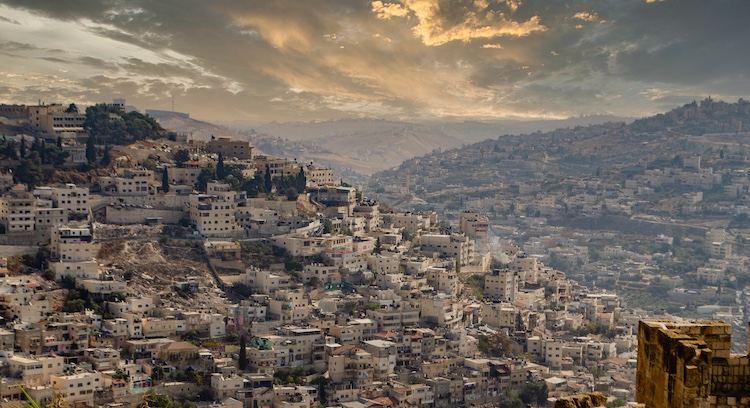
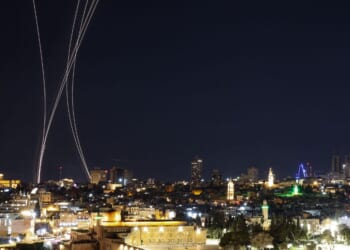
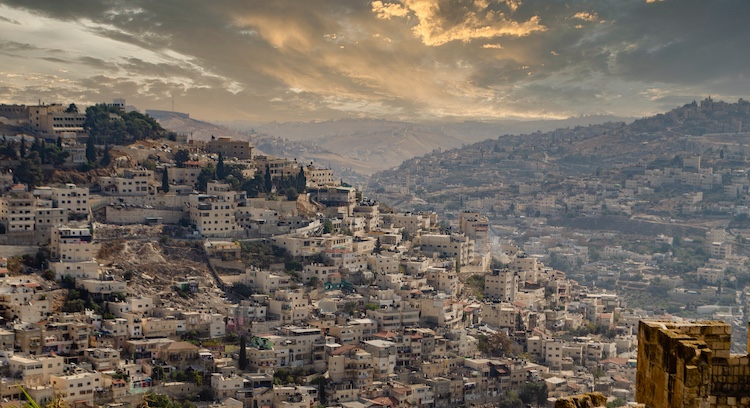
The two narratives are related: The right-wing version has cropped up because the left-wing version is too easily disproved. Walking through the eternal Jewish capital during the month of December, one is tempted to laugh at the tension that exists outside these borders. Here we can include all three Abrahamic communities, as the Old City serenades visitors and residents with the sounds of Jews davening and the muezzin’s call to prayer and church bells ringing to the tune of worship songs. At this time of year, the only landmark more visible from afar than the Dome of the Rock is arguably the Christmas tree outside the Jerusalem YMCA.
Of course, a Christmas tree doesn’t disprove the existence of conflict. But it is impossible to spend much time in Jerusalem, especially the Old City, without engaging its various religionists. Daily coexistence is unremarkable. Each individual incident of conflict isn’t falsely cast as the norm here. In Western media, this reality is inverted. In the eyes of the world, there is no crime in Israel, only holy war. When you’re here, you see just how much that microscope distorts the picture of what is, in fact, typical civilian life.
This is why the anti-Zionists on the right are forced to come up with a different excuse to justify their own personal distrust of Israel. I am no Christian theologian, but that’s OK—it turns out the “heresy” argument is a distraction. That, too, is easier to see from here.
One can grant the claim that there is no theological imperative for Christians to support Israel at all, but that is not the same as saying that there is a theological imperative to be hostile to Jewish Israelis.
As the theologian Brian G. Mattson asks, “what has Israel to do with a modern Christian heresy? Has the state of Israel ever embraced or promoted or associated itself with Christian Zionism, other than to accept enthusiastic support wherever it can be found, particularly when in short supply? The modern Jewish state no doubt has its own notions of its origins, essence, and purpose … and they are unlikely to have been cribbed from modern evangelical Christian sensibilities, making it strange to hold Israel responsible for ideas held by some of its American supporters.”
Again, the theological discussion looks interesting from the outside. But the discussion the rest of us can more easily weigh in on is the political one, and here is the political reality. The Christian population of Israel is still growing, some years even as a percentage of the total population, and that is not the norm in the rest of the region. But this time of year, the issue tends to focus on one place more than others: Bethlehem.
The answer to why the Christian population is struggling in this historical Christian city is the same, however, regarding the question of Christian struggles in the Palestinian territories. The Christian population of Gaza has plummeted since Hamas’s 2007 takeover. The community’s population in Bethlehem has deteriorated since the Palestinian Authority took control of the city in 1994.
Hamas’s activities both in Gaza and in places like Bethlehem (Hamas exists in the West Bank, as well) have made the Christian population unsafe and also forced into a second-class citizenship status. As Eness Elias notes, it has become increasingly difficult for Christians to buy land in places under Palestinian control. Elias also recounts a story in which “Sanaa Razi Nashash from Beit Jala described how she went to the police to file a complaint against a Muslim man who assaulted her—only to find the assailant wearing a police uniform.”
Chasing Christians out while preventing them from buying property is a pretty airtight strategy to ensure the population only goes one way: down. And it’s the prevailing policy in places under Palestinian governance. Others report that the Palestinian Authority “is erasing” Christians from education curricula as Muslim students become the majority in previously Christian schools.
Walk around Israel and instantly understand that is the opposite of the case for Christians governed by the Jewish state. Ideological and theological debates over Zionism (of any flavor) are beside the point here, because it is where theory ends and reality reigns.