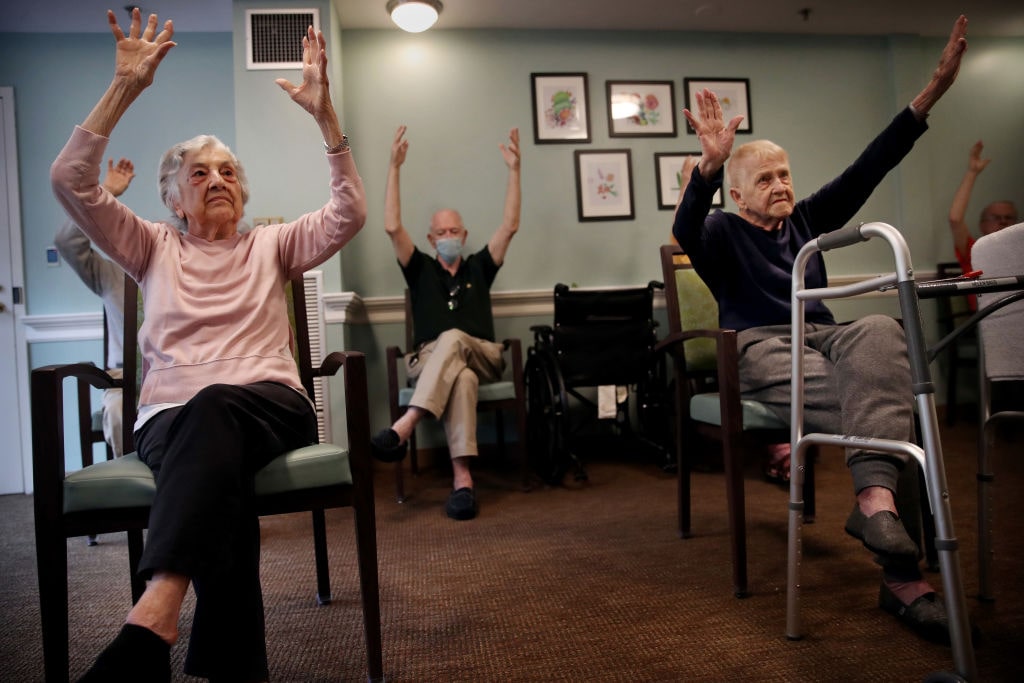
Remember when you could jump out of bed like a spring, no stretching required, no joints complaining? These days, you ease your way up carefully, hoping not to pull something before breakfast. Twist an ankle, catch a stubborn flu, push yourself a little too hard – all things you used to bounce back from fast – and suddenly the recovery drags. As you reach a certain age, that natural rebound slows in a way you can actually feel. It’s exactly this shift that new research is now trying to pinpoint.
The Body’s Age Clock
New research from Dalhousie University in Canada suggests that, for most people, the mid-70s mark a real biological tipping point. At somewhere between 73 and 76, the human body’s resilience – its ability to recover from injuries, illnesses, and the general wear-and-tear of life – drops off dramatically.
 The data behind this finding includes nearly 13,000 participants with an average age of 67, evaluated across more than 30 health attributes, ranging from chronic diseases to mobility and daily functioning. Researchers used the Frailty Index to quantify “health deficits,” then built a mathematical model to track not only how fast deficits accumulate, but also how well people recover from them. What it found was that up until around age 75, the body still manages a balance of “damage and repair.” Past that point, however, repair slows to a crawl, and deficits start piling up faster than the body can heal.
Imagine your body is a repair shop. For decades, it fixes dents and scratches quickly enough that everything stays more or less functional. But at around 75, the repair crew gets slower, the backlog builds up, and, as a result, more things eventually stay broken.
This doesn’t mean you can’t age well; the researchers stress that this frailty tipping point doesn’t guarantee collapse. It means recovery becomes harder. If stressors are reduced – if you’re experiencing fewer injuries, fewer heavy exposures, and less chronic strain – then the accumulation of problems can be slowed. Lifestyle habits matter, especially if adopted years before hitting your mid-70s. Ways to do this include regular exercise, a balanced diet, stress management, vision and hearing care, fall prevention, and generally keeping your body in good working order.
All Is Not Lost
New research suggests that the type of exercise matters just as much as the timing. A 2025 report in Cell analyzed the long-term effects of exercise on aging pathways and found that resistance training triggers molecular changes that directly support longevity by improving mitochondrial efficiency and cellular repair capacity. In other words, aging bodies may lose resilience, but they respond remarkably well to being pushed before that tipping point arrives.
This vulnerability of the body isn’t the only reminder that our prime doesn’t last forever. As Liberty Nation News reported, brain researchers at the University of Cambridge mapped brain wiring across nearly 4,000 people – from infancy through the 90s – and found that the brain doesn’t mature in a smooth line. It moves through phases with sharp turning points, including a major shift around age 32.
That research showed our brains finish the major wiring changes of adolescence only by the early 30s, not 25 as was previously thought. From then until about 66, brain structure stays fairly stable; our thinking, personality, and mental speed plateau. After 66, though, connectivity starts gradually deteriorating, and by 83, there’s a more noticeable decline in global network stability, shifting us toward “local circuit” thinking (like remembering faces well but struggling with new names).
Combine the two findings, and a picture emerges of aging as a multi-layered cascade, not a smooth slide. The body’s resilience, the brain’s wiring, and even how we bounce back from everyday stressors all shift at different times.
That’s not to paint a bleak future. Rather, it’s a roadmap, a powerful reminder that while we can’t stop time, we can influence how gradually our bodies decline. What if we treated midlife not as coasting but as preventive maintenance? If you start strength training, joint mobility work, cardiovascular conditioning, mental fitness routines, and sensory checkups, maybe you never eliminate the decline, but you slow the slide.
Cardiologist Eric Topol, 70, in an interview with The Washington Post, spoke about what he called “super agers,” people who were healthy in later life. For his book, Super Agers: An Evidence-based Approach to Longevity, he studied 1,400 healthy adults who were 80 years or older. He admitted to believing longevity was about a person’s genetic makeup, but after research, he discovered there was one main thing a person could do to fight age and live healthier: exercise.
“Of all the things we know about, the one that rises to the very top is exercise,” he told the outlet. “In fact, it’s the only intervention in people that has shown any effect on slowing the body-wide aging clock, meaning it appears to change how rapidly we age. Of course, other lifestyle factors, like diet and social interactions, are critically important. But if there is one thing that has the most exceptional evidence for healthy aging, it’s exercise.”
Furthermore, “This idea that you can’t build muscle or strength as you age is silly. No matter what your age, and I’m not young anymore, you’re fully capable of getting stronger and athletically fit.”
At the end of the day, our bodies and brains literally have internal clocks, but they don’t tick down at the same pace. Some parts slow early, others later. Knowing when those turning points come and taking steps to improve our health makes all the difference.