A few months ago in Damascus, I discovered a medieval hospital. The door had been left slightly ajar, and I wandered in with my companion Hassan Idlibi — a rebel fighter and old friend. He hadn’t been in the Old City since the fall of Syria’s capital, exactly a year ago today. “When Damascus fell,” he told me, “we were at our lowest ebb. Even the attack on Aleppo was our last gasp. We wanted to break the stalemate. And then we just pushed and pushed, and we ended up sleeping inside the Umayyad Mosque. It was a miracle.”
Idlibi, like many Syrians, did not interpret the taking of Damascus through geopolitics — but as divine intervention. This wasn’t because he was a mindless zealot. Far from it. He is one of the most well-read men I know. But, to his mind, the fall of Damascus was so sudden, so unexpected, that only the miraculous could explain it. The victory, he noted, had been achieved by those who had been motivated by Islam. Help had come from foreign fighters, the mujahideen, who travelled from across the globe to aid their co-religionists. And the campaign had been led by a former jihadi, Ahmed al-Sharaa, now the interim president of Syria. At the time, the old al-Qaeda operative, then known by his nom de guerre, Abu Mohammad al-Jolani, had a $10 million American bounty on his head.
After more than a decade of slaughter, no one had expected the capital to collapse. Assad, then president, had seemed like a stubborn wart: unpleasant but immovable. Jolani’s rebel enclave in the northern city of Idlib looked too small, too besieged, to pose a serious threat — though in fact it was performing better economically than inflation-ravaged Damascus, helped along by a reliable flow of Turkish hard currency. I myself expected the rebels to negotiate. What leverage did they have? Yet this rebel government, roughly the size of Croydon, took over the instruments of state, and since then has avoided stumbling into a new civil war.
The unexpected and largely peaceful victory was attributed to piety, prophecy, steadfastness. Some have even compared the final conquest of Damascus to Muhammad’s bloodless conquest of Mecca in 630. The idea of a “miracle”, here, is not mere rhetoric — it shapes political expectations. Some Syrians, at least based on my social media, think all this makes Sharaa “the one”, with my Facebook messages and WhatsApp chats awash with prophetic readings of the present. One believed Syria would now enjoy 10 years of peace before the war with Israel begins. Perhaps, he suggested, this was the prelude to the end of times. After all, so-called “Greater Syria” — encompassing much of the Levant — plays an important role in the Syrian and indeed Muslim sacral imagination. It is where prophets walked and is the place where many of the end of times narratives will play themselves out.
“Some have even compared the final conquest of Damascus to Muhammad’s bloodless conquest of Mecca in 630.”
Yet if the fall of Damascus seemed miraculous to many Syrians, the survival of the new administration will depend less on providence than on governance. Despite his past, Sharaa has so far demonstrated an unexpected level of political finesse. He has kept the constitution, held elections — albeit with 70 seats appointed by himself — and all the while has acted the statesman. He is savvy enough to not mind having President Trump spray his latest fragrance on him in the Oval Office, or Syrian Jewish rabbis blessing him.
Sharaa has made some promising early decisions. By keeping the civil service intact, he has avoided the catastrophic purge that helped destroy post-invasion Iraq. He should continue recruiting highly-educated young Syrians from the diaspora — people familiar with Western administrations and political norms. Even so, the administration still has a tendency to fear scrutiny and behaves as if under siege. It should welcome a regulated free press, which would expose blind spots, not undermine authority. The British press has reported that Jonathan Powell’s Inter Mediate is working with the new government. This should be welcomed rather than criticised — not only for reasons of conflict resolution and soft power, but for its value in statecraft and building institutional capacity.
Sharaa’s priorities for the coming year are clear. The country remains immensely fragile, caught in a regional tug-of-war between Israel and its neighbours, and divided along ethnic and sectarian lines. The situation could easily drift into a reprise of Lebanon’s civil war. Sharaa’s first task is therefore to mend Syria’s sectarian and ethnic fractures with a sense of equity. The trials that began this month over the coastal massacres in Latakia will be an important test of how the country intends to move forward. The Druze and Alawite communities — already bruised by conflict and mistrust — require justice delivered without the language of sectarianism.
Meanwhile, Kurdish anxieties must be addressed by ending the Arab-first ideology of the old regime. Syria has never been a purely Arab country: even its favourite son, Saladin, the builder of that hospital I visited and whose grave in Damascus still draws multitudes, was a Kurd. Last year’s tentative permission for Kurdish new year celebrations (Newroz) suggests that a more pluralist future is possible. Yet it remains unclear how far Kurdish cultural expression will be allowed to develop. Already this month, exchanges of fire between Syrian government forces and Syrian Democratic Forces (SDF) units under Kurdish command show how fragile the situation is.
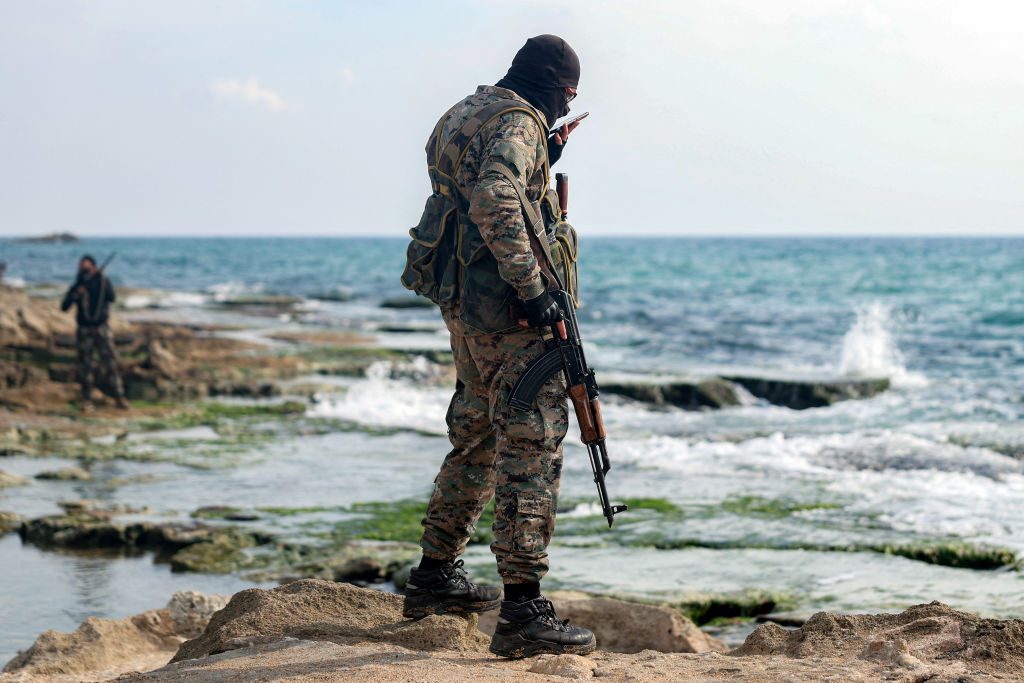
Perhaps the most difficult balancing act involves the foreign fighters who fought on Sharaa’s side. They carry immense symbolic weight in Syrian society — and are the cause of immense fear in the West. Many are ready to resume normal life, but others still see themselves as Islam’s warriors. Recent clashes in the Idlib countryside involving French foreign fighters reflect anxieties that any rapprochement with the West might see them handed over to their home governments. The image of Sharaa standing beside Trump, receiving a symbolic “anointing” of his new fragrance, alarms them even if such engagement is politically necessary.
Granting these fighters legal status, regularising their papers, integrating some into the national army or demobilising them with stipends and educational opportunities — not unlike the GI Bill for US veterans — could go a long way toward neutralising one of Syria’s most volatile pressures.
Then there is the conundrum of Israel. On this, Sharaa has cultivated deliberate ambiguity. At the United Nations, Syria has repeatedly noted its restraint regarding Israel’s illegal strikes on Syrian territory, yet Sharaa has resisted pressure to join Trump’s flagship Abraham Accords. Signing them now would be political suicide. But ambiguity buys him room to manoeuvre — and time to consolidate the state. The question is how long this can last.
For its part, the West has worked to prevent Syria from sliding into another civil war — one that would inevitably spill over into Europe, potentially replaying the exodus of 2015. With regional partners like Saudi Arabia and Turkey, Western governments have effectively restrained Israeli escalation, aware that renewed instability would eventually reach Jerusalem’s door. It’s not impossible to imagine rebels, having overthrown a “pro-Western stooge” like Sharaa and aided by foreign fighters, actually marching toward Israel, convinced that “the infidels” will never allow them to determine their own future. As they did in Damascus, so too — in their imagination — must they do in Jerusalem.
Thus far Sharaa has governed with surprising openness. He has welcomed Britain’s foreign secretary David Lammy, met American diplomats and General David Petraeus, played basketball with US soldiers, and cooperated in counter-terrorism operations. He has also restored relations with London, with foreign minister Asaad al-Shaibani reopening the Syrian embassy.
If Western governments refuse to work with him because of his Islamist roots, they will share responsibility should Syria fracture again. Sharaa’s past is not erased; he may remain an uncomfortable partner. But what is the alternative? That he be excluded from political life and drift into a Castro- or Maduro-like role on the sidelines? If the Saudi Crown Prince can be brought in from the cold after the Khashoggi murder, then almost anything is possible.
Here I recall a meeting with former Saudi spy chief Turki al-Faisal in his South Kensington apartment after the release of his memoir. Faisal lamented how his advice went unheeded after the Afghan-Soviet war. He had urged the international community to launch something akin to a Marshall Plan — an investment programme to stabilise Afghanistan. Had that happened, the region might not have unravelled. Instead, the country collapsed into years of civil war.
Likewise, fully lifting sanctions on Syria and providing a major investment programme, coupled with training and cultural exchange, could restrain the country’s more radical elements. Reining in Israeli escalation, de-escalating the Druze conflict, and mediating between the SDF and Damascus would all help prevent new wars. On this, the West could also spare itself a future security headache by helping Damascus regularise or demobilise foreign fighters rather than leaving them to drift. This would all help to displace messianism.
What, then, would such investment bring the West, beyond avoiding another gaping wound on its eastern flank? For sure, it will not turn Damascus into another Beirut, a place for foreign journalists to party, nor into a Deano-friendly Dubai. Syria will likely remain socially conservative, more like Muscat in Oman. Given time, however, it could become a commercial hub with a distinct cultural life, just as it has been for much of its epic history. This isn’t mere optimism: Sharaa turned Idlib, once a distant town, into a magnet for Damascenes seeking commercial opportunity. Investment now would bring the West a friendly partner, business prospects and political influence. The choice is stark. With support, Syria could become a kind of West Germany: rebuilt, integrated, and stable. Without it, the country risks becoming a new Jerusalem — a battleground charged with fire and prophecy.