A string of national security breaches at the University of Michigan was linked to the school’s research partnership with Shanghai Jiao Tong University, an elite Chinese engineering institution with ties to the Chinese Communist Party. More than two dozen major U.S. universities hold similar connections to Shanghai Jiao Tong, creating vulnerabilities that Beijing may be gearing up to exploit, national security experts and China hawks told the Washington Free Beacon.
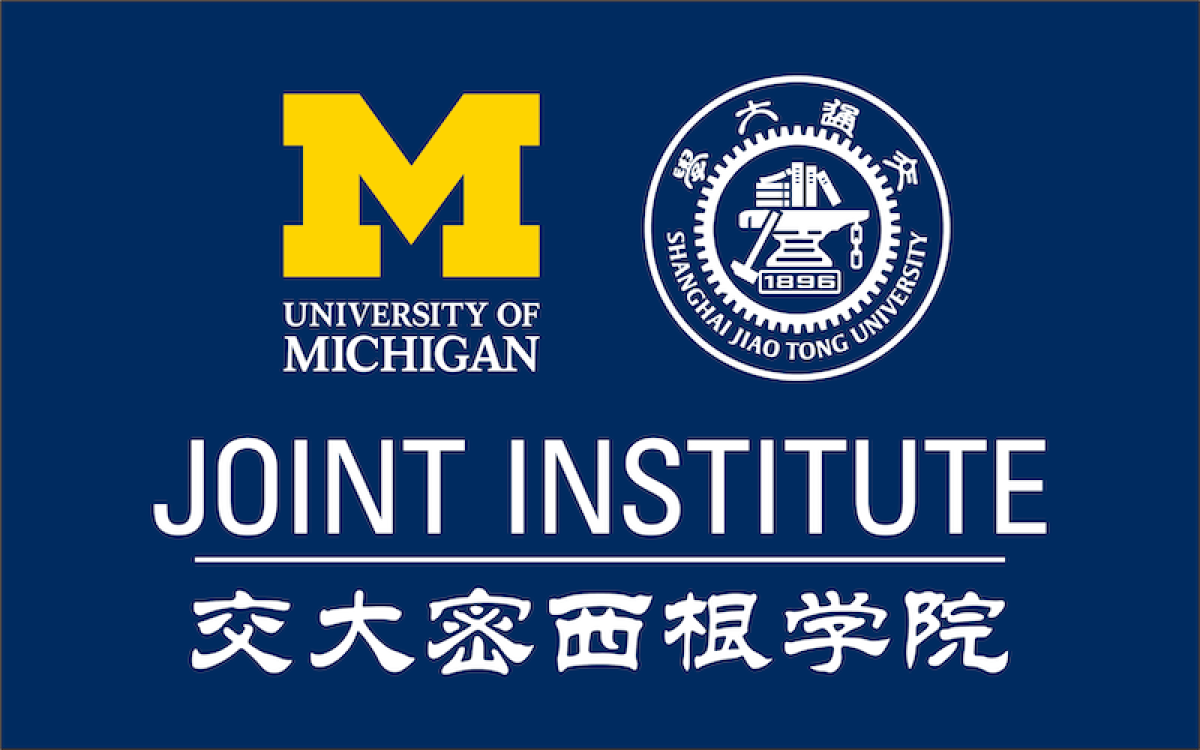
Since October 2024, the Department of Justice has charged at least 12 University of Michigan students, researchers, and recent graduates—all Chinese nationals—with national security-related offenses, a scale far outpacing any other U.S. school. Five of them were accused of taking photographs of military drills at Camp Grayling. They all belonged to an engineering partnership between Michigan and Shanghai Jiao Tong, which House Select Committee on China chair Rep. John Moolenaar (R., Mich.) said “was helping the CCP modernize its military” and allegedly sits on a People’s Liberation Army (PLA) base.
Michigan, under pressure from Moolenaar, went on to end its 20-year partnership with Shanghai Jiao Tong in January. But other top U.S. universities maintain ties to the Chinese school.
Shanghai Jiao Tong maintains joint institutes, dual-degree programs, and student and faculty research exchanges with more than two dozen top American universities—including Columbia, Yale, Cornell, Northwestern, the Massachusetts Institute of Technology, and the University of California, Berkeley—in fields ranging from engineering to public health and finance, a Free Beacon review found. The University of Southern California, for example, houses the Institute of Cultural and Creative Industry, which “leverages the influence of SJTU” and offers students from the Chinese school a master’s of management studies.
A USC spokeswoman said the university’s “agreements with that institution have been dormant for years and have never involved sensitive technologies.” While the institute’s USC website’s most recent updates are from 2020, Shanghai Jiao Tong continues to highlight the partnership in a way that suggests it is still active. A Nov. 1 post says the “USC-SJTU Institute of Cultural and Creative Industry (ICCI) is actively exploring innovative education practices that integrate digital and intelligent technologies,” while another notes that a USC associate director attended a September event hosted by the institute in Shanghai. The spokeswoman said the institute’s “use of the USC name stems from a 2014 agreement and does not reflect current involvement by USC in any of their activities.”
The surge in cases at the University of Michigan could nonetheless indicate that Beijing is gearing up to exploit those partnerships at other universities, according to Center for Immigration Studies senior legal fellow George Fishman.
“That’s a real risk,” he told the Free Beacon. “I don’t know if there’s a unique vulnerability at the University of Michigan, but whether there is or isn’t, the federal government needs to act.”
“If there is a vulnerability and the University of Michigan refuses to correct that vulnerability, the federal government could shut off student visas for the University of Michigan,” Fishman continued. “If it’s not unique to the University, then this is something that needs to be solved nationwide by the federal government.”
The University of Michigan did end its partnership with Shanghai Jiao Tong, but it’s evident that wasn’t enough to correct those vulnerabilities. At least six more Chinese students were accused this year of smuggling in dangerous biological materials, including parasitic roundworms and a fungal pathogen that federal prosecutors described as a “potential agroterrorism weapon.”
Four of those worked at the same University of Michigan lab, named for its director, Shawn Xu. That spurred a Justice Department investigation into the lab and Xu, who routinely hires Chinese-educated postdoctoral fellows and received two degrees from Wuhan University, which Moolenaar has described as “a direct extension of the Chinese military and intelligence apparatus” that trains PLA cyber warfare specialists, operates national defense laboratories, and is supervised by several Beijing agencies.
One of the perpetrators, Chengxuan Han, was pursuing her Ph.D. at another Chinese institution with PLA links: Huazhong University of Science and Technology, a Wuhan-based school whose laboratory is overseen in part by representatives from the PLA’s National University of Defense Technology and conducts research on subjects such as using artificial intelligence to identify software vulnerabilities. Han was recently removed from the United States after pleading no contest to smuggling multiple shipments of biological materials related to roundworms.
The students’ associations with PLA-affiliated schools in China, Foundation for Defense of Democracies (FDD) research analyst Jack Burnham said, mean there were warning signs that made spying and smuggling preventable.
“These were individuals that the university should have been able to flag, saying these individuals have credible links to the CCP, … [and] have connections to Chinese state-run programs designed to steal intellectual property,” he said. “The University of Michigan certainly had the ability to not admit these students based on these connections.”
Punishing the university for failing to identify those warnings could encourage other schools to take the issue seriously and to alert the federal government if they identify one, according to Hudson Institute senior fellow Michael Sobolik.
“We want to incentivize universities to cooperate with the FBI and not be penalized for recognizing a problem and then bringing it to law enforcement’s attention. That’s something that we need to incentivize, but we also need to incentivize self-policing, and we need to give them a new incentive to respond to because this fact pattern just at one university is crazy,” Sobolik told the Free Beacon.
China also represents an outsized problem. Roughly 330,000 Chinese nationals are studying in the United States—a total that’s second only to India—and any one of them could become an agent for Beijing, according to China experts.
“Any [People’s Republic of China] national can be coerced and pressured into doing things for the Chinese Communist Party,” Sobolik said. “That doesn’t mean all Chinese students are bad, but the CCP has leverage over all of them.”
Fishman noted, “It’s not something that could be found out before they came here, because they wouldn’t even know it themselves.”
The experts recommended barring Chinese students from enrolling in STEM majors—a particularly vulnerable subject area, according to an ICE spokesman—and restarting the China Initiative, a Justice Department counterspy program under the first Trump administration. Even though it investigated 2,000 PRC-linked threats and led to high-profile prosecutions, President Joe Biden shuttered it as university faculty across the nation condemned the program as racist.
“Research security isn’t xenophobia—it’s common-sense protection when biological agents are involved,” FDD senior China fellow Craig Singleton said.
But according to ICE chief of staff Jon Feere, such policy steps address only part of the problem. Vulnerabilities within the academic visa system itself, he warned, are even deeper.
“Rarely does a week go by without ICE identifying a threat within our F, M, or J visa categories,” Feere said. Those visas cover academic students, vocational students, and educational or cultural exchange visitors, respectively. “Our foreign student program is all too often a breeding ground for terrorism, intellectual property theft, fraud, and espionage. ICE is constantly working to defend our homeland against those who use this program to spy, pilfer intellectual property, or bring dangerous materials into the United States.”
The University of Michigan did not return a request for comment.