One year after their sweeping victories, Trump and the GOP are now being held fully accountable for their governance.
As with any clean sweep in a presidential election year, Donald Trump and the Republicans celebrated with gusto after winning the trifecta — control of the White House and both chambers of Congress — in 2024. They would now hold all the keys to the kingdom, allowing Trump and his congressional allies to dream big. After all, holding maximum power is the goal of any political party. But as the old saying goes, be careful what you wish for.
It’s not like the Republicans would have preferred not to seize control of all they survey, but with the privileges of unchecked power come full responsibility for the subsequent results. And the president, in particular, is feeling the heat from voters expecting him to reverse the many crises he inherited from Joe Biden that he promised to fix. Sure, Trump enjoyed a second honeymoon for a few months as voters gave him time to enact his many radical reforms as they recovered from four dreadful years under the previous administration. But now, as the end of his first year in office approaches, it seems people are getting restless and starting to pin the blame on Trump for the persistently high cost of living, as much of the country continues to live from paycheck to paycheck.
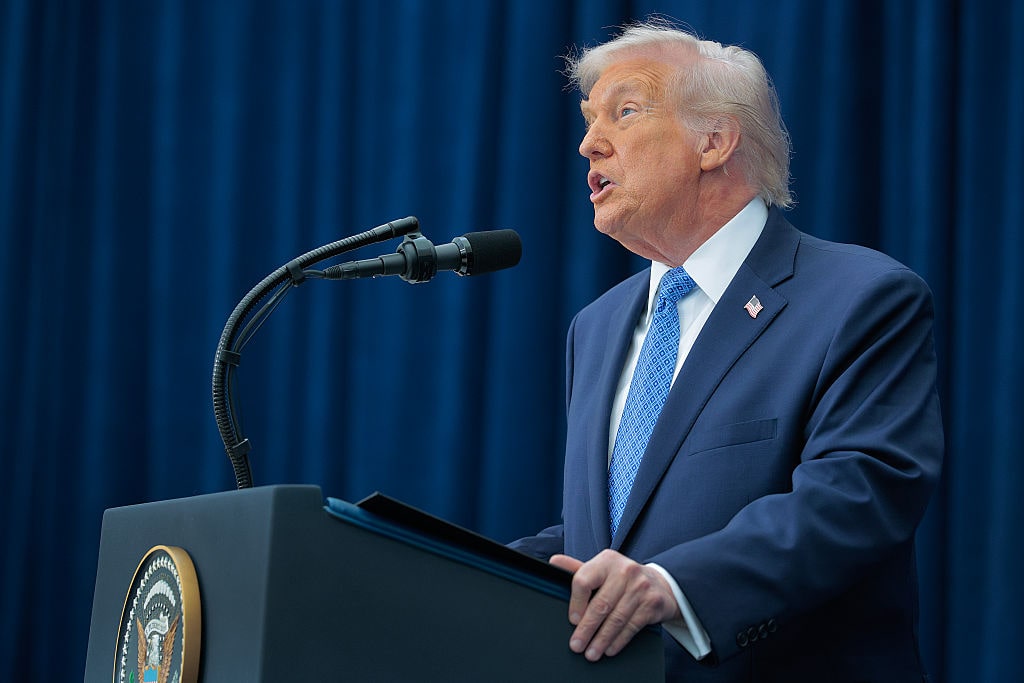
As evidenced by his trip to Pennsylvania on Monday (Dec. 8) to tout his economic program, the president appears to understand the mood of the country and has thus embraced “affordability” as his newest mantra. He will likely follow up with trips to other key swing states responsible for his victory.
That’s all well and good, but with perilous midterm elections approaching in less than a year, the president must deliver tangible results or risk losing control of the House and perhaps the Senate. In fact, it would be quite a departure from historical norms for the GOP to maintain its grip on power. First- and especially second-term presidents almost always suffer losses two years out from winning the presidency, when the millions who voted against the man in power are highly motivated to turn out. Indeed, midterms are uniformly driven by grievances, most or all of which will accrue to the benefit of the divided Democrats despite their own record-low approval.
Cracks in the Armor
In addition to Republicans being held largely responsible for prevailing economic conditions, other cracks in the GOP’s armor are starting to show. Internal divisions, largely papered over in the afterglow of the election, have begun to surface. Exhibit A is Marjorie Taylor Greene, long considered as pro-MAGA as any member of Congress, but who resigned her seat after a public spat with the president. She has now been embraced by the left and has said of her former congressional colleagues, “I think they’re terrified to step out of line and get a nasty Truth Social post on them,” adding that “it would shock people” to hear how Republicans in Congress talk about Trump behind the scenes. So much for loyalty.
This is part and parcel of one-party rule. No longer able to blame their powerless opponents, members of the party in power start to tangle with each other. In the first two years of the Biden era, when Democrats held the trifecta, moderates Joe Manchin and Kyrsten Sinema were constantly at odds with their progressive colleagues in the Senate. As Biden’s term went on, dissenting Democratic voices got louder as they worried about their own careers. The same now holds true of the GOP. If the economy does not show demonstrable improvement over the coming months, when reforms in the One Big Beautiful Bill are fully implemented, Republicans facing competitive races will likely start to separate from Trump, however gingerly.
Risks and Rewards for Republicans
It is postulated that Americans writ large prefer divided government, though there is scant evidence to prove it. In the 21st century alone, Democrats held the trifecta for two years under Biden and four years under Barack Obama, and Republicans for four years under George W. Bush and four at least under Trump. That adds up to a majority of the century spent under one-party rule.
There are many risks inherent in any single party controlling all the levers of power. It often leads to increased polarization, reduced government efficiency and responsiveness, and heightened risks to fair elections. The likelihood of corruption, abuse of power, and an erosion of bipartisan cooperation becomes greater than in divided government. And, generally speaking, one-party rule often leads to gratifying a narrow ideological base that helped elect the president instead of focusing on broader public needs. The party holding the trifecta will inevitably not be held to the same level of oversight and accountability as in two-party rule.
At the same time, it is only with one-party rule that the Republicans or Democrats can institute sweeping changes, for better or worse. With an overwhelmingly Democratic Congress, President Franklin D. Roosevelt was able to institute the explosively controversial, history-altering New Deal. Likewise, Obama pushed through the game-changing Affordable Care Act, which would never have been passed without Democratic control of the White House and both chambers of Congress. Trump’s first-term tax cuts would have been dead on arrival if the GOP had not also controlled the House and Senate.
Come 2026, will Americans double down or recoil from Republican one-party rule? This president has, from the start of his second term, demonstrated a relentless urgency to accomplish his audacious agenda within his first two years. Having lost control of Congress midway through his first term, he realized from the get-go that the GOP could easily lose its grip on Congress next year. If historical trends hold, he has good reason to believe so. But then, Trump has defied history from the moment he descended that golden escalator. Can he do it one last time?
Liberty Nation does not endorse candidates, campaigns, or legislation, and this presentation is no endorsement.