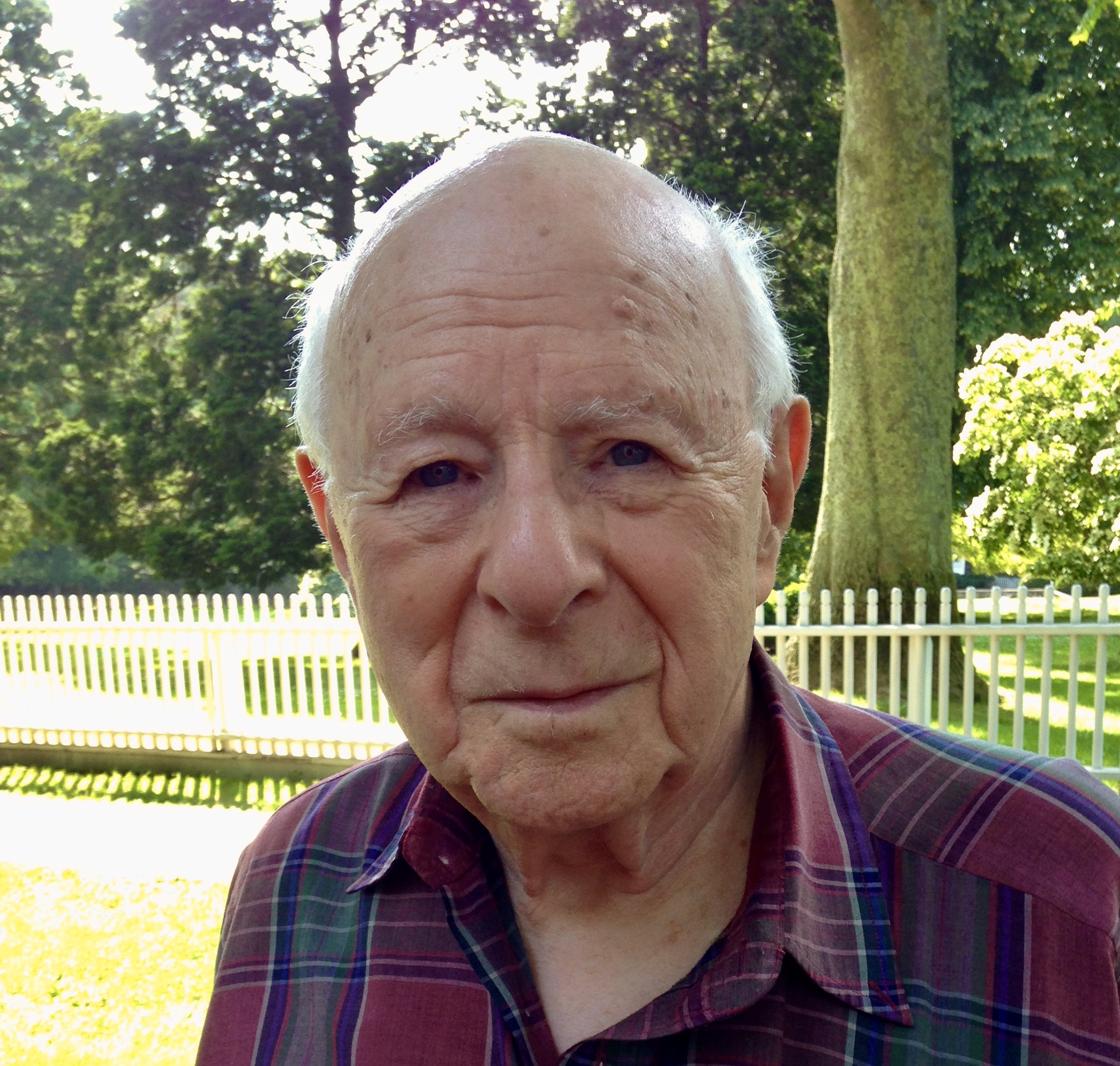
My father died tonight, December 16, a month shy of his 96th birthday. Norman Podhoretz passed peacefully and without pain, with a new translation of The Odyssey on his desk that had been sent to him by his friend Roger Hertog. It sat next to a copy of Alexander Pope’s legendary translation, which he had asked my sister Naomi to order for him so he could compare the two.
At the very end of his life, Norman Podhoretz was his truest self, a man of letters.
His greatest teachers, the men who had the most profound effect on him—Lionel Trilling at Columbia and F.R. Leavis at Cambridge—were critics who believed the life of the mind as expressed in literature was a high and noble calling. And I don’t think it’s bragging to say that he was a great literary critic, the last and maybe finest flowering of the group often called the “Partisan Review crowd”—though he did not write much for PR and published his most remarkable work in Commentary‘s pages, beginning with a review of Bernard Malamud’s first novel, The Natural, pushed at the ripe old age of 23. Our website records he published 145 articles in these pages from 1953 to his final appearance, in a colloquy with me about the magazine, in November 2020.
There will be so much to be said about him in the days and weeks and months to come. I’ll say more, as will many, many others. But right now, what I think you might be most surprised to know about my father is not that he was an astonishingly courageous intellectual force… though he was. Nor that his determination to remain true to his ideas, his country, and his people were actually profoundly costly to him in terms of the hostility that he generated and the friends he lost…though all of that is true. Nor that he changed America and the world with his own work (those 145 articles, two decades of newspaper columns in the New York Post and the Washington Post, and 12 books) and his 35 years at the helm this magazine, unequivocally and inarguably one of the most important editorships in American history…though he did.
What you really need to know is that what mattered most to him was writing. Great writing. Good writing. Clear writing. Honest writing. He was the most literate man I have ever known, possessed of an encyclopedic knowledge of the written word in our time and in times past, who found true moral, intellectual, and aesthetic purpose in the act of reading and deciphering and comprehending. And he was himself a prose stylist of magnificence. There is no other word for it, and anyone who says otherwise is judging him not by his sentences but by views he held they do not like. That was a sin against honesty he never committed. There were many writers whose views he abhorred, but whose gifts he would absolutely acknowledge and ruefully refuse to deny.
He often said he would forgive any insult if the person delivering it said he was a good writer. He was a man of great wit and a man of deep wisdom and he lived an astonishing and uniquely American life. And he bound himself fast to his people, his heritage, and his history. His knowledge extended beyond literature to Jewish history, Jewish thinking, Jewish faith, and the Hebrew Bible, with all of which he was intimately familiar and ever fascinated. He made the life of the mind a joyous sport. Along the way of his life from Brooklyn poverty to Manhattan comfort, he fathered and raised four children, 13 grandchildren, and 16 great-grandchildren. Though the memory is green, I believe his work and his lineage will serve to honor the astonishing contributions he made to the world he has left.