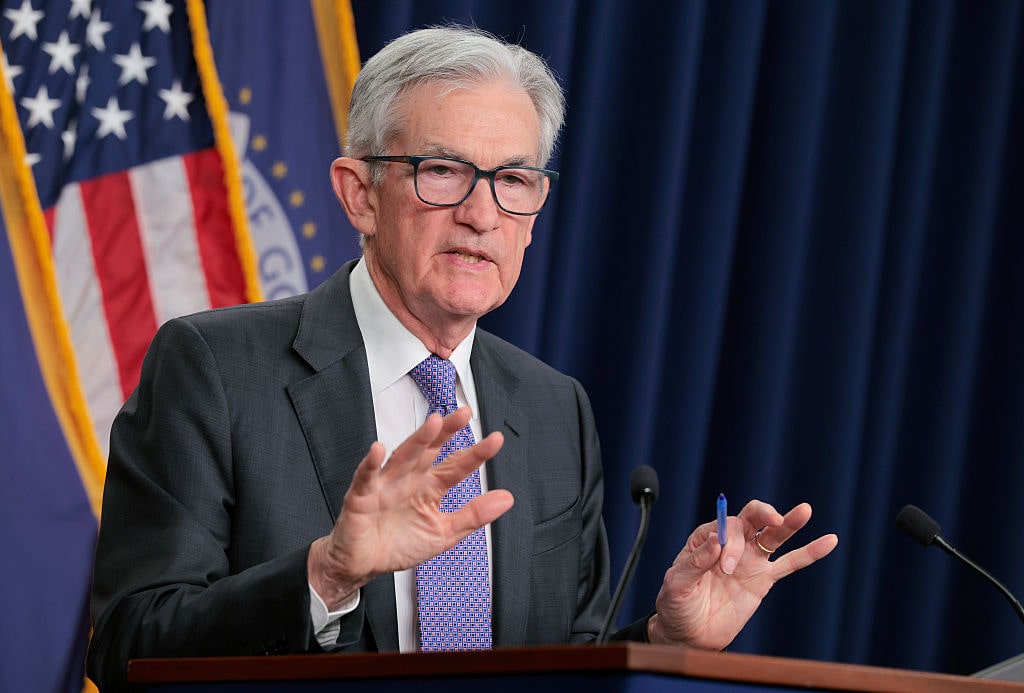
The lag effect of monetary policy rears its ugly head. Was Federal Reserve Chair Jerome Powell too late? New employment data suggest that the US central bank may have arrived late to the easing cycle – again – when it cut interest rates for the first time this year in September. Powell and his fellow doves may have needed to heed the advice of Fed Gov. Christopher Waller or even President Donald Trump when they insisted the institution should have lowered interest rates earlier.
Jerome Powell Reads the Jobs Data
Heading into the December Federal Open Market Committee policy meeting, the Fed lacked key government economic data, specifically the November nonfarm payrolls report and the November consumer price index (CPI) figures. This is why Chicago Fed President Austan Goolsbee and Kansas City Fed President Jeffrey Schmid opted for no changes. If policymakers had access to these numbers, or at least the employment statistics, would the central bank have listened to Fed Gov. Stephen Miran and followed through on a half-point interest rate cut instead?
The Bureau of Labor Statistics released the delayed, highly anticipated jobs data for October and November. Depending on your vantage point, the bureau may have been better off delaying it again.
The findings presented a varied picture of the national labor market. Last month, the US economy added just 64,000 new jobs, and the unemployment rate rose to 4.6%, the highest since September 2021. Now, some context is required. Job creation exceeded economists’ expectations of 50,000, and the November reading was an improvement from the 105,000-job decline in October.
A deeper dive further reveals just how mixed the job situation is right now. Average hourly earnings ticked up 0.1%, or five cents, to $36.86. Year-over-year, average hourly earnings eased to 3.5%, from 3.7%. Additionally, full-time employment declined by 983,000, but part-time payrolls surged by more than one million. The labor force participation rate rose to 62.5%, average weekly hours climbed to 34.3, and the long-term unemployment rate jumped to 24.3%.
Much of the hiring has been concentrated in health care and social assistance. This is entirely related to America’s aging population. The construction sector also added a healthy 28,000 jobs.
Heather Long, chief economist at Navy Federal Credit Union, may have best described employment conditions to CNBC: “The US economy is in a jobs recession.”
Too Late
The next time the Federal Reserve will convene its two-day meeting will be later next month. By this time, the central bank will have the December jobs report, which will provide a fuller picture of America’s employment situation. But the monetary authorities have suggested that they will lower interest rates only one more time in the year ahead, by a paltry 25 basis points.
When a labor market is in a downturn, it can spiral out of control quite rapidly. This has been Waller’s fear for several months, as evidenced by various indicators, from revisions to youth joblessness. Miran has also warned that the Fed needs to return to a neutral rate more quickly to prevent further deterioration in the labor market.
It is safe to say, however, that the Fed was spooked by inflation during the Biden era. Since monetary officials missed the mark on a 40-year-high inflation rate, insisting it was transitory, they do not want to keep overshooting their 2% target. However, the CPI or Personal Consumption Expenditures (PCE) data suggest that inflation has stabilized, with estimates pointing to the low twos when excluding tariffs.
If the downside risks to the employment side of the Fed’s dual mandate are worse than the upside risks to inflation, then a larger rate cut might be necessary in January. Or, at the very least, a few more rate reductions. At the same time, this could send the wrong message to Wall Street, signaling that the Fed is worried the United States is slipping into an economic downturn.
Ultimately, the risk of the Eccles Building falling behind could have been avoided if the Fed had listened to either the president or the contrarians sitting on the Board of Governors.
Economy Still Going Strong
Despite the doom-and-gloom popping up in the labor market, the broader US economy appears to be going strong. While headline October retail sales were flat, the key retail sales control group, which contributes to GDP calculations, surged at a higher-than-expected rate of 0.8%. The Atlanta Fed’s GDPNow Model indicates the gross domestic product surged almost 4% in the third quarter. In the final three months of 2025, growth was likely above 2%.
Should everyone worry about the rising unemployment rate? Or is it a case of a lower breakeven rate driven by immigration changes and, as a result, a smaller supply of workers? It will be a gripping tale over the coming months.