As one of the country’s so-called “leading” educational institutions, Brown University has been putting on a master class in what not to do in crisis management and communications.
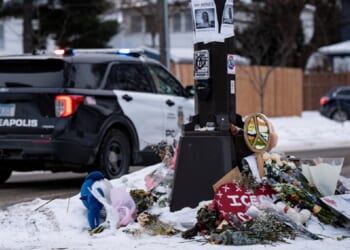
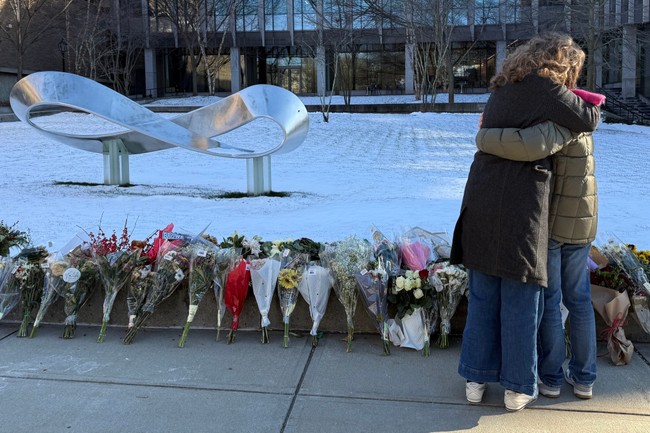
Of course, I’m talking about Saturday’s shooting in Brown’s Barus & Holley Engineering Building, where someone opened fire on a group of students preparing for an economics exam. Ella Cook, a 19-year-old sophomore from Alabama, and Mukhammad Aziz Umurzokov, an 18-year-old a freshman, were killed. Nine others were injured, some very seriously.
Much has already been reported on what a fiasco the police investigation of the killings has been. Shortly after the mass shooting, a suspect was taken into custody. That person was smeared all over the internet before the police realized they had the wrong suspect and still had no idea who the actual shooter was or where they might be.
Now, we’re told that officially there could have been two shooters, or maybe just one, but if you even ask about the person who seems suspicious and who seems to match the descriptive surveillance video of the shooter, police are going to shut you down.
Catherine has the latest on the hunt for the shooter.
There is no over-estimating what a tragedy this has been for the victims and their families. At the same time, armchair cops are just as dismayed over the amateurish approach to police work in the wake of the shootings.
The same holds true for those of us who work in crisis communications and crisis management. Communications-wise, it’s been one disaster after another. As someone who has handled hundreds of crises large and small, and who’s written my share of crisis plans, I’m embarrassed for Brown. When I saw one of their first interactions with the media six hours after the shooting, I was puzzled that the head of the university couldn’t even explain why the victims were in the room where they were shot.
🚨BREAKING: A reporter exposed this DEI Brown University President for having no answers after 6 freaking hours
BROWN UNIVERSITY PRESIDENT: “I don’t know”
REPORTER: “Six hours later, you’re the President and you don’t know. That’s kind of concerning.”
Do you agree she should… pic.twitter.com/79dHxypJSN
— Right Scope 🇺🇸 (@RightScopee) December 15, 2025
Actually, it disgusted me. There are certain things you must do when any crisis happens. First is to get and give a status on the immediate threat. Almost simultaneously, the next sep is to get as much information as possible on those who may have been harmed, the extent of their injuries, and their current status. In the case of a mass shooting, you have to know the status of the shooter, or whether the threat is ongoing. Right after that, in a case like this, there is no excuse for not knowing why the victims were where they were when they were hit by gunfire.
In breaking news situations, even if you have only five minutes before you have to stand in front of the press, you have to anticipate the most obvious questions and have answers before you step in front of the cameras. She did not.
As a result, she made herself look weak and inept, and she made Brown look awful. That dismal performance set the tone for more to come.
Then there is the issue of university security cameras. So far, it appears Brown was not able to capture any clear and compelling video surveillance footage that might help law enforcement identify a suspect.
The university provost’s answer here would be a good one if they had a suspect in custody, or if the public has seen any clear video of a suspect, but it has not.
Brown University operates 1200 cameras across campus.
With that level of surveillance, is it
unreasonable for people to say this feels like a cover up? pic.twitter.com/rP4CeTZGvQ— Open Source Intel (@Osint613) December 18, 2025
Since the killer is still at large, it is in everyone’s best interest to publicize the best possible video of the shooter, and that hasn’t happened. Brown’s provost appears to be passing the buck to law enforcement on this. But that’s not good enough. If you are telling people you have 1,200 cameras, and you have video that’s gone over to the police, you also have an obligation to push for the usage of that video to ID and help apprehend a suspect ASAP. Instead, they’re framing the whole surveillance video issue as a procedural matter.
In a rare outbreak of journalism, reporters have become openly hostile towards university officials, the Providence mayor, the police chief, and the Rhode Island attorney general at press conferences due to their perceived lack of urgency, curiosity, forthrightness, and competence.
🚨 HOLY CRAP! A LIVID reporter WENT OFF on Providence RI officials, accusing them of TAKING DOWN cameras in Brown University to shield illegal aliens
They had to abruptly end it!
“The camera in that building Brown pulled off, because the sanctuary city law we have! You don’t… pic.twitter.com/Qu4ztulYem
— Eric Daugherty (@EricLDaugh) December 17, 2025
Another serious problem tied to the optics of these press conferences are the sign language interpreters for the hearing-impaired. I’m all for The Americans with Disabilities Act, but you don’t need to have a sign-language person right next to the press conference speaker. I’ve made accommodations for the hearing impaired at events, but ASL interpreters at live press briefings where no one in the physical room is hearing impaired is just virtue signaling.
It’s not a requirement, and when you look at the “signers” they’ve brought to the press conferences, they are a major distraction, almost appearing to be mocking the people speaking. Even if you see this as a well-meaning gesture, it detracts from the seriousness of the situation, and it hurts communication.
🚨 BREAKING: Brown University shooting Press Conference is scheduled for 4pm ET
Here is this message in sign language 👇🏻 pic.twitter.com/p1NVhgEK9R
— Alec Lace (@AlecLace) December 17, 2025
Then there are problems with communication between the various parties charged with finding a suspect and bringing him to justice. They can’t even get their story straight on what kind of surveillance video they have. To make it worse, in real time during a press conference, they are stepping all over each other with conflicting information. Once again, there is no excuse for this.
🚨 EMBARRASSING UPDATE: In today’s press conference on the Brown University mass shooting manhunt, Providence Police Chief Oscar Perez and Rhode Island AG Peter Neronha openly contradict each other on basic facts about the key surveillance video.
Chief:…
— Heterodox Media (@HeterodoxMedia) December 16, 2025
Sticking with the Providence police chief, what on earth possessed him to start answering questions in Spanish? He’s in the middle of a press conference in the United States, and there is no practical reason for him to do this. Even if the questioner speaks in Spanish, they are in Rhode Island talking about something that is not specific to Hispanic culture. It’s baffling.
DEI Providence, Rhode Island police chief thinks it is imperative to speak Spanish during a new conference on the botched Brown University investigation.
— LetsGoBFLO (@HistorianUSA1) December 18, 2025
Just as with American Sign Language interpreters, it is important to ensure people of all languages and abilities have access to good information. Still, a certain communications triage needs to occur when conducting press events and disclosures during a crisis. Continuity and consistency are paramount. Switching back and forth between languages is only a sign that you’re unfocused, unserious and no one is really in charge. In short, it’s a sign the wheels are coming off.
There are so many valid questions being posed where reporters and the public deserve better answers than they’re getting, such as what about that student who’s been floated as a possible suspect? If he’s not, why isn’t he out there clearing his own name? What about that security video? Why aren’t we seeing better footage if it exists? If it doesn’t exist, how is that not a failure on leadership’s part here?
It just keeps getting worse. It seems that you have the worst and most incompetent people in every position of responsibility here, and they all want a role at every presser.
Sometimes when you work in crisis communications, you don’t have the luxury of getting time to prepare. You jump into a situation in midstream.
If that were me in this case, the first thing I’d do is name one spokesperson and tell everyone else to get out of the picture and provide support behind the scenes. This is to reduce confusion and avoid sending mixed messages. That person cannot be anyone we’ve seen to date. None have shown they’re capable of being a strong, consistent and singular voice for this crisis.
Second, you need airtight coordination between all parties behind the scenes, making sure accurate, verified information is flowing and available to the spokesperson right up until he or she takes the mic.
By now, you need to have a running list of the hottest questions, and everyone involved needs to make it their highest priority get thorough, clear and credible answers to each question. And if you can’t answer, you need to say why and what you’re doing about it.
As for fault and responsibility, the university president had an opportunity here, and like she’s done throughout, she dropped the ball.
When asked if Brown had proper safeguards in place, the president said “I do.”
That level of denial is astonishing. Zero accountability.
These institutions are circling the wagons while people pay the price. pic.twitter.com/0jVc0hUAti
— Michael Carbonara (@MCarbonaraFL) December 17, 2025
When she was asked if the school had the proper measures in place to prevent the shooting, she had an opportunity to be real. The only answer is, “Obviously, our measures weren’t enough to prevent this shooting or it never would have happened. We need to look at this issue from top to bottom once the immediate priorities before us have been addressed, and we have time to take corrective actions to prevent future shootings.”
What did she do? She defended her incompetency, and in so many words said it was good enough, in spite of the fact two people were killed and nine wounded.
Crisis management is not rocket science. What it requires more than anything is to take an unflinching look at what’s actually happening and commit to not sidestepping the realities of the situation. When you do that, you force yourself and everyone around you to step up and say the things that need to be said, and do the things that need to be done, to right the situation.
What Brown University, local and state politicians, and the local police have done is something quite different. The cumulative effect of all of this is that the public is left to assume none of them really care about protecting the public and the students at the university. Nothing they’ve said or done refutes this perception.
It’s the Christmas season, and there’s no better way to tell someone what they mean to you than giving them the gift of enlightenment! PJ Media VIP memberships are on sale! Get 60% off of an annual VIP, VIP Gold, or VIP Platinum membership! PJ Media’s VIP memberships give you the best way to arm yourself with some great arguments if you find yourself in a friendly debate with your leftist coworker or brother-in-law this holiday season. Join the fight! Use promo code FIGHT to get 60% off your VIP membership!