BBC director-general Tim Davie and BBC News CEO Deborah Turness resigned last month in the wake of serious allegations of bias at the publicly funded broadcaster. An internal memo by Michael Prescott to BBC board members revealed shocking editorial malfeasance, from Panorama’s doctoring of a speech by Donald Trump to BBC Arabic’s hiring of anti-Semites to the corporation-wide submission to trans-activist insanity. Yet despite all this, the BBC still insists it is objective and unbiased, asking us to deny the evidence of our eyes.
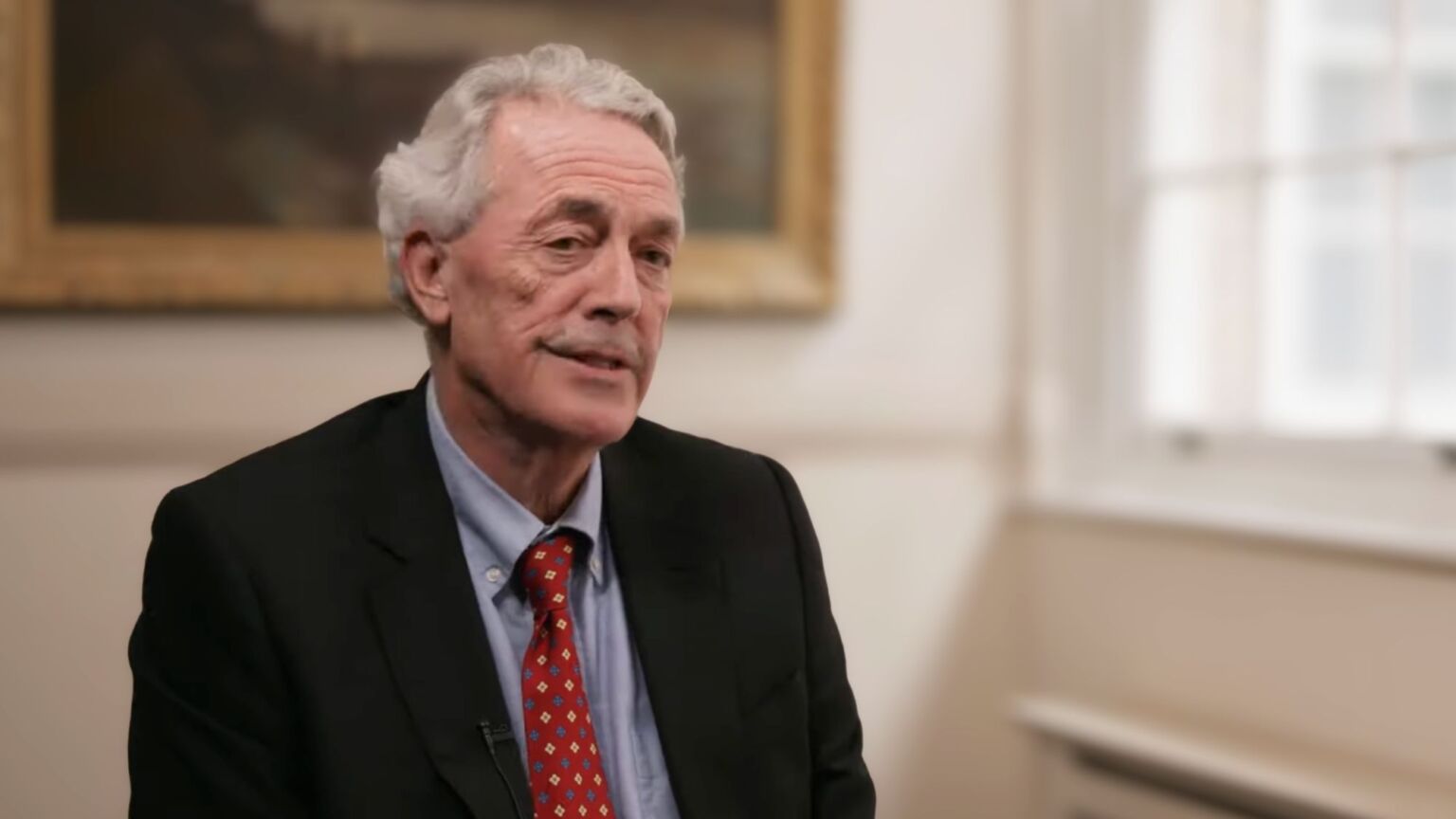
Drawing on his decades of experience inside the corporation, Robin Aitken joined Brendan O’Neill on his podcast, The Brendan O’Neill Show, to discuss how these controversies fit into a longstanding pattern of BBC bias. What follows is an edited version of that conversation. You can watch the full thing here.
Brendan O’Neill: Older readers will remember a time when the BBC was a more conservative, even slightly ‘stuffy’ organisation. When did things begin to change?
Robin Aitken: That’s a very interesting question. If you read the early history of the BBC, you’ll see that from the beginning, Asa Briggs, the official BBC historian, documented suspicions on the right about the corporation potentially being a collectivist, socialist project. In the 1920s and 1930s, there were even speeches in the House of Commons criticising the BBC for its perceived bias. But the BBC emerged from the Second World War with its status enhanced because of the noble role it played during the conflict. I find it very moving to read accounts of people in the French Resistance tuning in with their little crystal or shortwave radios to receive news that they trusted, surrounded as they were by Nazi propaganda. The BBC had its golden period during those years, while still being a socially conservative organisation.
What happened next mirrors broader societal changes, which I see as generational. My parents, born in the early 1910s, came to adulthood just as the Second World War began. Their lives were marked by existential threat, which instilled discipline and social conservatism. That generation held power into the 1960s. By then, the baby boomers – my generation – naturally reacted against their parents’ way of thinking. These young people then entered the BBC and other professions carrying the exact values that had been rejected by the previous generation.
Up until the 1960s, the newsrooms at the BBC would deliberately avoid controversy. They would report on it, but they wouldn’t simulate it. By the time I joined in the late 1970s, however, the organisation had begun to actively seek controversy.
Another important shift happened in the 1990s under John Birt, who, as deputy director-general under Mike Checkland, oversaw all of the BBC’s journalistic output. Birt abolished the departmental distinction between news and current affairs. This might sound minor, but it made a significant difference. In the radio newsroom, where I worked, news reporters traditionally focussed on the facts: who, what, where, when. But Birt argued that journalism had to go beyond that. It had to explain why. This placed the responsibility on journalists to interpret events, which naturally opens space for personal bias or revealed preferences.
O’Neill: How pivotal was the stance the BBC took against Margaret Thatcher in the 1980s?
Aitken: Thatcherism overturned, assaulted, and eventually vanquished a consensus that had existed since the late 1950s regarding the economy. This was essentially Keynesian economics: the idea that the state could, through judicious borrowing and funding, prime the economy to grow. You didn’t worry too much about borrowing because, in the end, the returns would outweigh the costs. But Thatcher didn’t believe that.
By that time, many of the key figures within the BBC were young people. Journalism, especially when running demanding programs like Newsnight or Today, is a young person’s game because of the long hours and intensity. These young editors carried the generational rejection of their parents’ values and were very hostile to Thatcherism. Also in those years, the BBC promoted and amplified a socially liberal message, which largely went unchallenged internally.
During the Miners’ Strike, which I reported on extensively in Scotland, the government pushed back because they felt the BBC was giving the miners too sympathetic a portrayal. That was partly due to the medium itself: television conveys human stories very effectively. Showing the hardships of mining communities, the struggles of wives, or the experiences of strikebreakers, is a lot easier than illustrating economic abstractions. For the broader audience watching the Nine O’Clock News, the emotional story of the people involved had far more impact.
O’Neill: What did you think when you read the Prescott report?
Aitken: I was quite shocked by some of the details. The idea of taking a speech by the president of the United States and editing it in a way that distorted its meaning is nothing less than a lie. I was also struck by the trans issue: why does the BBC have a stable of correspondents defined by their sexuality or gender identity? They wouldn’t have a group of correspondents defined by race. They wouldn’t assign all reporting of Jewish affairs to Jewish reporters. So why do this with ‘LGBTQ+’ people? It was shocking to see that such positions existed – although, the BBC’s reporting of trans issues over the previous decade had already suggested its stance was skewed.
Prescott’s memo made clear the full extent of the problem. For example, the BBC Arabic service appeared to be staffed largely by people openly sympathetic to Hamas, which is a serious journalistic lapse. In one way, I thought, ‘Here we go again’. Think back to the 1995 Martin Bashir interview with Princess Diana, and the revelations 20 years later about the cover-up and double-dealing to secure that interview. Prescott’s memo was just more examples of journalistic failings that stretch back decades.
The BBC higher-ups’ initial response to the Prescott memo struck me as completely incoherent. First, they suggested there had been a right-wing conspiracy – yet, according to their own account, Robbie Gibb (the only one right-winger, and therefore deemed the one responsible) was acting alone. Then there was the bizarre spectacle of the director-general and head of news resigning, claiming accountability, all while the corporation itself continued to insist there was no problem with impartiality. How do those things stack up? They are completely contradictory: the top bosses resign, yet nothing is acknowledged as wrong. It’s ridiculous.
Robin Aitken was talking to Brendan O’Neill. Watch the full conversation below: