‘For many states that were once great have now become small; and those that were great in my time were small formerly. Knowing therefore that human prosperity never continues in one stay.’ So wrote Herodotus in his Histories, in the fifth century BC. He reminds us that world history is not a morality tale between the ‘powerful’ and their victims. Rather, societies evolve, grow stronger and overcome weaker ones. People – and, more recently, capital – migrate to places that offer greater opportunities.
This was certainly true in the time of Herodotus. He was born in Greek colonies in what is now Turkey and died in another Greek colony in Italy. The search for better conditions – whether for grazing, farming or, more recently, manufacturing and technology – unravels older orders and paves the way for new ones. As a result, centres of power move. As French historian Fernand Braudel noted, between the 16th and 18th centuries, capitalism shifted from one hub to another – Venice to Antwerp to Amsterdam, and then to London.
With these shifts in power often come shifts in migration patterns. Where droves once headed to Western Europe from the former Soviet bloc, as the old centres stagnate, many may consider returning to the Eastern bloc, and even parts of the once-cursed ‘Club Med’, including Herodotus’s Greece.
Nowhere is this pattern more dynamic than in the United States. Most settlers who flocked there from the old world were motivated by hopes for a better life, not as a quest to impose racial supremacy, as is so often claimed today. Whereas Europe’s density tends to anchor power in London, Paris or Berlin, all of them capitals, the balance of power is constantly shifting in the US, from New England, in the 18th and early 19th centuries, to the mid-Atlantic states, followed by the rapid rise of the upper Midwest, which was then supplanted first by California and the West Coast, and more recently by Texas and the South.
Travel across America and the differences between regions can seem almost like those between nation states. The elite classes – and their chattering-class interlocutors – remain concentrated in New York, Los Angeles and San Francisco, places that retain much of the world’s ultra-rich. Yet the supremacy of these cities is being undermined by their growing failure to offer working- and middle-class citizens, particularly the young, the prospect of a better life.
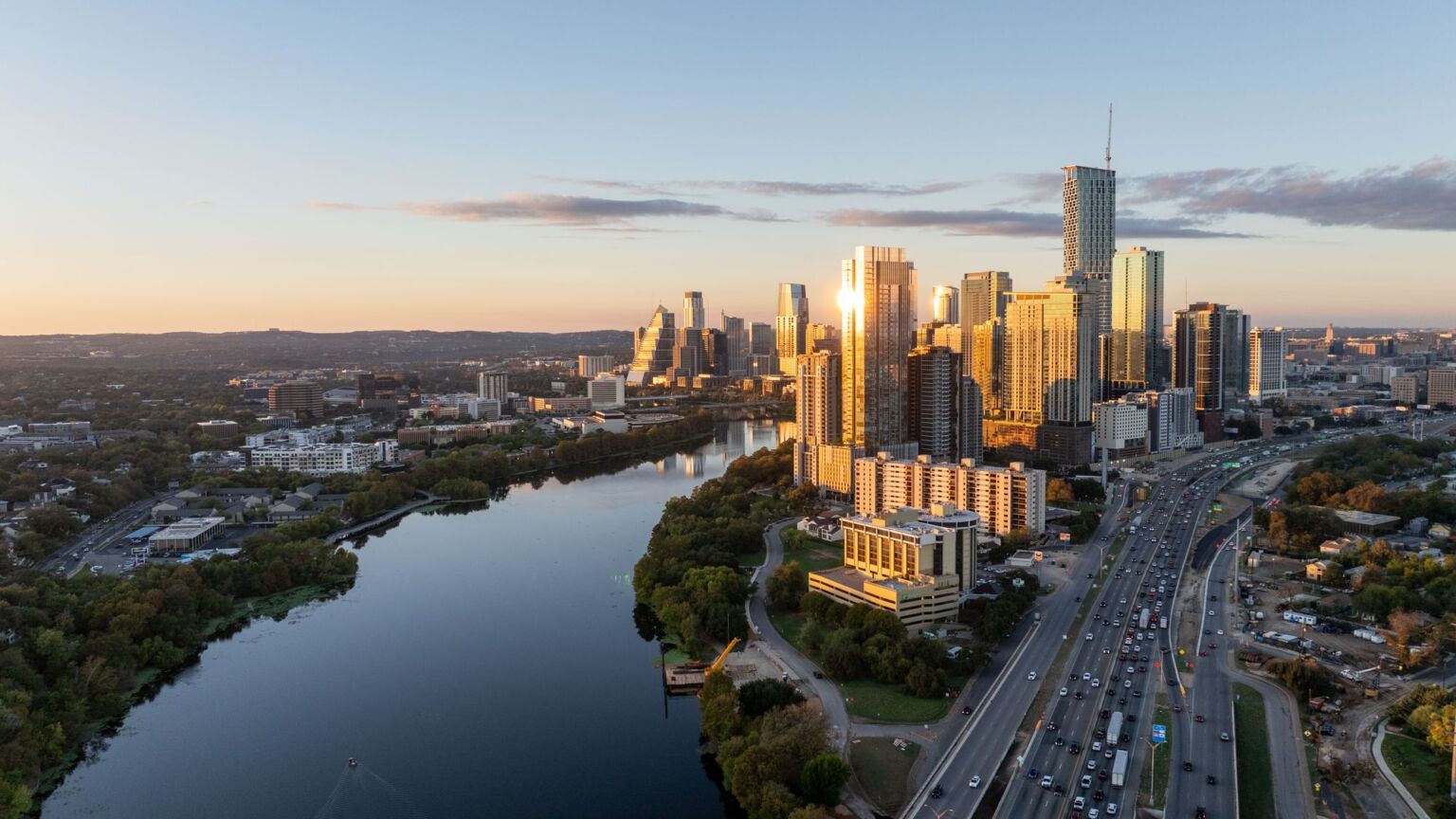
Over the past decade, economic and demographic momentum has accelerated towards Texas, Arizona, the Carolinas and Florida – places once dismissed as economically and culturally backward. None of America’s major growth hubs is now located in the north-east or California. The rising cities of today include Dallas-Fort Worth, Raleigh, Houston, Austin, Phoenix, Nashville and Salt Lake City.
This shift has been fuelled by stronger job growth in states such as Idaho, Utah, Texas, the Carolinas and Montana. By contrast, large urban states like New York, California, Illinois and Massachusetts sit near the bottom of the rankings. The same pattern applies to smaller metropolitan areas where job growth has surged, such as Fayetteville, Arkansas; Greenville, North Carolina; Grand Forks, North Dakota; and Ogden, Utah.
Migrants to these regions are generally finding their conditions improved. As Brookings Institution scholar Mark Muro has noted, salaries across a 19-state American ‘heartland’ region – essentially the middle of the country – are, when adjusted for the cost of living, above the national average. All 10 of the metropolitan areas with the highest average salaries are small or mid-sized markets, none with more than a million people.
Much of this transformation began with deindustrialisation. New York City had roughly one million manufacturing jobs in 1950; today it has around 70,000. Since 2000, California has lost more than 600,000 industrial positions. By contrast, recent industrial growth – driven by reshoring and foreign investment – has been concentrated in Midwest states such as Indiana, Wisconsin, Michigan, Iowa and Ohio, as well as in more recently industrialised Southern states including Alabama, Arkansas, Mississippi, Tennessee and Kentucky, which now dominate the list of states with the highest concentrations of industrial jobs.
Whole industries have followed. Energy, once largely controlled by New York and the West Coast, has consolidated in Texas and other oil-patch states, such as Oklahoma. Exxon left New York in the late 1980s; Chevron has recently departed California. New energy high-rises now grace the skylines of Houston and Dallas, rather than Sixth Avenue in New York or downtown San Francisco and Los Angeles. As America seeks to leverage its energy dominance – at least during the Trump years – lower energy costs in these states have also attracted jobs.
Even industries once thought best suited to coastal economies, notably finance and technology, have begun to disperse. New York, even before the election of socialist Zohran Mamdani, was losing its grip on investment banking and private equity. Despite the much-vaunted construction of the new JPMorgan Chase tower, the city’s share of finance jobs has fallen, with more positions shifting to places such as Dallas and Miami.
A similar pattern is evident in the high-tech sector. Although venture-capital-financed AI start-ups remain heavily concentrated in the Bay Area, the broader picture remains one of tech-job losses, according to San Francisco’s economic director, Ted Egan. By contrast, the Computing Technology Industry Association’s 2024 assessment found that Texas led the nation in new tech jobs, followed by states such as Florida, Georgia, Tennessee and North Carolina. California does not feature prominently among the states projected to enjoy the strongest growth in the sector over the next decade. New semiconductor plants – once a Californian speciality – are now being built elsewhere, notably in Texas and Arizona.
Migration patterns underscore the scale of change. Since 2000, California and New York together have lost more than four million net domestic migrants. Two further trends – falling immigration and declining fertility rates, especially in large cities – will make it difficult for these states to replenish their populations. Even Los Angeles County, the great exemplar of 20th-century growth, is now shrinking and, according to estimates, will lose a total 1.7million people by 2060.
Perhaps most strikingly, immigrants who once compensated for domestic outflows from big cities are now primarily heading to places such as Miami, Dallas and Houston. Increasingly, they are also moving to interior metropolitan areas such as Columbus, Indianapolis and Des Moines. These cities now attract a higher share of foreign migrants than traditional gateways such as Los Angeles, the San Francisco Bay Area or New York.
As has been the case throughout history, migrants move largely for opportunity. Blue-collar workers, in particular, are leaving places that impose far higher living costs while hollowing out the smaller industries and businesses that once provided working-class employment – particularly high-skilled, tangible jobs that are now often better paid than those requiring a university degree. A New York Times survey of the best places for good jobs for workers without four-year degrees identified cities such as Toledo, Ohio; Anchorage, Alaska; Des Moines; and Birmingham, Alabama.
Younger, largely educated workers are also on the move. As early as the 2010s, Texas and Florida were expanding their populations of college graduates far faster than California or New York. Where southerners once headed north for advanced education, now many northerners are moving south. Among the top 20 destinations for millennials, Austin ranked first; southern cities accounted for six, heartland states another six, and the intermountain west three.
Housing is central to these aspirations. Housing costs account for around 88 per cent of the difference in living costs between expensive metropolitan areas and the national average. Among people under 35, the places with the highest shares of new homeowners tend to lie outside the north-east and the Pacific coast. One study found that while 20 per cent of under-35s in Sioux Falls, South Dakota – an emerging tech centre – own their own homes, only 3.5 per cent can say the same in San Jose.
Comparable geographic shifts are visible elsewhere from Australia to Canada. Parts of Europe, including Germany, are also seeing movement, albeit at a slower pace, driven by older people and young families leaving core cities.
Such geographic rebalancing is a prerequisite for the vitality of Western societies. Dispersion may be essential to restoring conditions conducive to family formation. Large urban counties have suffered declines in their populations of young children at roughly twice the national rate. Fertility rates are far higher in states such as Wyoming, the Dakotas, Louisiana, Kansas, Texas and the Carolinas than in California, the rest of the West Coast or the north-east. Young people, as the economist Gary Becker observed, are crucial to an innovative economy – and in America they are increasingly likely to come from the interior.
These demographic and economic trends are also creating deep-seated fiscal challenges, the natural result of soaring spending and lagging revenues. Most midwestern and southern states remain in relatively sound condition, but the most acute problems are found in New York and Washington State. Poverty has risen in California, despite a stock-market boom that has enriched many companies, and welfare spending is growing far faster than revenues. The state’s non-partisan Legislative Analyst’s Office last month projected multibillion-dollar budget deficits for this year which will only get worse in future.
Given the ‘progressive’ dominance in almost all blue states, budgetary shortfalls are almost certainly addressed through higher taxes. In California, there is an initiative to tax the billionaire elite on unrealised capital gains. New York’s Mamdani and his allies in the state legislature share a similar interest in raising taxes, a notion that has support among the increasingly dominant ‘progressives’ in Albany.
This is likely to accelerate an already sizable migration of wealth, an intensifying wave of capital flight. Over the past decade, states such as New York, New Jersey, Illinois, and California have lost hundreds of billions to departing taxpayers, while states like Texas, Florida, Nevada, and Arizona have gained.
Political power is shifting, too. The South and the largely Republican Intermountain West are expected to gain 11 new congressional seats by 2030, adding further to their influence in the Electoral College.
Ultimately, America – and perhaps some other Western countries – should seek to foster these new avenues of opportunity. The existing urban hierarchy may prefer to restrain these shifts, but in doing so it only consigns itself to ever-greater irrelevance. The rise of new geographies, as history has shown, remains the most effective way to invigorate economies and stimulate innovation. Embracing the new geography of opportunity represents the strongest bulwark against stagnation.
Joel Kotkin is a spiked columnist, a presidential fellow in Urban Studies at Chapman University in Orange, California, and a senior research fellow at the University of Texas’ Civitas Institute.