The National Security Strategy requires reviving our defense industrial base, but how?
One of the critical elements mentioned in President Donald Trump’s recently released National Security Strategy (NSS) is “Reviving our Defense Industrial Base.” To that end, the NSS asserts, “America requires a national mobilization to innovate powerful defenses at low cost, to produce the most capable and modern systems and munitions at scale, and to re-shore our defense industrial supply chains.” These requirements beg the question: where are we today, and where do we need to be to have a defense industrial base to meet the threat?
A Revitalized Defense Industrial Base
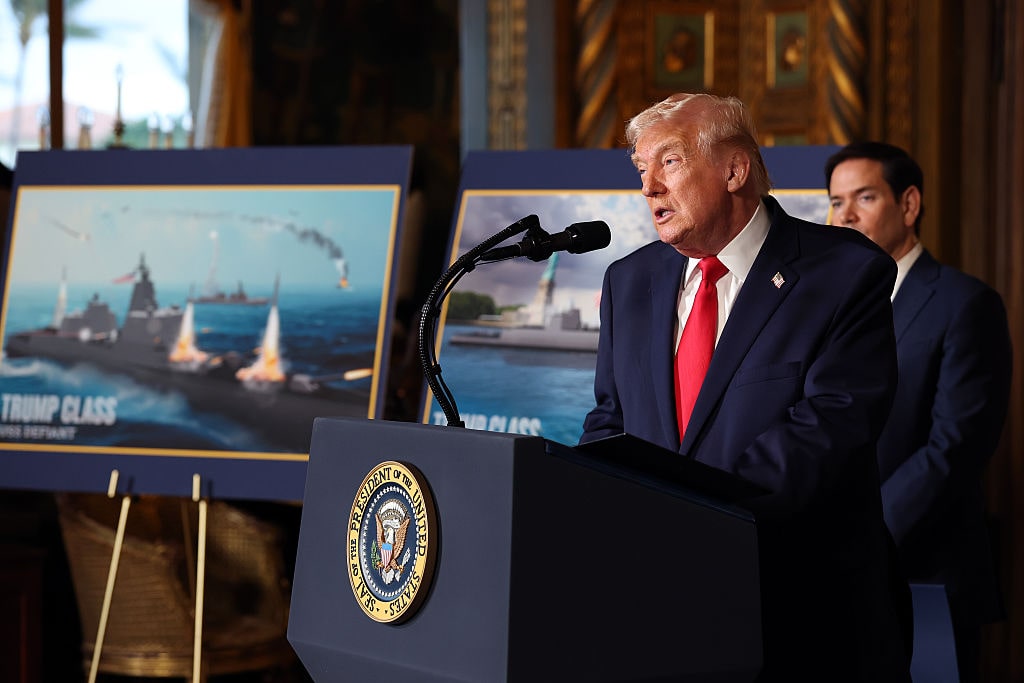
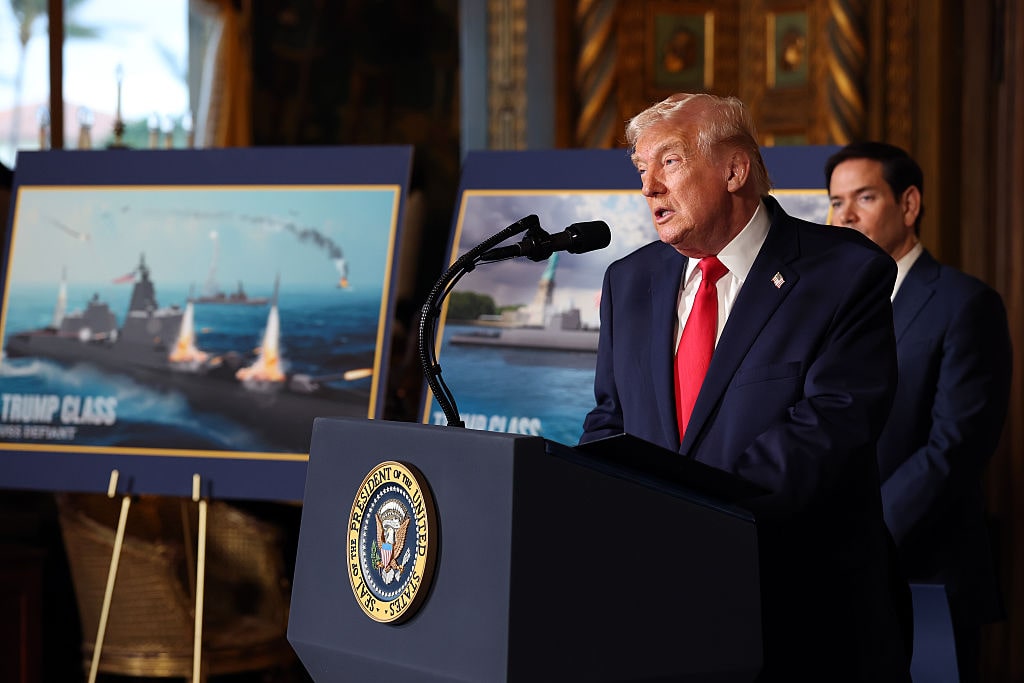
President Trump wants America to build a new fleet of mini-battleships and numerous smaller Coast Guard cutter-sized vessels (he calls the “Golden Fleet”) to expand US warship capability and increase US Navy capacity. Trump has said publicly that he wants the first two battleships designated as guided missile battleships (BBG) within 2.5 years and that “the Navy would immediately start procuring the first two ships.” In announcing the new class of warship, President Trump asserted, “They’ll be the fastest, the biggest, and by far 100 times more powerful than any battleship ever built.” However, wanting and getting are two very different things. To deliver the first two 30,000—40,000-ton Trump Class guided missile battleships (the first will be named the USS Defiant) by mid-2028, would require immediate construction at a production facility capable of building a battleship that size. Currently, such a drydock and the 100s, if not 1,000s, of suppliers, as well as skilled workers, are in short supply. Existing shipbuilding capacity is full with contracts for the US Navy’s existing shipbuilding program, and there is a backlog. Furthermore, “Naval ship building in the US has been plagued by massive delays, with some contractors extending their deadlines for ship delivery by up to three years,” the Daily Caller observed.
It’s not just facilities and shipyards that must see a significant increase in numbers and size. There must be a fundamental change in how the US Navy conducts shipbuilding. In his written statement to the Subcommittee on Seapower and Projection Forces, House Committee on Armed Services, Shelby S. Oakley, Director, Contracting and National Security Acquisitions, explained:
“Infrastructure and workforce limitations worsen the Navy’s shipbuilding challenges. Shipyards have problems with aging facilities and equipment, as well as space limitations that are affecting shipbuilding performance. Shipyards are also struggling to replace the loss of experienced, skilled workers with new ones. While the Navy has made investments to improve shipyard capabilities, the Navy has not developed a cohesive strategy to confront these challenges.”
Bringing on a new class of warship doesn’t just entail the vessel; it also requires adding “as many as 50 support ships,” Fox News reported. That will further stress the shipyards.
In addition to the Trump Class vessels, the President envisions the Navy acquiring a smaller (4,000-ton) cutter/frigate-sized vessel. In a US Navy press release, the Sea Service announced, “FF(X) is engineered for rapid, cost-effective production, enabling this vital capability to the fleet faster. This is made possible by basing the new frigate on HII’s proven Legend-Class National Security Cutter. This approach leverages a mature design to deliver ships to our sailors without delay.” Additional reporting on the subject estimated 20-24 cutter-size ships would be built. But that’s what the Navy said about the competition for the now-canceled Constellation-class frigate. Huntington Ingalls Industries (HII) is already operating at near-maximum capacity. It’s unclear how HII will deliver the new FF(X) on time and within contract cost.
It’s not just a dearth of shipyards capable of building the BBGs and frigates; more concerning is the lack of a skilled maritime workforce. A War on the Rocks report explained, “According to the Bureau of Labor Statistics, the current ship and boat building workforce includes approximately 146,500 employees. However, workforce demands in the shipbuilding industry are projected to more than double over the next decade to keep pace with strategic requirements.” Even with the establishment of a new White House Office of Shipbuilding to oversee the immense task of revitalizing America’s maritime industry, it may be out of reach. “It’s also no secret that China is outpacing the United States in shipbuilding at a rate of six to 1.8 combatant ships and a staggering 200 to one in commercial ships,” War on the Rocks observed.
It’s Not Just Shipbuilding
Building warships is just one aspect of an already strained defense industrial base. China turns out, conservatively, 240 fighter aircraft per year, with some estimates as high as 300. By comparison, the US produced only 222 in 2025. For the US to scale up production would require a significant increase in highly skilled aerospace workers and tooling. According to an annual study by the Aerospace Industries Association (AIA), 76% of aerospace companies are “experiencing the demand for new hires” in engineering, followed by 68% for “skilled manufacturing.” Highly experienced aerospace workers are very difficult to come by. That makes scaling up for a “wartime” production rate even more challenging. AIA observed that, “Executives throughout the A&D industry are expressing frustration with persistent workforce shortages—multiple executives interviewed remarked that their organization finds it especially hard to recruit skilled technical labor workers and engineers at the mid-career level.” Additionally, AIA asserted that by 2033, there will be a shortage of 210,000 new assemblers and fabricators. Addressing this situation will require a concerted effort by the aerospace industry to make the defense workforce appealing with competitive compensation and job security.
Revitalizing the US defense industrial base will require a drastic change in how weapons and military equipment are produced. Getting weapons produced at scale and in the hands of the warfighters will be the goal. The Trump administration is working hard to address the challenges in producing reliable, lethal, and sustainable warfighting capability. The President’s Executive Order directing Modernizing Defense Acquisition and Spurring Innovation in the Defense Industrial Base is a start, but clearly, to meet the threats facing America, it will take an all-of-government effort to get US wartime production to where it needs to be. The Department of War, working with Congress, will be essential to achieving a competitive defense industrial base.
~
The views expressed are those of the author and not of any other affiliate.
Liberty Nation does not endorse candidates, campaigns, or legislation, and this presentation is no endorsement.