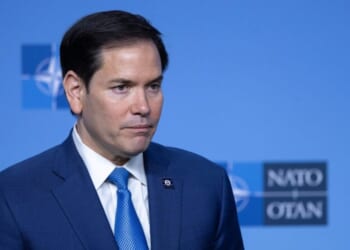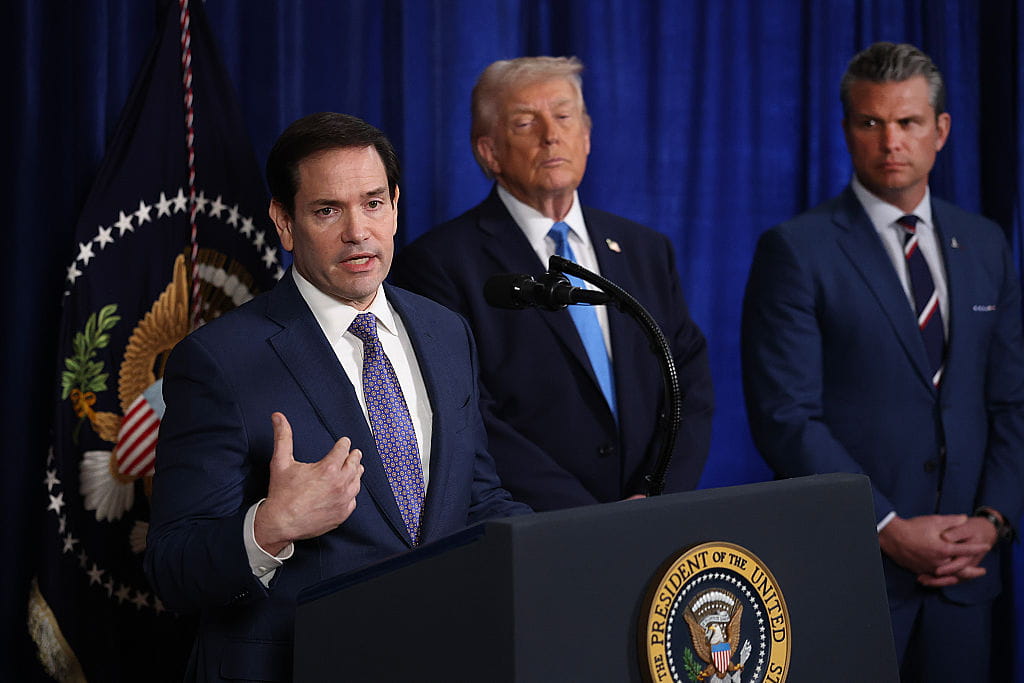
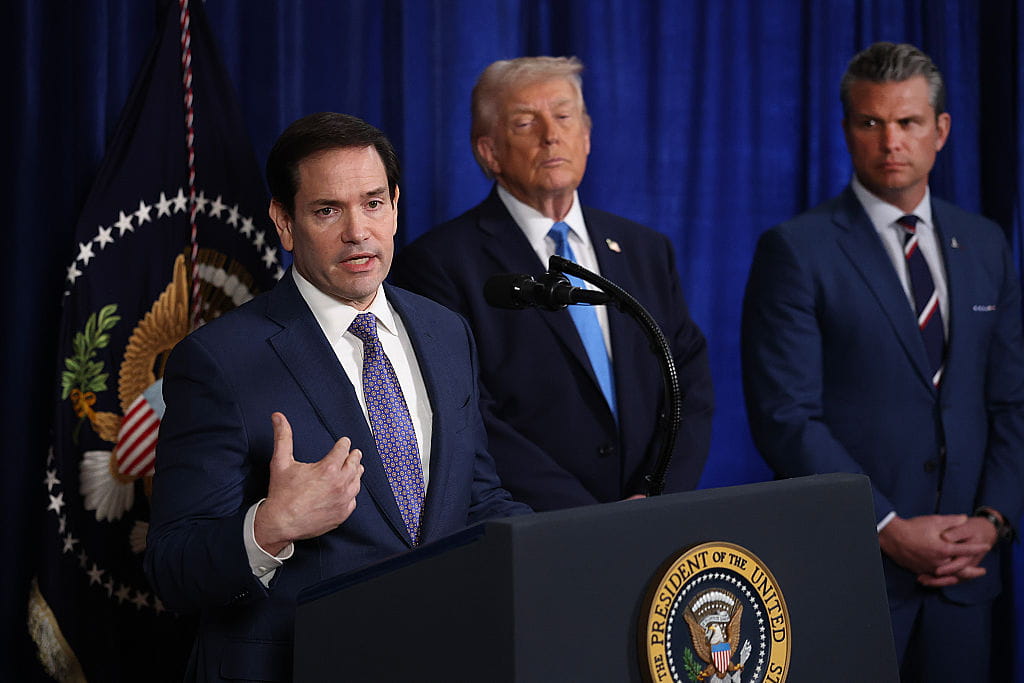
Marco Rubio, whom President Donald Trump said will be remembered as the “greatest Secretary of State in the history of the United States,” is now taking a center role in directing policy in Venezuela. The secretary, National Security Advisor, and 2016 presidential candidate is looking very White House-ready after the targeted strike by US special forces that resulted in the capture of the self-appointed dictator of Venezuela, Nicolas Maduro, and his wife, Cilia Flores, in Caracas. Rubio has, understandably, been trending high on X. Even after a tense overnight with the president ending in the early hours of Saturday morning to watch the military incursion, Rubio made the rounds on the Sunday talk shows to answer questions from the left-wing media – rightly calling out the absurd ones.
Is Rubio Running Venezuela?
Rubio said he’s not running the country but the policy, designed for the good of the people of Venezuela and the national security interests of the United States. On Meet the Press, Rubio made clear the difference:
“I think everyone knows I’m pretty involved on politics in this hemisphere … The Department of War plays a very important role here along with the Department of Justice, for example, because they’re the ones that have to go to court. So, this is a team effort by the entire national security apparatus of our country but it is running this policy. And the goal of the policy is to see changes in Venezuela that are beneficial to the United States, first and foremost, because that’s who we work for, but also, we believe, beneficial for the people of Venezuela who have suffered tremendously.”
Rubio was clear that the focus in Venezuela is to address the problems that existed under Maduro. The secretary said the oil quarantine, the targeting of drug boats, and the seizure of ships sanctioned by court orders will continue.
Venezuela Is Not the Middle East
Rubio sharply addressed the question of American involvement in failed nations, quelling the criticism that has already arisen about unintended consequences:
“I watch these experts and it’s clown hour. These people have focused their entire career on the Middle East, or some other part of the world, because that’s where all the action was. Very few of them know anything about Venezuela and the Western Hemisphere. Venezuela looks nothing like Libya. It looks nothing like Iraq. It looks nothing like Afghanistan. It looks nothing like the Middle East, other than the Iranian agents that are running through there, plotting against America. These are western countries with long traditions, at a people-to-people and cultural level, and ties to the United States.”
Rubio mentioned Cuba being “in a lot of trouble,” both in Saturday morning’s press conference and in Sunday’s interviews, but he didn’t reveal what comes next for the communist regime that has been propping up Maduro. The prophetic significance of Rubio, son of Cuban political exiles, leading the charge to help make our Latin American neighbors prosperous, cannot be ignored. A White House adviser told Axios that Rubio and Venezuelan Vice President Delcy Rodríguez could have daily calls, while Trump plans the next steps with Venezuela.
The Venezuela Whisperer
Rubio became one of Trump’s advisers on the Western Hemisphere in 2017, soon after he was sworn into office. At that time, Rubio reportedly brought the wife of Venezuelan opposition leader and then-political prisoner Leopoldo Lopez to meet Trump at the White House.
In January 2019, President Trump issued a statement reportedly urged by Rubio:
“I am officially recognizing the President of the Venezuelan National Assembly, Juan Guaido, as the Interim President of Venezuela. In its role as the only legitimate branch of government duly elected by the Venezuelan people, the National Assembly invoked the country’s constitution to declare Nicolas Maduro illegitimate, and the office of the presidency therefore vacant. The people of Venezuela have courageously spoken out against Maduro and his regime and demanded freedom and the rule of law.”
Rubio, according to Axios, talked Trump out of military strikes on Venezuela back then, because the United States didn’t have the military assets in the region for effective kinetic action.
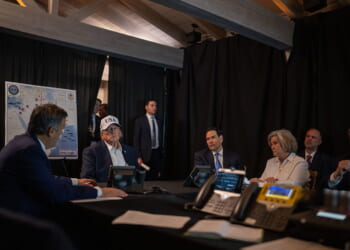
Trump said at the press conference on Saturday that the team flanking him — Rubio, Deputy White House Chief of Staff Stephen Miller, Joint Chiefs of Staff Chair Dan Caine, Secretary of War Pete Hegseth, and CIA Director John Ratcliffe — would be involved in the next steps in America’s plans for Venezuela.
On Monday, Maduro, along with his wife, appeared in federal court in Manhattan, claiming he was innocent and defiantly declaring he was “still president” of Venezuela. The Justice Department released a 25-page sealed second superseding indictment it had filed in the US District Court for the Southern District of New York. Six defendants, including Maduro and his close associates, are charged with narcoterrorism, drug trafficking, and firearms offenses, as part of a conspiracy involving corruption, partnerships with narcoterrorist groups, and the importation of thousands of tons of cocaine into the United States dating back to 1999. It asserted US jurisdiction for offenses committed outside of, but affecting, the United States.
Appearing as the second defendant on the indictment is Minister of the Interior, Justice, and Peace Diosdado Cabello Rondon, still in Venezuela. The Trump administration says he plotted to assassinate then-Sen. Rubio in 2017.
In an exclusive interview with NBC on Monday, the president reportedly said he was “prepared” for a second military incursion into Venezuela if Rodriguez stops cooperating with US officials.
Rubio, Hegseth, Miller, and Vice President JD Vance are among the top officials in charge of Venezuela, Trump announced, placing himself at the top.