Republicans now lead in the state’s voter registration – but uncertainty abounds.
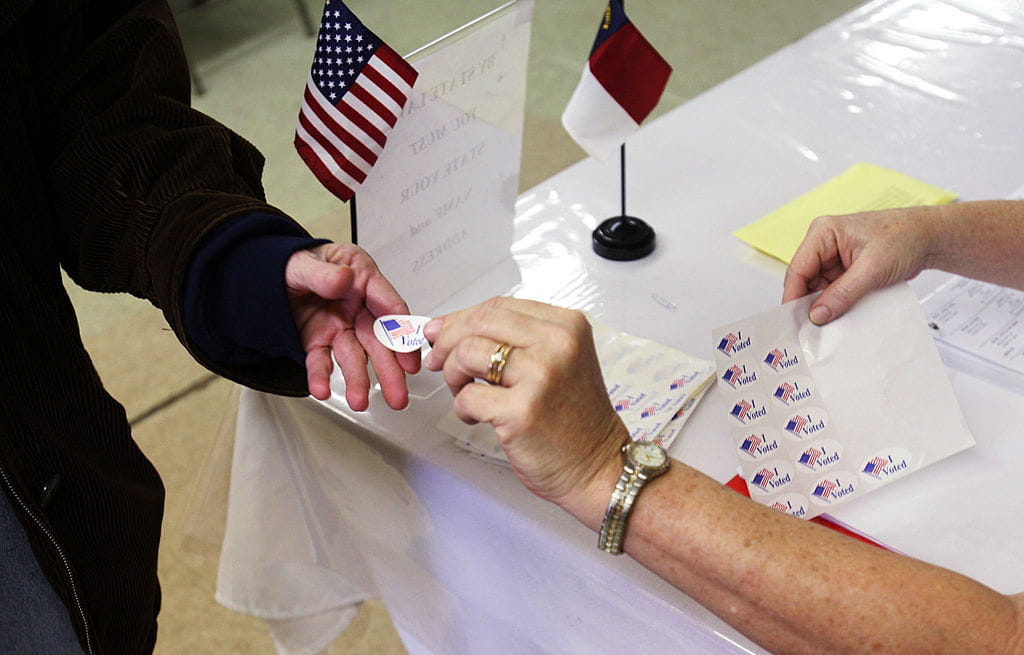
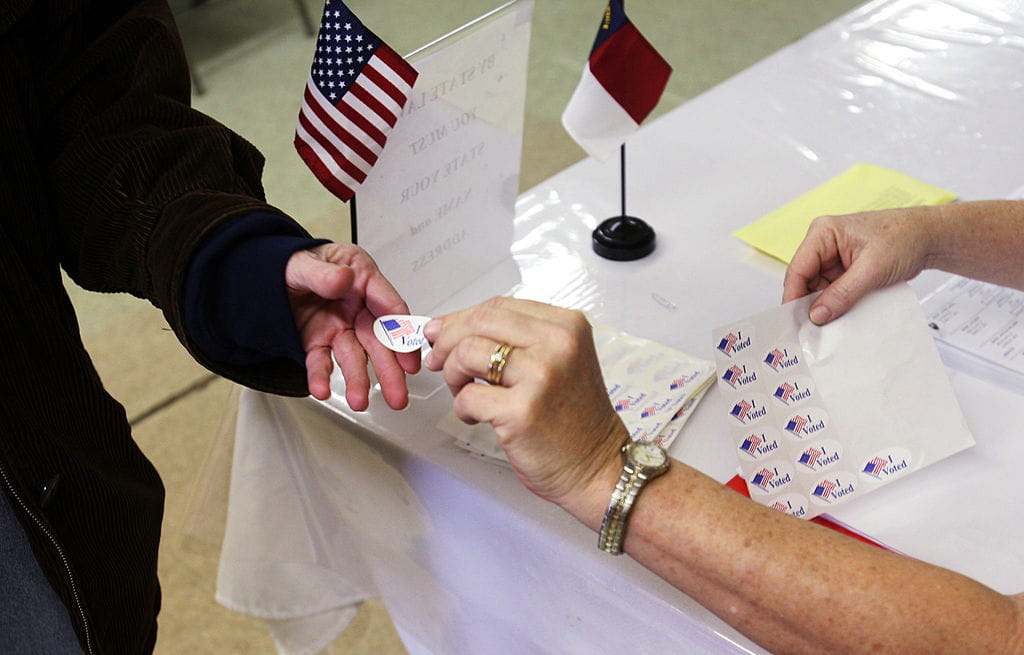
For the first time in the state’s history, North Carolina has more voters registered as Republicans than Democrats. This isn’t too surprising since the Democratic Party has been bleeding registrants nationwide for years, but the GOP advantage in the Tar Heel State might not be as momentous an occasion as some think. If anything, races in the state might be more competitive and complex now.
Democrats Can’t Hang on to Voters
The North Carolina State Board of Elections released data showing registered Republicans have edged past registered Democrats statewide by nearly 2,000 voters. It’s not a big lead, but because it’s such a closely watched swing state that Democrats dominated for much of the 20th century, it is significant. “Republicans are crushing Democrats’ voter registration advantage in North Carolina and taking control statewide,” RNC Chairman Joe Gruters told Fox News Digital. “President Trump’s America First agenda is winning. Democrats are failing, their out-of-touch liberal agenda is being rejected, and voters are done with [former Gov.] Roy Cooper and [Gov.] Josh Stein.”
While some of this may be true, the data are more nuanced. North Carolina Democrats have been bleeding registered voters as far back as the 1980s, yet Republican registrations have held steady. By November 2016, Democrats still had an advantage of more than 645,000 voters over Republicans, but the decline continued, letting the GOP take the lead in 2026 despite not having a sharp increase in voters. The problem for both parties is that unaffiliated voters outnumber them both.
Residents in the Tar Heel State do not need to be registered with a party in order to vote in either primary, so there’s not really a drawback to being unaffiliated – not for the voter anyway. How it impacts politicians’ game plans and individual races is another matter. One study by a group of political scientists found that unaffiliated voters in North Carolina are a mix of “shadow partisans” and “partisan floaters.” The former consistently votes for one party, while the latter are “unmoored” to either, making it difficult for both parties to understand the complexities of the electorate and to know whom to target with specific advertisements and messaging.
The registration phenomenon, however, is not exclusive to North Carolina.
Widespread Discontent
A recent report by Decision Desk HQ suggests “a majority of U.S. states are reporting their most significant voter registration gains are coming from voters who do not want to be affiliated with a political party.” Geoffrey Skelley, chief elections analyst at Decision Desk HQ, claims voters nationwide are dissatisfied “with the partisan rancor of our current political environment.”
In September, the secretary of state’s office in Colorado announced 50.3% of voters said they were unaffiliated. Back in August, The New York Times published an analysis of voter registration data collected by a nonpartisan data firm and found “significant Democratic erosion” in four battleground states: Arizona, Nevada, North Carolina, and Pennsylvania. During the previous election cycle, more than 50,000 voters “unaffiliated” themselves from the Democratic Party in the Keystone State, double the number who left the GOP, a growing trend throughout the country.
A handful of reasons could explain this exodus, but a big part of the realignment is likely caused by the Democratic Party alienating countless voters as it clings to unpopular issues and spends much of its time lambasting President Donald Trump for nearly every move he makes. That the number of lost registrations is so much higher for Democrats than Republicans speaks volumes. Still, it impacts both sides and will undoubtedly make campaigning this year a little trickier.
Regardless of how many voters throughout the country have quit identifying as Democrats, the GOP has a tough road ahead in 2026. Plus, Democratic voters frequently turn out in higher numbers for local elections. Though Trump has won North Carolina all three times he was on the ballot, his successes are typically not a good measure of how Republicans will do in midterm elections. Not to mention, midterms are often more of a backlash than a referendum, so the party in power usually doesn’t fare too well.
The results this year will likely depend on what the Trump administration and Republican lawmakers do – or don’t do – in the following months. If Democrats regain control of the House, it’ll probably be a difficult two years for Republicans. Or, as Trump said in a speech at the GOP Issues Conference on Jan. 6, “You got to win the midterms, because if we don’t win the midterms … they’ll find a reason to impeach me.”
Liberty Nation does not endorse candidates, campaigns, or legislation, and this presentation is no endorsement.