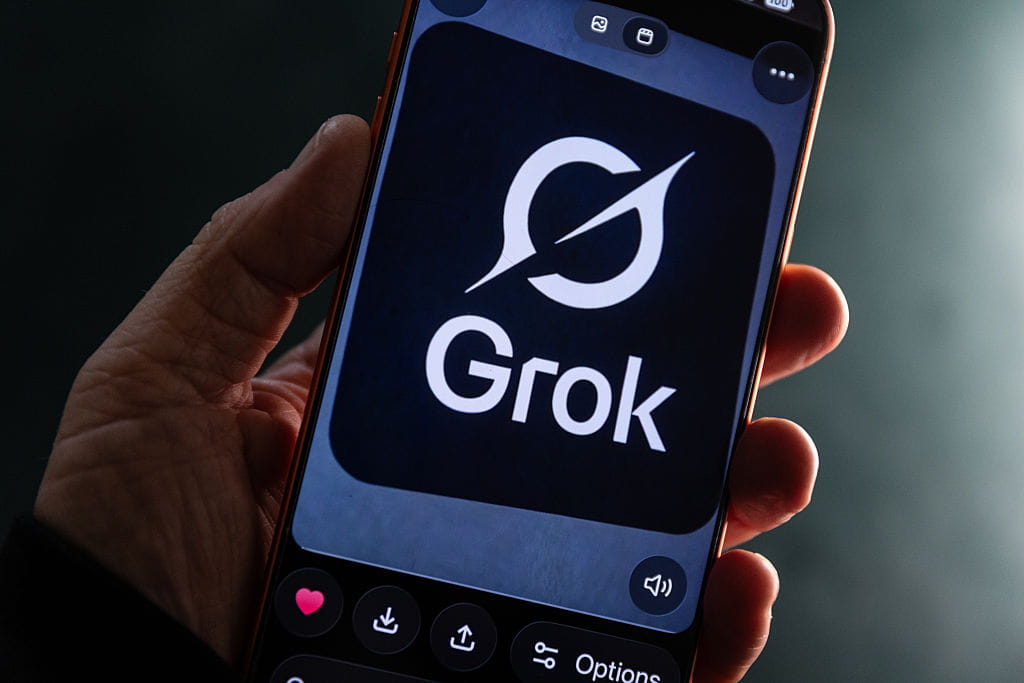
UK Prime Minister Sir Keir Starmer said he’s considering banning Elon Musk’s social media site X nationwide after it was revealed the platform’s AI tool – known as Grok – is being used to generate non-consensual sexualized images of real people.
“This is disgraceful, it’s disgusting and it’s not to be tolerated. X has got to get a grip of this,” Starmer said in a recent interview. “It’s unlawful. We’re not going to tolerate it. I’ve asked for all options to be on the table.”
On its face, the concern appears reasoned: No platform should allow sexual exploitation. But Starmer’s apparent attempts to protect Britons from genuine online harms collide with his government’s recent attacks on free speech. One day he’s “fiercely” defending civil liberties, and the next his government is arresting people for politically incorrect social media posts.
Just a few months ago, Irish comedian Graham Linehan was arrested at London’s Heathrow Airport over three X posts. His supposed “crime” was criticizing transgender activists. In a subsequent post on Substack, Linehan explained that five armed officers arrested and questioned him. He was eventually released on the condition that he remain off X.
“That’s it. No threats, no speeches about the seriousness of my crimes – just a legal gag order designed to shut me up while I’m in the U.K., and a demand I face a further interview in October,” Linehan wrote, adding that “the U.K. has become a country that is hostile to freedom of speech, hostile to women, and far too accommodating to the demands of violent, entitled, abusive men who have turned the police into their personal goon squad.”
An Excuse for Censorship?
Liberty Nation News confirmed that Grok will inappropriately edit user-submitted images of real women, including putting public figures like First Lady Melania Trump in lingerie.
Obviously, this is alarming, but it’s not unique to X. A post on Musk’s platform that amassed more than 30 million views shows Google’s Gemini and ChatGPT will both generate sexualized images of real people without their consent as well. However, Liberty Nation News found only Gemini would sexualize a photo of America’s first lady, whereas ChatGPT refused, stating, “Altering a real person’s photo to put them in a bikini (or lingerie) is sexualized image editing of a real individual, which I can’t help with.”
Even so, Starmer hasn’t suggested banning Google. The prime minister has repeatedly clashed with free speech on X, so his selective outrage raises an obvious question: Is this really about safety, or is it about control? Musk took notice of Starmer’s apparent double standard, writing on X, “They want any excuse for censorship.”
Grok Afoul of the Law
The UK’s Online Safety Act (OSA) criminalizes “intimate image abuse,” making the sharing of intimate images without consent a “priority offence,” which is the most serious class of online crime under the law. The act also compels companies to “proactively remove and stop this material appearing on their platforms.”
Tech companies that fail to crack down on intimate image abuse could face fines of up to 18 million pounds “or 10 percent of their qualifying worldwide revenue, whichever is greater.” Ofcom, the independent regulator of Online Safety, also has the power to block payment providers, internet service providers, and advertisers from working with a company, effectively banning companies deemed noncompliant.
Earlier this month, Ofcom posted a statement on X explaining that it was “aware of serious concerns raised about a feature on Grok on X that produces undressed images of people and sexualised images of children.”
Ofcom added, “We have made urgent contact with X and xAI to understand what steps they have taken to comply with their legal duties to protect users in the UK. Based on their response we will undertake a swift assessment to determine whether there are potential compliance issues that warrant investigation.”
While the Online Safety Act is ostensibly about protecting Brits from issues such as self-harm, pornographic content, and threats, the law has led to widespread censorship. As The Guardian reported: “Tech companies find it easier and cheaper to simply remove mass amounts of information than have something slip through and be deemed non-compliant.”
In practice, that means lawful speech often disappears alongside genuinely harmful material. While some tech companies have apparently caved to the UK’s demands, the Heritage Foundation reported that X isn’t alone in its stand against online censorship disguised as safety:
“Britain’s Online Safety Act, misnamed, misguided, and dangerous, has transnational pretensions, too. Last month, Britain’s media regulator tried to impose fines on the online message board 4chan for supposed violations of the OSA. 4chan’s lawyer, however, told the BBC that the American platform would just ignore the British action.
“[The U.K. Office of Communications’] notices create no legal obligations in the United States,” Preston Byrne, managing partner of law firm Byrne & Storm, told the BBC. The investigation, he said, was part of an “illegal campaign of harassment” against U.S. tech firms.”
It comes down to a simple point: If ChatGPT can do it, then surely X’s AI tool can, too. But that obligation doesn’t give the British government free rein to police speech or strong-arm platforms it dislikes. As for the UK’s threats against X, it’s likely Musk will follow 4chan’s lead and tell Sir Keir to take a hike.