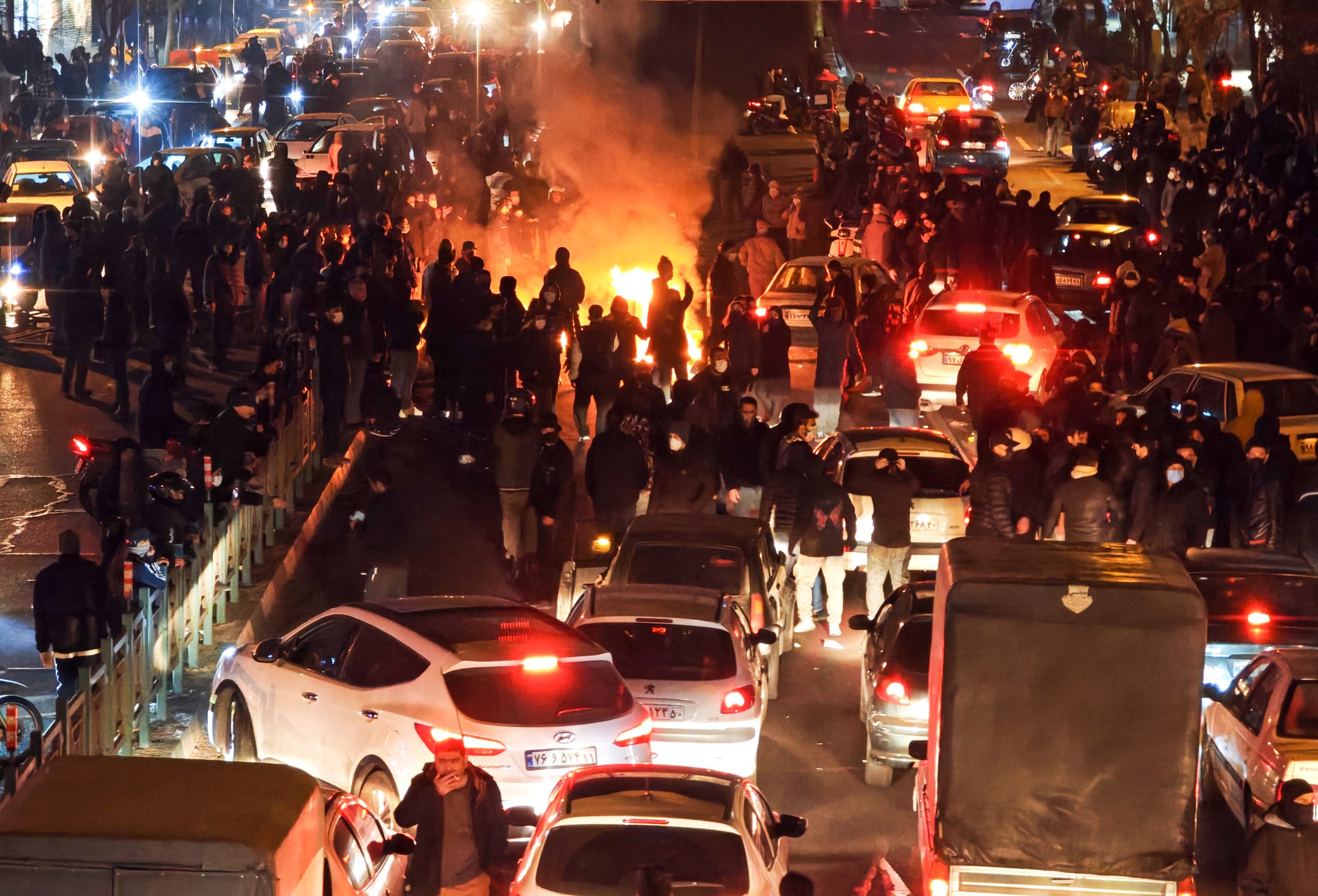
The Islamic Republic has killed upwards of 12,000 civilians since the popular uprising started at the end of December
The Trump administration on Thursday unveiled sweeping new sanctions on the Iranian leaders responsible for orchestrating a bloody crackdown against protesters, the first economic action the United States has taken since the regime began slaughtering thousands of civilians in the streets.
The measures target prominent Iranian figures like Supreme National Security Council secretary Ali Larijani, who authorized deadly force against protesters in several major cities. Others include Law Enforcement Forces (LEF) officials like Mohammad Reza Hashemifar and Azizollah Maleki, as well as Islamic Revolutionary Guard Corps (IRGC) leader Yadollah Buali, each of whom oversaw killings across the country. The LEF acts as Tehran’s domestic enforcers, preserving the regime’s rule by detaining dissidents and policing their behavior, while the IRGC serves as the regime’s elite fighting force both inside and outside the country. At the instruction of IRGC leadership, LEF forces have fired on protesters and arrested up to 50,000, according to dissident groups. IRGC operatives, who have also shot demonstrators, have attacked wounded protesters, family members, and medical staff inside hospitals, the Treasury Department stated.
The Treasury Department also placed sanctions on a complex “shadow banking network” that enabled “Iran’s elite to steal and launder revenue generated by the country’s natural resources,” according to a press release announcing the measures. The Trump administration targeted 18 individuals and entities “who play critical roles in laundering the proceeds of Iranian petroleum and petrochemical sales to foreign markets.”
The fresh punitive measures come as the Trump administration moves military assets into the region for a potential strike. While Israel and several Gulf states reportedly urged Trump to postpone military action, fearing that Iranian retaliation would include attacks on their countries, White House Press Secretary Karoline Leavitt said Thursday that “all options remain on the table.”
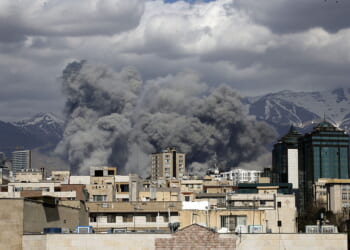
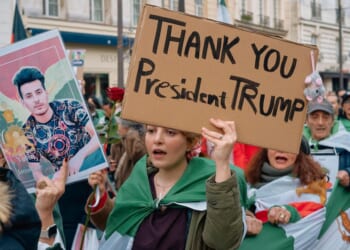
Protesters have continued to take to the streets throughout Iran, though signs that the movement may weaken have appeared amid a historically violent crackdown in which the regime has killed upwards of 12,000 civilians. The sanctions have the potential to reinvigorate anti-regime voices that have implored the Trump administration to take concrete action to demonstrate its support for the uprising.
“The United States stands firmly behind the Iranian people in their call for freedom and justice,” Treasury Secretary Scott Bessent said in a statement. “At the direction of President Trump, the Treasury Department is sanctioning key Iranian leaders involved in the brutal crackdown against the Iranian people. Treasury will use every tool to target those behind the regime’s tyrannical oppression of human rights.”
Trump himself previewed the new sanctions earlier in the week when he told Iranians over social media to “save the names of the killers and abusers. They will pay a big price.”
The Thursday move marks not only the first tangible action against the Iranian regime since the protest movement began but also the first time the United States has sanctioned top Islamic Republic officials over their widespread human rights atrocities. The Treasury Department identified Larijani in particular as a key official “responsible for coordinating the response to the protests on behalf of the Supreme Leader of Iran,” adding that Larijani “has publicly called for Iranian security forces to use force to repress peaceful protesters.”
The United States also targeted IRGC commander Nematollah Bagheri for authorizing civilian massacres across Iran’s Lorestan Province. In one example the Treasury Department highlighted, security forces in the region abducted a dead body and held it hostage in order to “coerce the family into falsely identifying the individual as a martyr for the government.”
The carnage has reached the point that, in the Fars Province, “hospitals are so inundated with gunshot wound patients that no other types of patients can be admitted,” the Treasury Department said. “Families of the killed have been forced to give false testimony on national television to support the regime’s narratives, lest their loved ones’ bodies never be returned.”
The financial sanctions unveiled on Thursday are certain to squeeze a regime that was already low on cash and struggling to pay its regional terror proxies. The United States listed nearly two dozen entities that have helped Tehran smuggle tens of billions of dollars each year.
Bank Melli, a prominent regime institution, “created an extensive network of cover companies to send and receive funds outside of Iran,” according to the Treasury Department’s Office of Foreign Assets Control. Melli has laundered billions on behalf of the IRGC, National Iranian Oil Company, and Iran’s central bank through its web of front firms across the United Arab Emirates, United Kingdom, and Singapore.