Challenges and opportunities in a fraught domain.
In February 2024, the Alabama Supreme Court’s decision on In-Vitro Fertilization (IVF) reshaped the national debate around fertility and pushed both Democrats and Republicans to present themselves as champions of reproductive health. As President Donald Trump and Vice President Kamala Harris fought for the White House, IVF shifted from a niche medical issue to a test of how each side understood family, women’s health, and how far the “right” to have a child goes.
What began as a legal question—whether embryos created through IVF are considered human persons—quickly widened into a debate about rising infertility rates and whether the country should move beyond IVF to treat the root causes of infertility itself. During President Trump’s second term, he has unexpectedly found himself at the center of these debates.
The Ruling Heard Around the World
In many ways, the United States had been building toward this moment for decades. President George W. Bush’s Council on Bioethics (2001–2009) was one of the first political efforts to think seriously about the rights of and responsibilities owed to human embryos.
Formed to address embryonic stem cell research, human cloning, and regulations on IVF, the Council produced several major achievements: an appropriations rider banning patents “directed to or encompassing a human organism,” the Born Alive Infants Protection Act (2002), the Unborn Victims of Violence Act (2004), and the Hyde-Weldon Amendment (2005), which blocked federal funding for abortion.
But progress stalled. The question of embryo personhood consumed much of the Council’s work. Leon Kass, its chair, concluded that “important though it is, the ‘life principle’ cannot continue to be the sole consideration in public bioethical discourse.” In practice, many of the Council’s recommendations, especially those dealing with IVF, were never implemented.
President Obama dissolved the Council, as new administrations typically do with their predecessors’ policy teams. His replacement body, the Commission for the Study of Bioethical Issues (2009–2016), reversed many Bush-era protections. By the time President Trump took office in 2016, public appetite for “bioethics” had faded. Americans increasingly pursued their personal desires, often at the expense of what was best for children. Neither Trump in his first term, nor Biden, nor Trump again in 2024 assembled new bioethics committees. IVF, gene editing, and emerging reproductive technologies largely drifted forward without national ethical guidance.
For years, IVF existed in a comfortable corner of American medicine. It was widely recognized, broadly accepted, and rarely questioned. Then Alabama’s IVF case, LePage v. The Center for Reproductive Medicine, changed everything. The plaintiffs were parents of several embryos—representing some of their best or last chances at having a child—which were destroyed after a fertility clinic left its cryopreservation room unlocked. A mentally unstable patient from an adjoining hospital wandered in, removed a container of frozen embryos, and dropped it when the cold metal burned his hands. The human embryos shattered on the floor.
State laws typically treat embryos as “property,” but the parents argued that this label failed to reflect the real gravity of their loss. The Court agreed. Because Alabama’s Wrongful Death of a Minor statute protects life from conception in the womb, the Court reasoned that life created outside the womb deserved the same protection. Simple enough—or so it seemed.
Despite media claims, the ruling did not outlaw IVF, increase costs, or prohibit the destruction of embryos already approved for disposal. It simply gave parents stronger legal recourse when clinics negligently destroyed their embryos. Yet the families’ personal tragedy was quickly drowned out by the national political uproar.
One after another, Alabama clinics stopped performing IVF procedures, arguing they could not continue without legal protection. “As the ruling is written…modern fertility treatments cannot continue in the state of Alabama,” Dr. Mamie McLean stated in an interview with the Guardian, “because of the risk to physicians and embryologists, given that embryos are now considered children.” This response revealed more about the procedures in question than the ruling itself, but the stoppage put massive pressure on state leaders.
President Trump responded on Truth Social, urging Alabama lawmakers to “find an immediate solution to preserve the availability of IVF.” He framed the issue as part of his long-standing message: Republicans support strong families, want to make it easier for mothers and fathers to have babies, and stand with couples who long for a “precious baby.” His post placed him firmly on record as pro-IVF.
President Trump would later credit Senator Katie Britt (R-AL) for bringing this matter to his attention. Under national scrutiny, Alabama lawmakers soon passed, and Governor Kay Ivey signed, a law granting fertility clinics civil and criminal immunity throughout the IVF process. No other state has given the industry such broad protection. Ironically, under this law, it is unclear whether the original parents in the LePage case could even sue if the same thing happened again.
The Political Vacuum on the Campaign Trail
The new Alabama law eased immediate pressure but created a political vacuum. In a campaign season dominated by questions of family and identity, both parties rushed into the space. Republicans positioned themselves as the pro-IVF advocates of parents and future parents. Democrats described IVF as a reproductive right and accused Republicans of threatening women who wanted children.
Inside the pro-life movement, many conservatives had never seen IVF as a moral problem. Abortion ended life; IVF created it. Senator Katie Britt, alongside Senator Ted Cruz, embraced this view and became national leaders pushing to protect and expand IVF access. Trump adopted similar language, calling himself the “fertilization president.” Throughout 2024, lawmakers floated resolutions and bills related to IVF. Some simply affirmed IVF’s role in helping families; others, like Senator Tammy Duckworth’s Access to Family Building Act or the IVF Protection Act by Britt and Cruz, aimed to restrict states’ ability to regulate IVF.
Other proposals focused on tax credits for IVF. These proposals were rejected by social conservatives and some fiscal conservatives, who argued that the bills ignored the rising causes of infertility and let market pressures raise prices without improving outcomes. On the campaign trail in April 2024, Trump promised to expand access and lower costs, even suggesting potential insurance mandates for IVF.
For many voters, IVF seemed like the obvious solution to the terrible problem of infertility. Infertility was a disease; IVF was the cure. Polls showed broad support for IVF, reinforcing the idea that expanding access was politically safe. Ethical concerns, especially about embryo destruction and eugenic screening, were often dismissed as an attack on couples longing for a child.
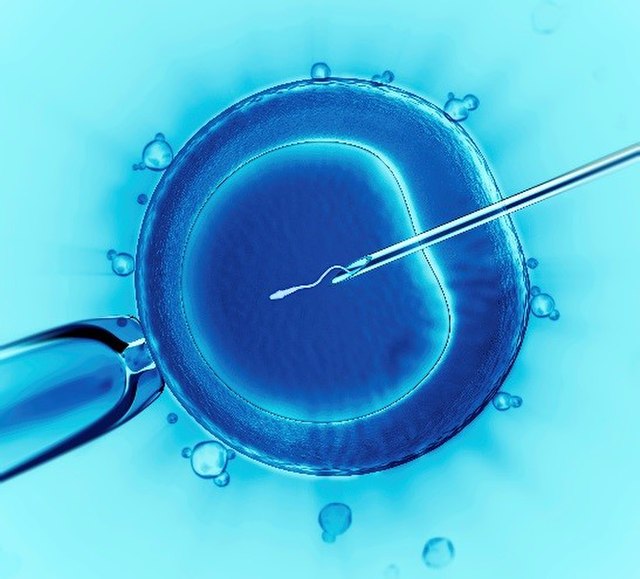
Yet the debate exposed how little Americans understood about IVF. IVF does create embryos by fertilizing egg and sperm in a lab, but it can also create more embryos than parents use. Many are frozen; others are discarded, experimented on, or eugenically selected based on their potential health, sex, personality, looks, or IQ. Roughly 75% of U.S. clinics offer such testing for sex and basic health conditions, and about 40% of IVF cycles include it.
IVF isn’t just for couples who are struggling with infertility. Elective IVF is rising: for sex and health selection, or for same-sex couples and single individuals described as “infertile” for social, not biological, reasons. In at least five states, thanks to advocacy by Men Having Babies, “infertility” now legally includes couples or individuals whose relationships—not their bodies—are sterile.
Here the moral tension becomes clear: if pro-lifers believe life begins at conception, then what happens to embryos in IVF matters just as much as what happens to unborn babies in the womb. With as few as 3%-10% of all embryos created in IVF resulting in the live birth of a child, the success rates for the human embryo are very low indeed.
Meanwhile, federal oversight is minimal. The only major law, the Fertility Clinic Success Rate and Certification Act of 1992, requires clinics to report basic data. It does not regulate genetic testing, embryo creation or storage, health risks to women, or long-term outcomes for children conceived through IVF. The industry has grown rapidly with little guidance.
These realities have caused deep division among Republicans, especially between social conservatives and pro-IVF leaders aligned with Trump.
Make America Healthy Again: Looking Beyond IVF
By mid-2024, many in the pro-family policy sphere realized that even if lawmakers enacted strong protections for human embryos within IVF, that would not solve the broader crisis of rising infertility. The goal was not simply to increase IVF access. The goal was to help couples by diagnosing and treating the real medical conditions behind infertility, such as endometriosis, polycystic ovary syndrome (PCOS), blocked tubes, hormonal imbalances, male-factor infertility, and more.
IVF can help some families, but it cannot fix these underlying problems. Instead of debating IVF alone, conservatives began rethinking infertility care itself.
This realization marked a turning point in 2024 and set the stage for the rise of restorative reproductive medicine (RRM) within the broader Make America Healthy Again (MAHA) movement. In April 2024, Senators Cindy Hyde-Smith (R-MS) and James Lankford (R-OK) introduced the first federal RESTORE Act, which stands for Reproductive Empowerment and Support through Optimal Restoration. The bill aimed to expand education about reproductive health, increase access to restorative reproductive medicine, fund research on root-cause infertility, and train more physicians in these approaches.
RRM, including long-standing methods like NaProTechnology, focuses on restoring a man or woman’s health so they can conceive naturally. It avoids treatments that suppress, bypass, or damage the body’s natural functions. Where IVF treats infertility as a standalone disease, RRM sees infertility as a symptom of deeper conditions. With over 100 potential conditions at play, researchers estimate that for every diagnosis of infertility, there are four or more underlying conditions whose causes come from the woman, the man, or both parties in equal parts. RRM can improve egg and sperm quality, lower miscarriage rates, balance hormones, and optimize a woman’s body to support pregnancy.
Americans were already turning toward holistic health. Their desire for real healing over mere symptom management helped fuel new political interest in RRM, a medical discipline which has been around since the 1970’s.
RRM also fits naturally within the MAHA framework. MAHA emphasizes restoring the body’s natural functions, treating dysfunctions holistically, and reducing dependence on costly, high-intervention medical treatments. RRM applies those same principles to reproductive health. Rather than treating fertility in a vacuum, RRM approaches it as one result of the body’s overall health.
Trump’s IVF Executive Order (2024) and IVF Report (2025)
This shift was evident when President Trump issued his IVF executive order in February 2025. Unlike the enthusiastic reaction to Trump’s pro-IVF comments after the Alabama ruling, the executive order drew a mixed response. The main criticism was its minimal emphasis on root-cause care. It became clear that IVF was no longer an easy political win. Americans wanted in-depth answers to the infertility crisis.
As the administration met with experts, including infertility doctors, Silicon Valley pronatalists, social conservatives, and drug companies, it allegedly declined to meet with the American Society of Reproductive Medicine, the main lobbying arm of the fertility industry.
Through the spring and summer, momentum for RRM grew. The RESTORE Act was reintroduced in Congress. Arkansas became the first state to adopt a state-level RESTORE Act under Governor Sarah Huckabee Sanders. The MAHA Commission released reports promoting root-cause infertility care and fertility-awareness-based methods.
By September, when the Trump administration released its IVF report, the policy had shifted. Instead of mandating insurance coverage or federal subsidies, the administration negotiated a “Most Favored Nation” pricing model to reduce the cost of IVF medications. The White House showed charts comparing drug prices—one medication costing $80 in the U.K., for instance, could cost $1,300 in the U.S.
A second part of the plan allowed employers to offer optional fertility benefit plans, with freedom to include IVF or RRM-only coverage. This flexibility matched public opinion: in a J.L. Partners survey for The Heritage Foundation, 79% of Americans wanted personalized, root-cause infertility care, and 89% wanted treatment tailored to their specific medical conditions.
Any policy that increases IVF cycles inevitably increases the number of embryos created and destroyed. When asked about these pro-life concerns during the report’s rollout, President Trump said he wasn’t aware of any objections and that “everyone supports IVF.” Again, ethical arguments may not resonate broadly, but the desire for better medical care does.
What Comes Next
Two movements will likely shape the next phase of this debate.
First, pressure from Silicon Valley pronatalists, who promote the selection of certain kinds of children via IVF, will encourage the administration to confront issues like embryo screening, lab-derived egg and sperm, germline editing, and artificial wombs. On the positive side, HHS has already prioritized somatic gene and cell therapies, root-cause approaches to treating infertility, and the State Department’s Human Rights report recently required foreign governments to report “eugenic gene-editing practices.”
Second, Congress will continue to introduce additional IVF-related legislation. The fractured political landscape of pronatalist, pro-family, pro-life, and MAHA coalitions means that sweeping IVF policy is unlikely in the short term.
In the end, President Trump did more than take a position on IVF. He reopened a national conversation about what human reproduction means in an age of transhumanism. The country must now decide what it owes to children, to parents, and to the future. The task ahead is not only to point out ethical concerns but to build alternatives that honor human dignity, strengthen families, and respond to the real suffering of couples longing for children. This series will explore the moral, medical, political, and technological landscape that brought us to this turning point. The answers we collectively reach will shape the fabric of American life for years to come.