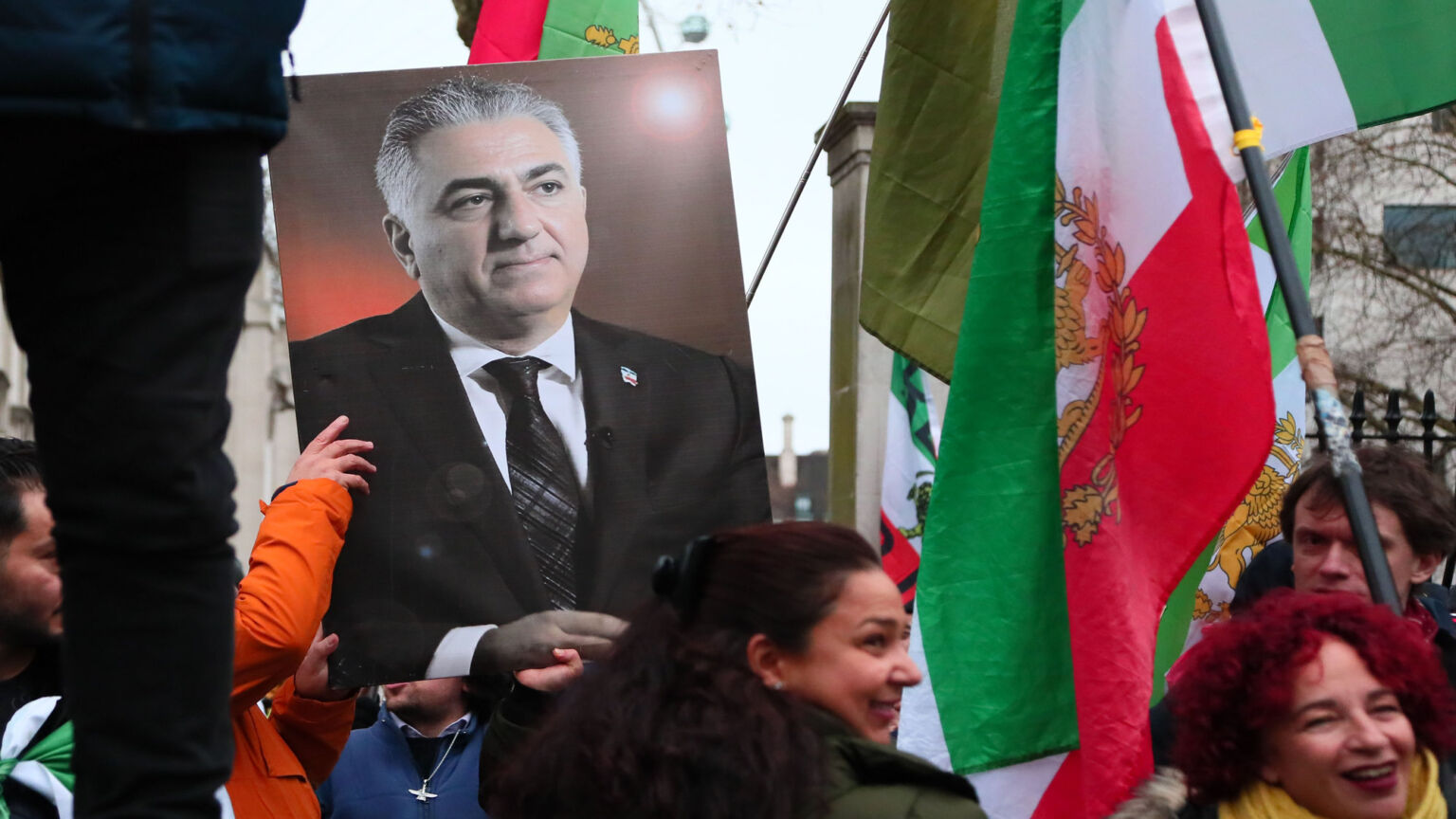
As Iran’s protests spread, a familiar figure has re-emerged in Western media and in discussions among the Iranian diaspora: Reza Pahlavi, the so-called crown prince, the son of Iran’s last shah. With striking regularity, he is touted as a potential leader should Iran’s Islamist regime crumble.
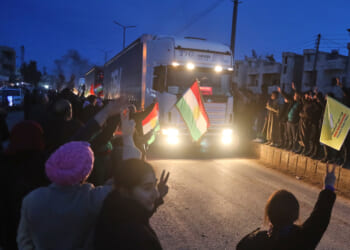
From exile in Washington, DC, Pahlavi has been urging on the protests. Many protesters in Iran have chanted his name. But this is by no means the majority position on the streets. It would be a mistake to believe that Iran’s crisis can be resolved by resurrecting a familiar, Western-friendly figurehead, and restoring him to the Peacock Throne.
The appeal of this narrative is obvious. Monarchies offer symbols, succession and a clear chain of authority. A leaderless protest movement, by contrast, is untidy, unpredictable and ideologically diverse. For commentators uneasy with mass politics, Reza Pahlavi provides a convenient shortcut – a figure who can be interviewed, endorsed and imagined as a neat solution to the messy business of finding a replacement for the hated ayatollah.
Yet what is striking about the recent unrest is precisely its decentralised nature. There is no single leader, no unified ideology, no agreed blueprint for what comes next. That is not a weakness – it is a rejection of imposed authority itself.
This is why attempts to frame the protests as a monarchist revival ring hollow. Nostalgia for the Pahlavi era is strongest not among the protesters, but among Iranians in exile – sustained by distance, selective memory and an understandable despair at the present Islamist regime. Inside Iran, the monarchy is mostly remembered not as a liberal alternative to the tyranny of the mullahs, but as another period of top-down rule, enforced silence and political exclusion.
Iran’s current crisis did not begin in 1979. It began long before, under a monarchy that concentrated power in the hands of a single unelected ruler and treated dissent as a security threat. The shah’s regime may have been secular and outwardly modern, but it was no friend of liberty. Political participation was tightly controlled, opposition parties were neutered or banned, and the state ruled through repression rather than consent.
This matters, because authoritarian systems do not disappear simply because their aesthetic or ideology changes. The Islamic Republic did not emerge from a vacuum. It inherited a political culture shaped by decades of centralised power and unaccountable rule. As I have argued previously on spiked, the shah pioneered much of the repression that is now being challenged by the protests. Romanticising the old monarchy doesn’t challenge tyranny – it whitewashes it.
Reza Pahlavi himself is also an implausible candidate for leadership. By virtue of his lineage alone, with his father having fled the country amid mass unrest, he is inevitably a divisive figure rather than a unifying one. He has no political record, no experience of governing and has not held a proper job for decades.
Some argue he could serve merely as a ‘transitional’ figure, but Iranians have heard that promise before. Ayatollah Khomeini, too, was presented as temporary – and history shows how catastrophically that logic can fail. The Islamic Republic he founded is still here, almost five decades on.
Too much Western commentary presents Iranians with a false choice: theocracy or monarchy. This binary is not only intellectually lazy – it undermines the very aspirations expressed by the protest movement. The demand being voiced on Iran’s streets is not for a different strongman, but for an end to strongman politics altogether.
The lesson should be obvious. Freedom cannot be delivered from above, whether by clerics, generals or kings-in-waiting. It must be built through institutions that disperse power, protect dissent and allow societies to argue their way forward – slowly, imperfectly and without saviours.
History offers a clear warning. Time and again, societies emerging from repression have been tempted to place their hopes in ‘safe’ figures who promise order first and freedom later. Too often, later never comes.
None of this is a defence of the Islamic Republic, which continues to violently suppress opposition and restrict political life. Indeed, any lingering nostalgia for the shah speaks to just how totalitarian and brutal ayatollah’s regime has become. The desire to replace tyranny with something familiar is understandable – but it is also a trap.
Iran’s protest movement deserves to be taken seriously on its own terms – as a genuine, if fragile, rejection of unaccountable power.
Étienne Verité is a writer.