What has it accomplished, and what will 2026 bring?
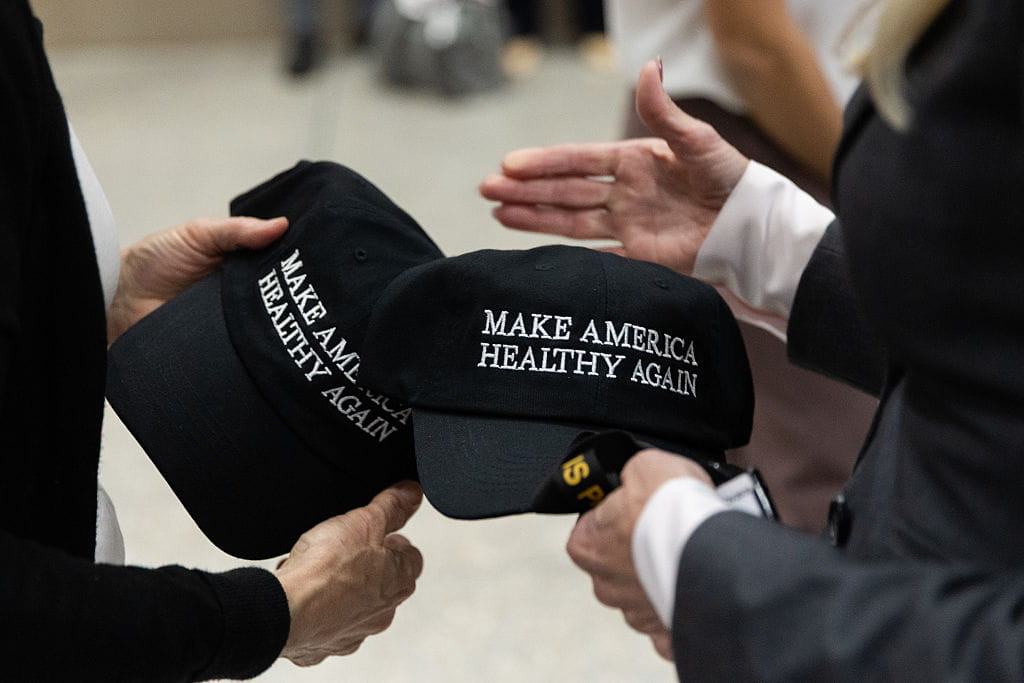
It’s not only President Donald Trump who is celebrating a one-year anniversary today, January 20. The nascent Make America Healthy Again, or MAHA, movement is now celebrating its first birthday as the driving force of the Health and Human Services department. This collaboration between Robert F. Kennedy Jr. and the president has been a significant influence on federal and state policy over the last 12 months and could prove a major player in this year’s midterm elections.
Growing Pains
Democrats and the legacy media viciously attacked Kennedy as he called out the regulatory capture of the US food and health systems by overly powerful industries. These assaults were redoubled during Kennedy’s HHS secretary confirmation proceedings, in which Sens. Elizabeth Warren (D-MA) and Bernie Sanders (I-VT) led a failed charge to discredit RFK Jr. Even his detractors concede Kennedy is correct about chronic illness and ultra-processed foods, and MAHA continues to gain traction on these issues.
MAHA has growing pains, struggling to maintain internal solidarity and grow the movement as critics promoted in the big box media strive to shred the nascent revolution. The first MAHA Commission Report boldly questioned the presence of pesticides in food supplies, sparking a MAGA revolt led by the nation’s crop farmers. The second report backed away from critiquing this third rail of American agriculture, outraging MAHA supporters who felt betrayed.
Meanwhile, HHS Secretary Kennedy faced a similar Scylla-and-Charybdis dilemma navigating vaccine and other medical policies. He pared back vaccine recommendations for children to howls of media contempt, even though parents can still get the jabs, they are just no longer mandatory. He replaced the members of the Advisory Committee on Immunization Practices who had conflicts of interest with Big Pharma, which outraged a media machine largely funded by Big Pharma advertising.
Taking Flak While Fighting Back
In 2025, Kennedy was plagued by detractors for doing what he promised to do: eliminate industry bias, study vaccines more thoroughly, and leave important medical decisions for their children between parents and the doctor.
Yet the real MAHA action is not in the vaccine arena but the chronic disease crisis fostered by ultraprocessed foods (UPFs). While Americans remain sharply divided over vaccine safety and efficacy, they are largely united in their awareness of the ills inflicted by toxic food dyes, microplastics, endocrine disruptors, and heavy metals in children’s cereals, baby foods, and infant formula. This policy/political consensus has continued to swell as the 2026 midterms approach.
Critics scoffed when Kennedy’s HHS quickly called for the elimination of toxic dyes in US food supplies, claiming much more needed to be done (avoiding the obvious question: Why wasn’t this done decades ago?). Kennedy then pushed to eliminate sugary drinks and candy from the SNAP program. His detractors pushed back, claiming a government that pays $100 billion annually for free food should not deprive the poor of the junk diet that tastes the best but sickens them the most.
Focus on Food and Farming
Later, Kennedy reshaped the nation’s food pyramid to favor whole, healthy foods over processed options. The negative press was more muted, likely because Americans knew the old guidelines were bunk and that their children suffer from obesity and mental health problems that are compounded by toxic food additives. Of course, many in the MAHA base clamored for greater change, but most agree that progress in food quality is apparent, even though more remains to be done.
This is where the rubber meets the road for MAHA in 2026: food and farming. America’s food supplies have been compromised for decades while federal agencies condemned red meat, butter, and eggs as deadly and turned a blind eye to industrial chemical additives and preservatives. Agricultural consolidation destroyed rural cultures and economies while Wall Street soared. Americans became sicker and heavier while pharmaceutical and health companies reaped fortunes treating citizens like industrial livestock.
USDA Secretary Brooke Rollins and Kennedy jointly announced $700 million in funding for regenerative agriculture in December 2025. President Trump’s Rural Health Transformation Program ($50 billion over five years, destined for all 50 states) seeks to improve preventive health through nutrient-dense diets and lifestyles rather than dump more money into insurance premiums and administrative healthcare salaries. A legal definition of UPFs has been promised and will be forthcoming in early 2026, enabling regulatory agencies to identify which foods should be avoided for SNAP beneficiaries and public-school children to achieve improved health outcomes.
MAHA in 2026
The legacy media and Democrats invest so much energy in opposition to these policy goals that they have not fashioned any others that would appeal to voters. Healthy diets eliminate the need (and high costs) for insulin and Wegovy, and Americans are demonstrating that they seek healthier lives even if that threatens the paychecks of corporate executives and the advertising revenue of legacy media outlets controlled by Big Pharma, Big Chem, and Big Food.

MAHA continues to wrangle with the Environmental Protection Agency, which appears to be dragging its regulatory feet. Perhaps the greatest challenge for the Trump administration and MAHA policies is the tricky task of improving food quality while bringing grocery prices down and supporting profit margins for regenerative farms. Americans want to have their organic cake and eat it cheaply, too. Economic fundamentals dictate otherwise, as witnessed in the tension between lowering grocery store prices for hamburger and eggs and while promising higher returns for the US farms that produce them.
In merely a year, MAHA has made remarkable progress. Stay tuned for the midterm elections 2026, when voters will review the movement’s scorecard to evaluate which state and federal candidates have delivered on its promises, while the legacy media pivots from complaining about its every move forward to griping that MAHA didn’t do enough.
Liberty Nation does not endorse candidates, campaigns, or legislation, and this presentation is no endorsement.