Over on TikTok, chivalry is not dead. Feeds are being bombarded by version after version of the same video: an AI-generated medieval princess stands in a dark cathedral, hands joined with some hapless prince. A crown is lowered on to her golden hair; she pouts, and turns towards the congregation. There, a knight stands in full armour. We close in on his eyes, peeping through the helmet. He is crying silent, manly tears. Sometimes we get montages of his doomed love affair with the damsel; they lie in meadows, she in a puffy-sleeved dress, he sitting wistfully holding a rose. Every video is overlaid with a slowed-down version of The Stranglers’ “Golden Brown”. These posts accrue millions and millions of likes. They say: this is you, a Zoomer man, a chad in chainmail. This is the life you could’ve had.
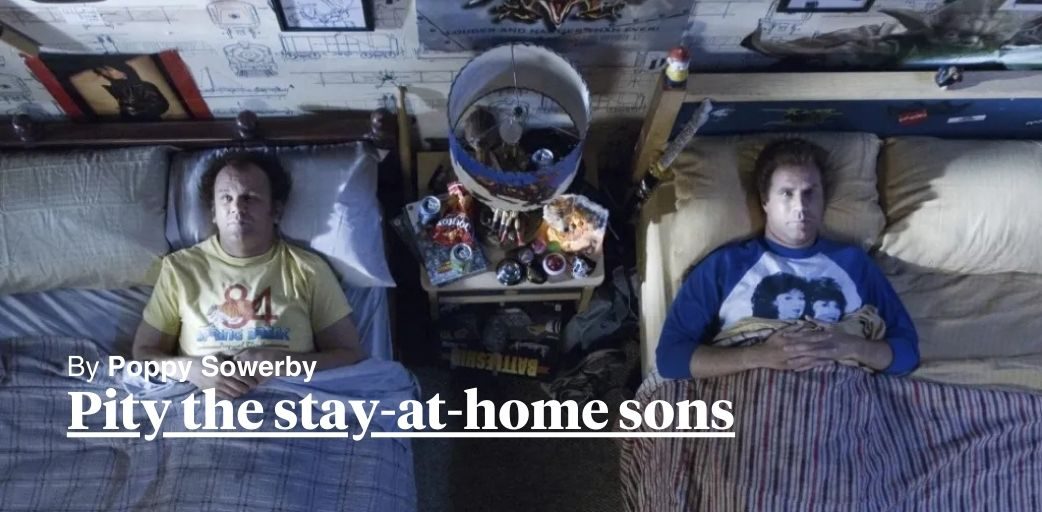
The reality of young adulthood today is a far cry from this dark fairytale. The chances are that a good portion of the millions of people liking these posts are between 25 and 34 and are watching these mournful “edits” from unmade beds in their childhood bedrooms. In America, a Pew Research Center study found that in 2023 18% of young adults in this age group lived with their parents, with men five percentage points more likely to than women (20% vs 15%). We are living in the era of the “stay-at-home son”. It should not surprise us that this AI knight — principled, mysterious, independent — has become a Gen Z obsession: for men in their twenties emasculated by parental coddling, robbed of mystery in a family home and pitied by modern-day damsels for still living with mumsy, I cannot imagine a daydream more intoxicating.
News coverage of the stay-at-home son’s plight is sympathetic, not scornful. “These are creative young people who, for a whole host of reasons, haven’t had the opportunities or the support they’’e needed to explore what they want to do and figure out how to transition to adulthood in a way that’s exciting for them,” one researcher told Business Insider. The implication is that these broken-winged birds are hobbled not by suffocation, but by a lack of encouragement. Financially, this is certainly true — the cost of housing is debilitating, with only inherited wealth throwing young people a lifeline out of the rental trap. For the rest, ambition has never been less rewarded. But it is not the case that Gen Z have received exceptionally scant emotional resources from their parents as the researcher insinuates: to hear her tell it, this is a group raised in cruel and disinterested Spartan circumstances, left on mountains — or in the family basement — to wilt away. Instead, mine is a generation that has been intensely encouraged to bubble-wrap our wellbeing, guard our sense of comfort and, above all, value self-expression over achievement. We were not exactly raised in the Fifties by a generation of troubled war veterans; our parents, finding their feet with us in the Noughties, were more likely to ply us with picture-books about inclusivity than belt us for bunking off school. To let us off the hook for shunning independence because our “creative” instincts were underindulged is a terrible fudge. If anything, we’ve been overmummied — taught that anything short of total comfort and security is beyond us. “Transitioning to adulthood” can be hard, but you need to do it anyway.
The stay-at-home son can’t have it easy in the dating scene. One “trad son” from Vallejo, California, a highly diverse and working-class city (both factors increasing the likelihood of not flying the nest) where more young adults lived with parents than anywhere else in America, told The Guardian that dating is hard in his situation; women “want a guy with a job. They want a guy with a car. A provider.” As much as I despise the grasping instincts of liberal feminism — make him pay for every date, he is the oppressor after all! And you’re just a girl! — a man being in employment seems to me a reasonable requirement. For, financial independence aside (nobody wants a hobosexual hanging around your flat and using your nice shampoo), there is something fundamentally emasculating and, yes, unappetising about a grown man who has failed to thrive. Domestic independence — even those household chores which were once deemed the female domain — is fundamental to modern, metropolitan masculinity. Will he know how to use the washing machine? Would an email from an estate agent have him hyperventilating? Does he know how to boil an egg? Even the squalid circumstances of the urban twenties and thirties today, with a revolving door of irritating housemates, box rooms and email jobs, is preferable to the social suicide of living with your pitying parents. There’s a reason why Hollywood’s archetypal loser is always a basement-dweller: nothing undercuts the respectability of a man quite like the image of his mum ironing his pants.
“Nothing undercuts the respectability of a man quite like the image of his mum ironing his pants.”
Funny, really, that the traditional marriageable qualities of women are now hampering men. Once, the only time a man could expect to have cereal for dinner would be if his mother or wife were indisposed; today, as singledom tightens its grip on young people, more men than ever seem to be salivating over Ottolenghi cookbooks and advertising their culinary prowess on dating apps. The status symbols of the Fifties have been turned on their heads: I myself have bragged about boyfriends having slap-up dinners ready on the table, like a mid-century husband proud of his wife’s mean meatloaf.
Less funny are the likely consequences of this epidemic. Men living at home are more likely to be violent, with the poor parents themselves often the target. The Guardian found that frustration with their dependence bred resentment; to compensate, the adult son “reverts to what you understand manhood to be” — in this case, aggressive.
The causes of the sexual disparity in independence are sobering, too: here, the incel’s contention that modernity favours women for once holds water. As manufacturing gives way to a feminised, office-based professional and services workforce, young men who would have excelled in manual jobs are left behind, robbed of the dignity of a trade and left to join the bloated leagues of graduates from second-rate universities, competing for clerical jobs for which they have less aptitude. Nor does this benefit women: New York is full of young, professional single women paying for apartments with the spoils of their HR jobs while clawing each other’s eyes out over the dwindling number of men who can actually afford to live here.
But the most troubling effect of the social castration of Zoomer men is the way it will warp masculinity itself. Disaffection from the “real world” — independence, dignified solitude, a truly private life — can only mutate what a real man represents. In place of the small rewards of normal adulthood loom warped spectres of imagined heroes — gigachads, domineering and aggressive, exacting revenge for the dreamer’s domestic humiliation. It is no coincidence that the so-called “manosphere” has flourished in tandem with the stay-at-home son: society owes young men dignity and meaning, and when it fails those men look to extremes to rationalise their resentment. So it is that instead of cultivating the positive qualities for which men have always been admired — resilience, capability, drive — they sit in their jim-jams in their childhood bedrooms, sucking on a vape and watching AI edits of manly knights who the maiden loves most.