While debate worldwide over the capture of Venezuelan dictator Nicholas Maduro remains mixed, for many Venezuelans forced to leave their country under his rule, it’s nothing short of a miracle.
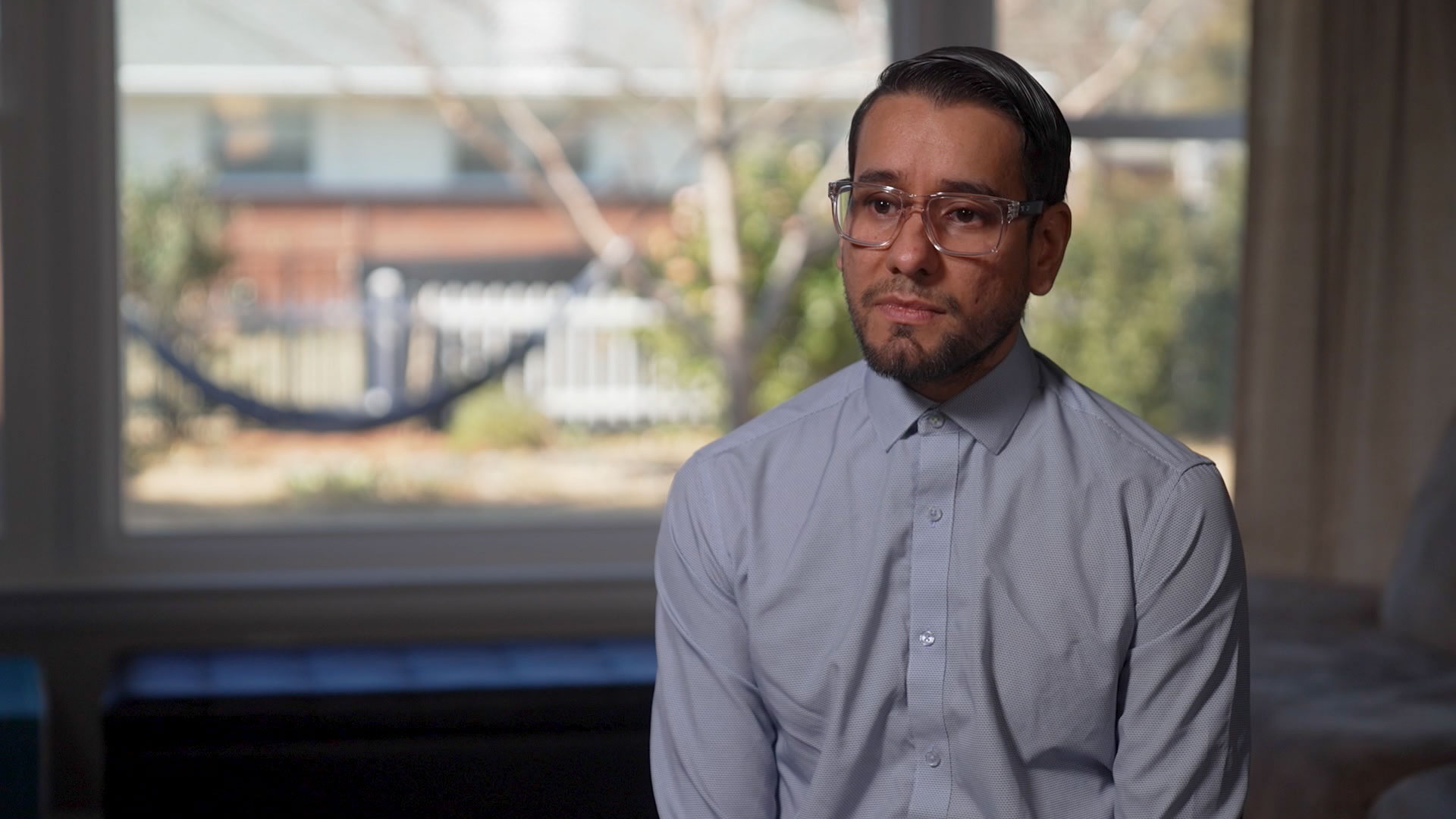
Thirty-five-year-old Francisco Gil of Norfolk, Virginia, fled Venezuela in 2017. His nightmare began when soldiers kidnapped him and two cousins at a military checkpoint and held them for ransom.
“They point a gun on my face, and they told me to get out of the car. When I did, and I thought they were going to ask me, ‘Hey, where’s your papers? Can I have your license and registration?'”
“Another officer came down, put a gun right here, my neck, and told me, ‘You’re going to unlock your phone. You’re going to give me that phone. And then you have five minutes to make a call to find somebody that can save your life. If you don’t, I like this car. I like what I see. I like your phone. So, it’s going to be just another news (story) tomorrow,'” Gil told us.
The soldiers drove them for about two hours to an abandoned house in the country and locked them in a bathroom.
“You feel a lot of things happen in your mind at that point, right? All this hard work for what, right? All this life for what? Like what you did, what you accomplished in your life, what you can be proud of, what you can be grateful of, what you didn’t do,” Gil recalled.
Fortunately, Francisco was able to make the call that saved their lives. “They confirmed the transfer was sent. So, my payment was done,” he recalled.
After that, Francisco knew staying in Venezuela could no longer be an option. He escaped and headed to the U.S. Francisco joined his fiancé, now wife, Kimberly in Virginia. He got a job at Home Depot, and they’re now raising two young daughters.
When he and Kimberly, who’s from Colombia, heard about Maduro’s capture, they thought they were dreaming.
“It was just a huge scream in my house. I was like, ‘Kim!’ And she was like, ‘What?’ because we never scream like that, ‘They got him!’ She was like, ‘They got what? Who? What’s going on?’ ‘Maduro, they got him!’ She was like, ‘No way!’ and the joy in this house was amazing, but I was still in shock. It was like, is this really happening?” Gil said.
Since then, thousands of Venezuelans have been celebrating Maduro’s overthrow and what this might mean for other socialist and communist nations.
Rev. Samuel Rodriguez, president of the National Hispanic Christian Leadership Conference, told CBN News that he hopes this is just the beginning.
“The communistic-socialistic worldview is completely counterintuitive to our Judeo-Christian value system. It believes that government is God – government is God. So, I am glad it’s the beginning, but not the end. I hope Cuba, Nicaragua, and even Brazil, to a great degree, receive the proverbial wake-up call as it pertains to what just took place in Venezuela,” Rodriguez said.
He also sees it as resulting in more freedom to preach the Gospel.
“I’m a pastor. I want to see people come to the knowledge of Jesus Christ as their Savior. When you have a government that is threatening and oppressing and imprisoning those that are against their political policies and so forth, we are all at peril, right? So, it means freedom to preach, freedom to live, freedom to prosper, freedom to transfer to your children and your children’s children, what you worked hard for. That’s what it means, really. It’s freedom across the board,” said Rodriguez.
Some Latino Christian leaders, however, feel it’s too soon to celebrate until it’s clear how the vacuum, now being filled by interim leader Delcy Rodriguez, will ultimately play out.
“I spoke to several pastors in Maracaibo and Caracas this week that there were gangs trying to intimidate pro-democracy forces. So, there’s a national call for prayer. Many people did not go to church on Sunday. There was the cancellation of services this past Sunday out of abundance of caution,” said Rev. Gabriel Salguero, President of the National Latino Evangelical Coalition.
“But at the same time, there’s expectation that Venezuela will be able to determine its own future, that self-determination and democracy will return to Venezuela and the people in the diaspora are asking, ‘What does this mean for us who’ve been here 10 years, 15 years?’ The Chavez-Maduro regime has been in power for over 26 years, and over eight million people have left the country, many of them Pentecostals and Evangelicals. Does this mean we’ll return?” asked Salguero.
As for Francisco, he has no plans to return to his home country, and when asked if he felt he was living the so-called American dream, he pointed to his backyard.
“See the white (picket) fence right there? So yeah, I’m very grateful because of what was given to me. I couldn’t even imagine having a beautiful home the way I have. Yes, it’s this change of work, change of everything, change of language, cultures, food, you name it,” he said.
The biggest change for him, though, happened during the kidnapping.
“When I was there in the bathroom, I was praying, I was like, ‘Lord, this cannot be how my story ends. I cannot be just about to be with the love of my life, and this is how I’m going to end.’ And I remember that God told me in that moment, ‘It’s not what’s going on to you, kid, what’s going to happen, so be tight, be straight, don’t show any weakness right now.’ And from that moment, it changed. Something really deep changed in me. I don’t care about money. I don’t care about wealth. I don’t care about status. I don’t care about any of that,” he said.
For now, Francisco says he’s happy seeing his country heading in the right direction.
“And I hope, and I pray for the resolution of this conflict, not only for me, for Nicaragua, for Cuba, for all the countries that have been down in this socialism. My prayer is for the new generations to have peace for the first time in many decades. I think that we are in a point that we can reach that,” Gil said.