Chris Edwards and Yasmeen Kallash-Kyler
The Trump administration is cracking down on fraud in welfare programs. Recent scandals in Minnesota suggest the ease with which people can steal from federal grant programs for food, childcare, and health care. The epidemic of food stamp card skimming is also in the news.
Low-income welfare is not the only type of federal spending hit by fraud. Farm subsidies—which are high-income welfare—also attract crime. With more than $30 billion a year in benefits, farm subsidy programs are a rich target for crooks.
How do farmers steal from farm programs? We illustrate below with a sample of 15 cases in 12 states since 2022. Farmers steal from federal subsidy programs for wheat, soybeans, corn, tobacco, livestock, sunflowers, grapes, and other commodities.
Here are some highlights from the 15 cases:
- Cancer Con. The federal government still subsidizes tobacco, and farmers are stealing millions of dollars of the benefits.
- Rain Rustlers. Farmers in Colorado stole millions of dollars from the government by tipping over rain buckets.
- Crooked Cowboy. A farmer who was a star in a TV show about “real American cowboys” stole millions of dollars in subsidies.
- Granny Graft. Four elderly sisters stole millions of dollars over 10 years from federal funds set aside for farmers who suffered discrimination.
As a general matter, farm subsidies are an inefficient, unfair, and unaffordable part of the federal budget. Farm subsidy theft is even more egregious. Unfortunately, “Government programs offering the chance at millions of dollars in payouts have always been the target of persistent—and creative—fraud,” noted the Colorado Sun regarding farm scam number 6 below.
Many of the thefts profiled below were from the federal crop insurance program, which is the largest farm program at about $15 billion a year. It is not really an “insurance” program but rather a sneaky way for farm-state legislators to funnel huge subsidies to the nation’s wealthiest landowners.
Nearly all the fraud cases we found were big-dollar, usually thefts of more than $1 million. We wonder whether there are a lot of smaller farm subsidy frauds—thefts of tens of thousands of dollars—that go undiscovered because government investigators and prosecutors are focused on the largest scams. The theft techniques illustrated by the big-dollar cases below would also work for small- and medium-sized farms.
Here are 15 farm subsidy fraud cases. They illustrate the many ways that farm programs can be scammed.
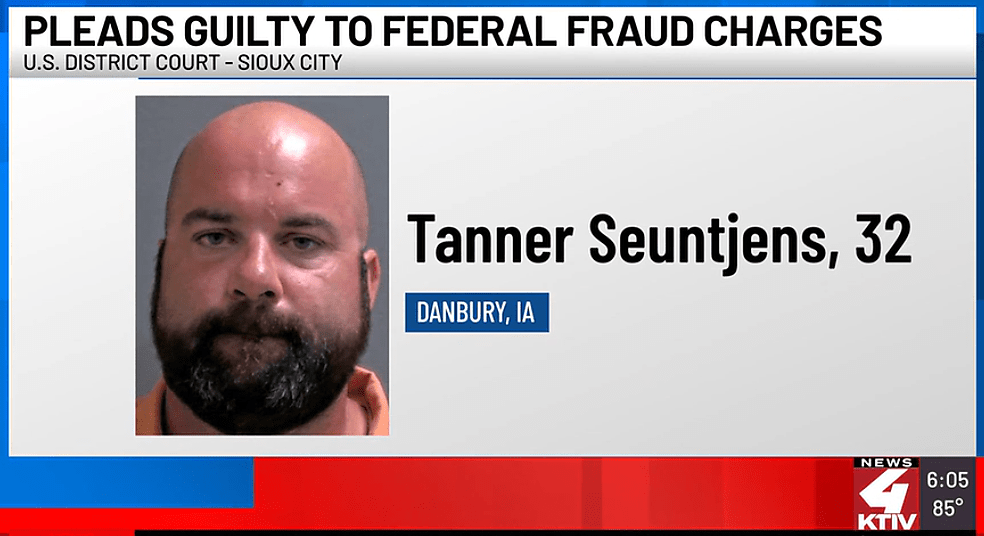
1. Iowa. Tanner Seuntjens was convicted in 2025 for stealing $1.5 million of farm subsidies from the Coronavirus Food Assistance Program, which aided livestock producers based on inventory. He claimed subsidies three times under different names for the same livestock. Seuntjens also defrauded the crop insurance program by repeatedly underreporting his crop yields to receive extra payments. To top it off, he also defrauded a bank and stalked a court witness.
2. Florida. Manager of Oakes Farms, Christopher Lee, was convicted with co-conspirators in 2025 of $1.1 million in crop insurance fraud. They minimized the use of fertilizers and fumigation to deliberately fail insured crops. With the help of a corrupt insurance agent, they filed loss claims to collect aid payments, a scam called “insurance farming.” Lee was also convicted of defrauding the Coronavirus Food Assistance Program of $1.4 million by using a shell farm and listing his parents as owners. There have been six convictions in related cases so far involving more than $6 million in subsidies.
3. Kentucky. Seven tobacco farmers and the manager of a tobacco warehouse company were convicted of fraud against the crop insurance program. One farmer, Larry Walden, was convicted in 2025 for stealing $10 million from the program. Over a six-year period, he falsified documents to minimize reported production and maximize subsidies, while secretly selling his crops under the names of friends and relatives. The tobacco company manager, Thomas Kirkpatrick, was convicted of crimes in support of $16 million in crop insurance theft over a seven-year period, including helping farmers produce false documentation for their claims.
4. Florida. Specialty crop company owners Jacinto Luna and Marcelino DeLeon were convicted in 2025 of stealing $1 million each from the Coronavirus Food Assistance Program based on “misrepresented crop production, crop revenue, and ownership interests.”
5. Kentucky. Robert Hunt was convicted in 2025 for stealing $1.6 million in subsidized crop insurance payments. Over an eight-year period, he sold portions of his wheat and soybean crops under the names of others to underreport production on payment claims.
6. Colorado. Patrick Esch and Ed Jagers were convicted in 2024 of defrauding the federal crop insurance program. They paid $6.5 million to resolve criminal and civil allegations against them. One type of subsidized crop insurance pays out when there is less than usual rain. Esch and Jagers tampered with the government’s rain gauges in their area by covering them, injecting silicone, cutting wires, and tipping over rain buckets. With less measured rain, the farmers boosted their subsidies. A report on the case noted, “farm payouts based purely on a rainfall index quickly became one of the most popular subsidy programs” when introduced in 2007.
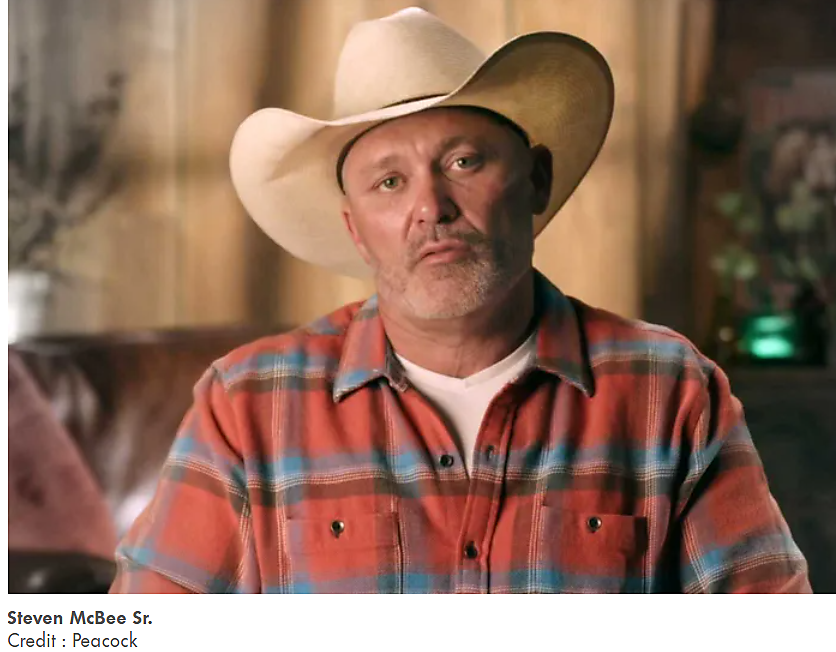
7. Missouri. Steve McBee was the owner of McBee Farming Operations and star of TV’s McBee Dynasty: Real American Cowboys. He was convicted in 2024 of crop insurance fraud over a three-year period of $4 million. His huge theft was based on underreporting his corn and soybean production and providing false planting dates.
8. California. Jatinderjeet Sihota ran a family farm producing grapes and other crops, and Ralph Hackett was a manager of a local fruit-packing company. Sihota and Hackett were convicted in 2024 of defrauding the crop insurance program of $650,000. Initiated by Sihota, the pair falsified subsidy claims by underreporting crop sales over a five-year period to make it appear that the farm had suffered large losses.
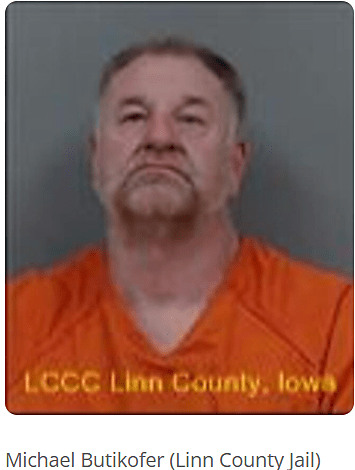
9. Iowa. Michael Butikofer was convicted in 2023 of stealing more than $5 million in farm subsidies and stealing his customers’ livestock. Butikofer operated a feeding operation for cattle owned by other ranchers and investors. The operation would sell the cattle to slaughterhouses for the owners, but Butikofer stole $2.5 million of the proceeds. He also defrauded the government out of $1.2 million in Coronavirus Food Assistance Program benefits for cattle that he did not own, and he cheated the Small Business Administration out of $1.5 million in pandemic subsidies. Butikofer was also awful to his employees and repeatedly threatened them with violence.
10. New York. Craig Spofford was convicted in 2023 of defrauding federal crop insurance of $179,000. He “claimed to lease and organically plant crops on three separate parcels totaling over 500 acres in Herkimer County that he did not in fact lease and plant.”
11. Washington State. Rick Gray and his company were found in 2023 to have defrauded crop insurance by $180,428. Gray claimed fake losses and failed to disclose his sales outside the county of more than 35,000 bushels of wheat.
12. North Dakota. Kent Pfaff was convicted in 2023 of crop insurance fraud totaling $379,317. Pfaff understated his soybean production to boost his subsidy payments. He was found to be “shifting production,” which is a fraud scheme where farmers overreport production from some fields and underreport from other fields to inflate subsidies.
13. South Dakota. James and Levi Garrett were convicted in 2022 of crop insurance fraud. The father and son claimed that 2,200 acres of sunflowers and 47.5 acres of corn failed, but in fact they had not planted any sunflowers or corn. The pair fraudulently obtained $1.3 million in subsidies.
14. Michigan. Gaylord Lincoln and his company agreed to pay $1.2 million in 2022 to resolve civil allegations of defrauding crop insurance and other farm subsidy programs. To avoid federal payment limits, Lincoln placed farmland and crops in the names of his employees, who then handed over the subsidies to Lincoln. In a related civil action, Lincoln’s insurance company agreed to pay $500,000 to resolve allegations that it aided the scam.
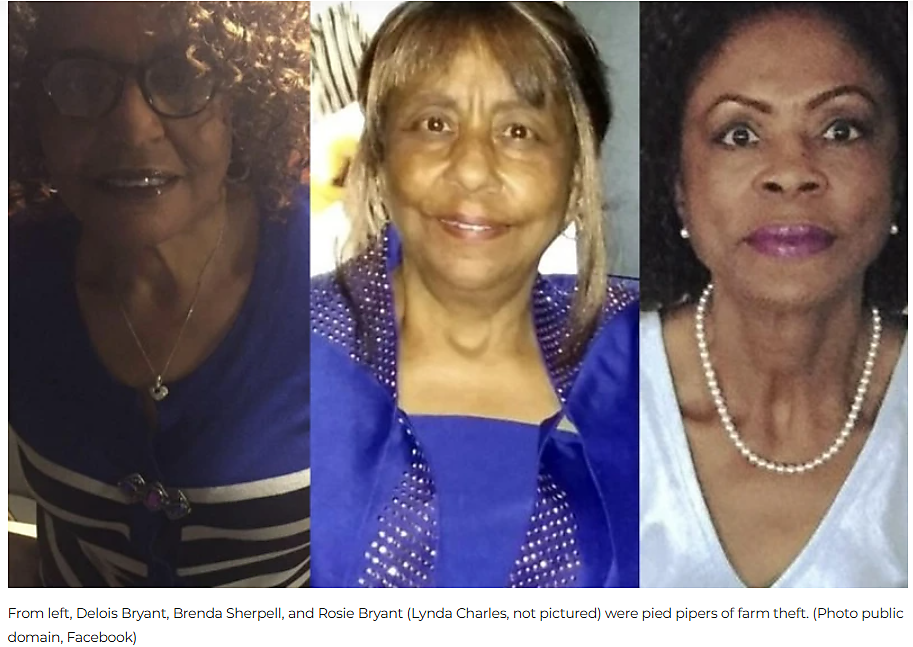
15. Arkansas. Four sisters were convicted in 2022 of stealing $11.5 million from two government funds set up to aid farmers who had suffered discrimination. Over a 10-year period, Lynda Charles, Rosie Bryant, Delois Bryant, and Brenda Sherpell found individuals they could use to file discrimination claims. They submitted 192 claims to a fund for black farmers as well as a fund for Hispanic and women farmers. Almost all the claims were paid, but they “were false because the claimants had not suffered discrimination and, in most cases, had not even attempted to farm.” The sisters took cuts of the attorney fees as well as cuts of the payments to claimants. They were aided by a corrupt attorney and also aided by a corrupt tax preparer in failing to report $4.6 million on their tax returns.