It has been a longstanding gripe of the Welsh that they exist on the political as well as geographic fringe of the UK. A debate on BBC Radio Wales at the start of the year seemed to offer proof of this complaint: here were the senior figures from the major Welsh political parties (except Reform UK), having it out in the first formal, official debate before May’s Senedd election – theoretically one of the most significant domestic political events of the year. And not a soul in Westminster appeared to notice.
To be fair, at that specific juncture, on 4 January, Welsh politics was being somewhat overshadowed by something else. Just hours before the debate, news broke that America had bombed the Venezuelan capital, Caracas, and had captured the country’s leader, Nicolás Maduro. Even Keir Starmer’s carefully planned media strategy – a range of television interviews before parliament returned that Monday – was blown off course by Washington’s shocking intervention. Yet would the response have been any different, even without Maduro’s sudden removal? Recent history suggests not.
The relative indifference on the part of national media and politicians towards Wales has long allowed its government to escape proper scrutiny. This has served the Welsh government well, but its people very poorly. Combined with the historic dominance of Welsh Labour, which has won every Senedd election since devolution in 1999, the lack of attention has left Wales with a bloated, wasteful and inward-looking government that rarely faces any criticism at all.
In recent years, while neglecting the basic needs of its citizens, the Welsh government has embraced virtue-signalling with gusto, and has committed itself to every fashionable cause under the Sun. There is no better example of this than the ‘Anti-Racist Wales Action Plan’.
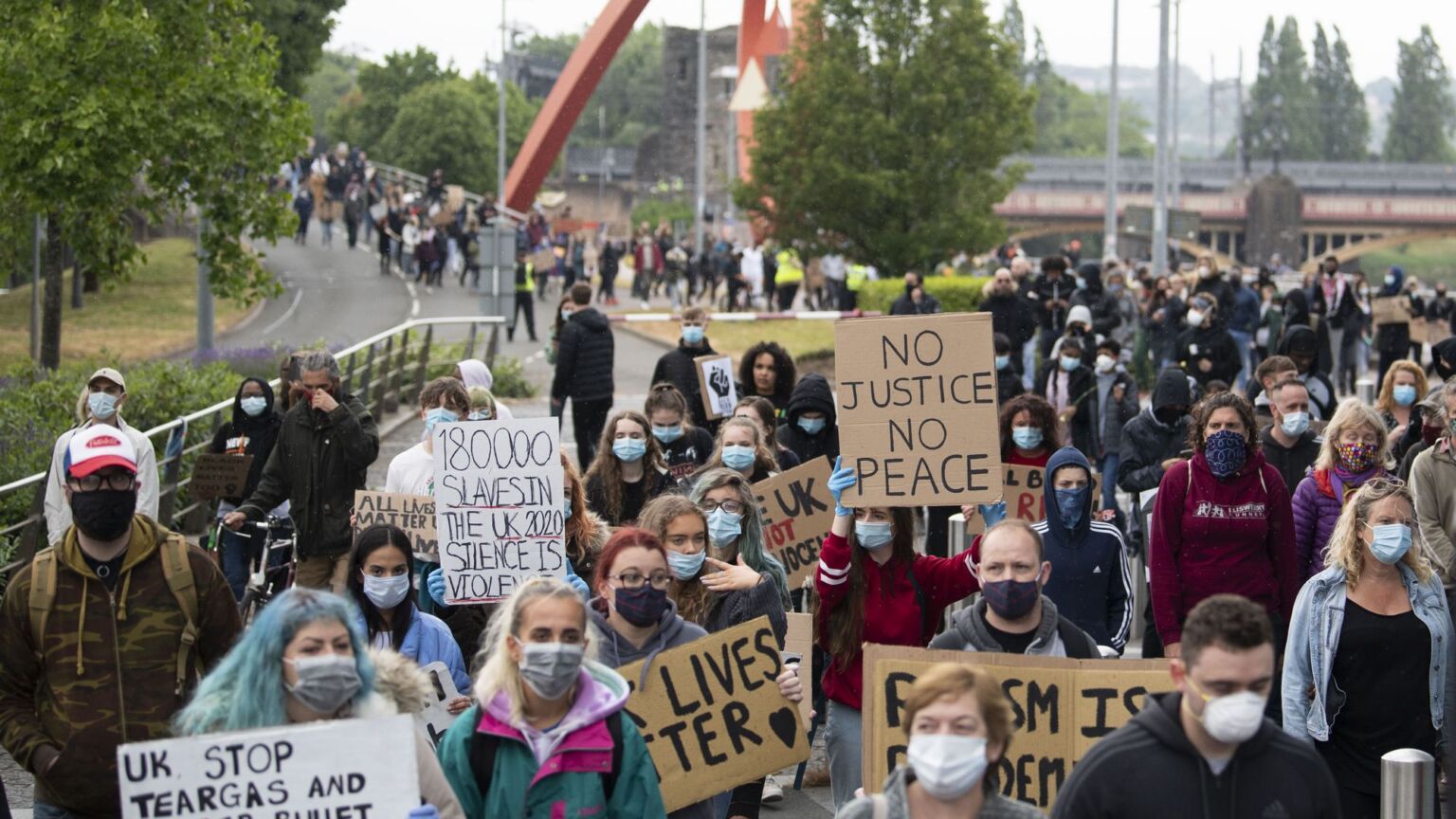
The action plan is one of the more staggering documents – at least in Britain – to have emerged from the Black Lives Matter protests of 2020. Conceived that summer and published in 2022, the plan promised to make Wales ‘racism-free’ by 2030. When rioting broke out in the UK in the summer of 2024, sparked by the murder of three young girls in Southport by Axel Rudakubana, the Welsh government decided that its initial strategy did not go far enough. The riots were proof, the government said, of the ‘level, depth and pervasiveness of racial prejudice in our society’. And so the action plan was updated and expanded. At the end of 2024, the Welsh government published 400 dense, lifeless and bureaucracy-inspiring pages – this was the final blueprint in Wales’s crusade to end racism, once and for all.
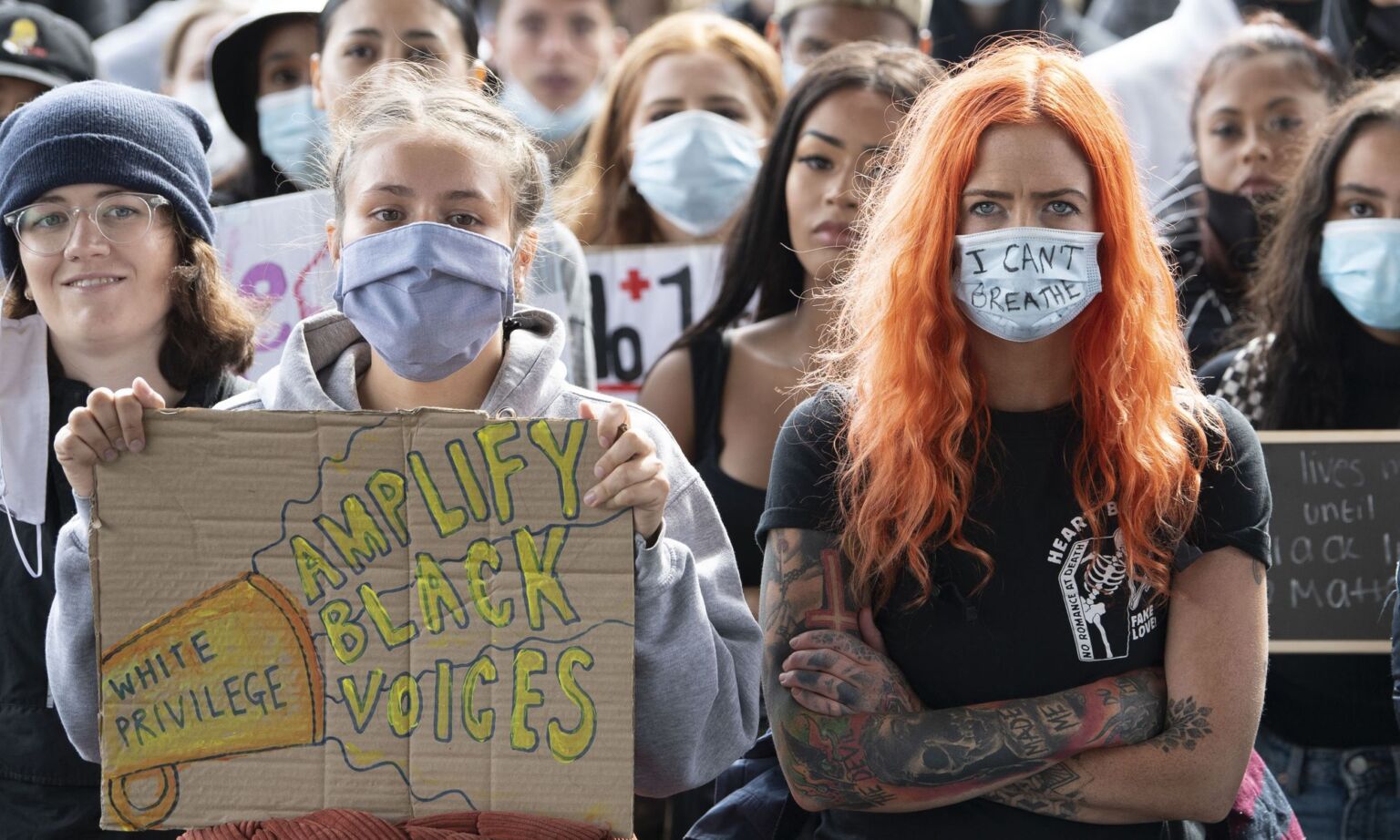
Protesters look on during a Black Lives Matter protest at the Senedd on June 06, 2020 in Cardiff, United Kingdom.
The Anti-Racist Wales Action Plan cannot be criticised for lack of ambition. It essentially conscripts every department, in every level of government to the goal of abolishing racism, in every corner of society. It makes for a bewildering, bureaucratic edifice, constructed from initialisms, acronyms and mind-numbing jargon. Overseeing operations are the Anti-Racist Implementation Team and the Race Disparity Evidence Unit. These departments are responsible for the Cultural Maturity Matrix, answerable to the External Accountability Group (EAG), and appear to oversee the actions of the Local Authority Officers’ Minority Ethnic and Gypsy, Roma and Traveller (MEGRT) Group, along with a multitude of other anti-racism government divisions.
This is merely the tip of the iceberg. We haven’t even yet come to the Diversity and Anti-Racist Professional Learning (DARPL) project, which ensures the teaching of ‘Black, Asian and Minority Ethnic histories and experiences’ in Welsh schools. Or the Workforce Race Equality Standard, which exists to ‘tackle racial inequalities in the experiences of NHS staff’ – a task apparently made easier after Welsh universities promised to ‘decolonise’ the midwifery curriculum. There is even an ‘Ethnic Minority Mental Health and Task Finish’, which examines how ‘ethnic-minority communities access and experience mental-health services’. Sporting organisations, landlords, museums – there is really nothing you can do, see or be in Wales that isn’t overseen by some arm of this zealously ‘anti-racist’ state.
Surely, you might think, with all of these EAGs, MERGTs and DARPLs, the Welsh government must have made some extraordinary breakthroughs? That it has rooted out a cabal of neo-Nazis in the Senedd, purged Cardiff Bay of white-supremacist ideas? Alas, the results and recommendations have largely been farcical.
The most notable achievement, so far, is an extensive government blacklist of supposedly racist landmarks. These range from community centres, schools and streets to statues and pubs. These may have been built with colonial money or are just named after ‘problematic’ historical figures. The names include the usual woke roll call of villains: Winston Churchill, Cecil Rhodes and Christopher Columbus. And alongside them, some surprising additions, like utopian socialist Robert Owen and, er, the famously non-violent Indian-independence activist, Mahatma Gandhi.
The Welsh government carried out an audit of each location and awarded each a colour grade, to indicate just how evil and racist the place is supposed to be – red demonstrating the ‘definite personal culpability’ of the location’s namesake, orange indicating ‘personal culpability uncertain’, and green meaning either that the offending building has been removed or that the person it was named after was ‘not culpable’.
One of these racist buildings is the Buccaneer Inn in Tenby, Pembrokeshire, which was awarded an ‘orange’ grade. This is because pirates, or buccaneers, ‘preyed on ships involved in the slave trade’ (although the audit is at pains to note that pirates ‘were also known to have racially diverse crews’). The entire 4,600-person village of Nelson, in Caerphilly, south Wales, even appears on the blacklist. Its sin is to have been named after Horatio Nelson – perhaps the most famous British military officer in history. Like many men of his time, he supported the slave trade and died before its abolition.
The Anti-Racist Wales Action Plan has generated many similarly absurd policies and outcomes. One of the more risible proposals appeared in 2024, courtesy of Climate Cymru BAME. Its contribution to purging Wales of racism was to suggest the creation of ‘dog-free areas’ in local parks, on the grounds that dog-walking is, apparently, a predominantly white pastime.
The fanaticism of Welsh anti-racists has overwhelmingly focussed on one part of society: culture. The action plan has a ‘TV Strategy’, the aim of which is to bring about a ‘shift in the beliefs and the behaviours of the white majority’. A similarly totalitarian objective is contained in the government’s 2024 ‘Public Commemoration Works’ guidelines, which told local councils and institutions like the National Museum of Wales to remove works of art that ‘insult’ or hurt’ the ‘present values’ of Welsh society. This followed government guidelines issued the previous year, which singled out statues depicting ‘powerful, older, able-bodied white men’, such as Nelson, Sir Francis Drake and the Duke of Wellington.
Every aspect of Welsh cultural life seems to be affected by the action plan. Like sand, it gets everywhere.
Arts grants in Wales are now contingent on setting the ‘right historical narrative’. Funding is available only to those museums that promise to ‘create exhibitions that tell stories through the lens of black, Asian and minority-ethnic people’s experiences’. Even libraries have been swept up in this great, moralistic fervour. In 2022, the Chartered Institute of Library and Information Professionals received £134,000 from the Welsh government to create ‘anti-racist library collections’.
Despite its promise to put ‘openness and transparency at the heart’ of the action plan, it is incredibly difficult to find out how much all this is costing the Welsh, and therefore the British, taxpayer. In fact, anti-racist spending remains highly opaque. In response to a freedom-of-information request in 2023, the Welsh government said it had dedicated £238,000 to the race action plan in its most recent budget. This figure, however, is almost certainly a mere atom of the true cost. For example, in 2024, the government said it had allocated £160million via the Local Authority Education Grant to ‘address equity’ in state schools. In the same year, it provided £3.4million to the ‘Gypsy, Roma and Traveller community’ to refurbish their homes or buy new caravan pitches. And this is before one takes into account the Anti-Racist Wales Culture Fund, which offers grants of up to £20,000 for organisations that ‘support’ the aims of the action plan.
Keeping track of all this anti-racist spending is a near-impossible task. Figures for specific projects occasionally tumble out into the press, though this can’t give us the full picture. There is the £70,000 for ‘ethnic minority-led groups’ to appoint an ‘anti-racism manager’ to provide ‘anti-racism training’ to housing organisations. And there is the £10,000 contributed by the Welsh Arts Council to research on ‘decolonising the Welsh cake’. Quite what these scone-like bakes have to do with racism is unclear. According to the researcher engaged in this ‘decolonising’ project, it involves exploring the Welsh cake through the prism of English colonial rule, complete with an analysis of the role of sugar in said cakes.
It might initially seem hard to take any of this seriously. There is a great deal of Monty Python about it, after all – decolonised cakes, anti-racist libraries, blacklisted villages. There is the gnawing suspicion that someone, somewhere, is orchestrating an almighty piss-take. But, shortly before Christmas, we were reminded just how seriously the Welsh government appears to be taking the task of forging an ‘anti-racist’ nation. And it isn’t very funny at all.
Uzo Iwobi, founder of the Race Council Cymru and a Senedd (Welsh parliament) adviser, had been asked to assess Wales’s progress towards anti-racism. There was one problem, Iwobi said. It was the UK’s Race Relations Act which, since 1965, has outlawed racial discrimination in employment, housing, education and services. Iwobi said it was ‘not possible’ under this law to ‘positively discriminate’ – that is, to prioritise, say, the employment of ethnically diverse candidates over white candidates. In other words, Iwobi appeared to be calling for the legalisation of racial discrimination to advance the cause of ‘anti-racism’. It is a highly disturbing argument, even if it is the logical conclusion to this identitarian crusade.
Wales is a country that is 94 per cent white. It is not a hotbed of racial tension, let alone racial animus. Yet this hasn’t stopped the Welsh state and its politicians from waging a relentless, vicious culture war on ordinary Welsh people, their pastimes and their history.
The distance between the ‘progressive’ views of the Labour-dominated Senedd and the lives of the Welsh population has been growing for some time. It’s fair to say that it is now a chasm. When the Welsh political class looks at the Welsh public, it sees something that needs correcting in the name of woke ideology.
Little wonder that in recent years, the Welsh authorities have impaled themselves on every fashionable, right-on cause, invariably at the expense of the far more pressing concerns of its people. In 2023, the government imposed a 20mph speed limit on vast swathes of Wales. It has proved so unpopular that the government is now spending millions of pounds reversing the policy. In the same year, it abandoned or scaled back 50 road projects because they feared these would add to the ‘climate emergency’. During the pandemic, then Welsh first minister Mark Drakeford consistently sought to outdo every other UK home nation with the severity of his lockdown measures, at extraordinary costs to the Welsh economy and people’s freedoms.
Yet in every important measure, Wales is failing. While its political elites have focussed solely on Guardianista causes, its people have continued to endure the highest rates of poverty in the UK, a problem that is particularly acute among children. Welsh schoolchildren consistently rank lowest in the UK when it comes to reading, mathematics and science literacy. It seems that all these serious problems have been relegated to second-tier status amid the great, historical fight to rid Wales of a racism that exists mostly in the minds of its politicians.
There are signs that the Welsh people have, at last, had enough of this melange of incompetence and authoritarianism. In a Senedd by-election in October, Labour lost in Caerphilly – a seat it had held since devolution in 1999, and the Westminster seat since it was created in 1918. It received just 11 per cent of the vote, down from 46 per cent in 2021. According to the latest polling, Labour – the party that has controlled Welsh politics with an iron grip for close to 30 years – is coming fourth, regularly polling at less than 10 per vote of the vote.
With the demise of Welsh Labour seemingly imminent, we can only hope it will take its Anti-Racist Wales Action Plan with it. It is a reminder of the most toxic period of the woke era, a period that the rest of the world appears – finally – to be moving on from.
Hugo Timms is a staff writer at spiked.