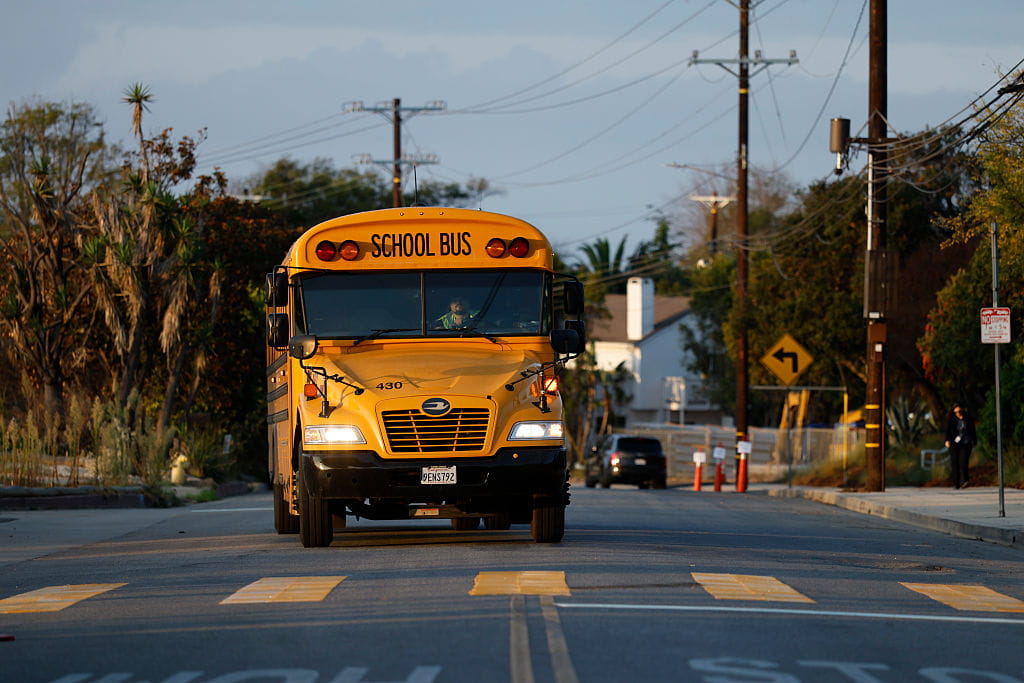
More than 1.5 million students are participating in school choice programs this year, far more than the 600,000 in 2020. A 2026 national survey found that 75% of US parents of school-aged children said they considered a new school in 2025, 15% more than the previous year, which makes sense when considering that Gallup discovered in 2025 that only 35% of Americans are satisfied with the quality of education that K–12 students receive. Public schools have seemingly been declining for years, and now families want options. Why should their kids suffer in a bad district just because of their address?
The Holdouts
During a hearing on Wednesday, senators revived old arguments over school choice when debating the Education Freedom Tax Credit, a scholarship program included in the One Big Beautiful Bill Act. Under the program, families who donate up to $1,700 to a scholarship-granting organization will receive an equivalent tax credit, potentially generating billions for private school tuition, homeschooling, and academic costs without diverting money from public schools. But states have to opt in.
A tally from the Education and Treasury departments released on Tuesday shows at least 23 states have opted into the program, most of which are led by Republican governors. So far, Colorado Gov. Jared Polis and North Carolina Gov. Josh Stein are the only Democrats to announce their states will participate.
“It’s not about public school versus private,” said Republican Sen. Bill Cassidy (LA), “not about teachers versus parents, not about Republicans versus Democrats. It’s about giving the parent access to the innovative educational program best for her child.”
Sen. Bernie Sanders, an independent from Vermont who typically caucuses with Democrats, had a different opinion: “We should not be creating a two-tier education system in America, private schools for the wealthy, and well-connected, and severely underfunded and under-resourced public schools for low-income, disabled and working class kids.”
The left wasn’t always against school choice. In 1990, Milwaukee Mayor John Norquist, a Democrat, introduced one of the movement’s early signature programs: vouchers. Senator Cory Booker (D-NJ) won a Newark mayoral election in 2006 while campaigning for alternatives to the city’s public schools. Barack Obama, during his 2008 election campaign, promised to double the federal funds allocated for charter schools under President George W. Bush. So why are so many Democrats against school choice now?
It might have something to do with the teachers’ unions, which are major donors to the Democratic Party. The National Education Association and the American Federation of Teachers have also funneled tens of millions into left-wing causes, and both despise school choice. Their main argument is that the programs “defund” public schools, but this reasoning ignores the fact that the money is meant for educating children, not for supporting an institution. The funds do not belong to the schools. If K–12 establishments don’t want kids leaving for other places, perhaps they should reevaluate their approach to teaching and ask themselves why students and families desire more options.